God With Us

This Advent season, we thank God for becoming “God with us.” Think of Simeon, the old man to whom the Holy Spirit revealed the infant Jesus as the promised Messiah. Apparently many years earlier, the Holy Spirit had revealed to Simeon that he would not see death until he first saw God’s Anointed One.

Baby holding father's hand DEC 13

Image courtesy of Royce Bair http://www.tssphoto.com/

What trials and temptations did Simeon endure in the meantime? All we know is that he lived at a painful time in Jewish history. But he loved God, patiently waited upon Him through life’s tribulations, and experienced God’s faithfulness. All of Simeon’s troubles seemed to fade away when God rewarded his faithful perseverance with the privilege of holding the King of Kings in his own arms.

“Blessed is the man who perseveres under trial,” James tells us, “for once he has been approved, he will receive the crown of life which the Lord has promised to those who love Him” (James 1:12).

Like Simeon, we all face trials and temptations. Often, these hardships tempt us to demand the things of God in our own way and time. It is human nature to want things now. But if we do not trust Him, we can do and say reckless things that we will later regret.

Blessed is the person who perseveres in spite of these trials and temptations. Blessed is the person who, like Simeon, makes God’s promise the rule of his life.

To be blessed is not only to be happy, but to enjoy a taste of eternal life now, even as Simeon did. This blessed person is not an ideal person, but a person of flesh and blood. James is talking about you and me.

If we hold out for the promises of God, we shall have them. Perseverance proves that we have real faith. “Hope deferred,” we are told, “makes the heart sick; but when the desire comes, it is a tree of life.” “Those who wait upon the Lord will never be ashamed.”

Whatever trial or temptation we face, our chief test is to trust God through it all. To trust God permits us to become trusted by God, to possess His matchless gifts in this life and the next. When we have passed the test—we receive the “crown of life.”

What is this “crown of life”? It is eternal living, fullness and fulfillment, order and peace, plentitude and joy. It is to know something of the Garden of Eden in a fallen world of disappointment and death.

It is made possible only by the God who came to live among us and die among us that we might have life. We can love such a God as this, who saves and rewards us through His grace.

Perseverance under trial or temptation brings increased wisdom that comes only with time. It begins with our crying out to God in our distress. Perseverance begins by admitting our weakness, admitting our trials are impossible without dependence upon Him. It is a broken and contrite spirit that brings God’s work in us.

This Christmas season, millions of people know nothing of the One who persevered on their behalf, experiencing the cross and the shame, but also experiencing resurrection and victory that they might know it as well. Pray and work that they may know Him and experience His faithful presence and power even as Simeon did long ago.

Pilgrim Fathers

This month, as we thank God for His many blessings, let us thank Him for the
Pilgrim Fathers.

Many people argue whether or not America is an exceptional nation. I believe America is an exceptional nation especially because of the prayers and Great Commission spirit of the Pilgrim Fathers. Indeed, their prayers may yet make the difference for the future of this nation.

When the Pilgrims landed in the winter of 1620, they wrote the Mayflower Compact, binding themselves to a society of laws “for the glory of God and the advancement of the Christian faith.”

In this age of low commitment to anything, many (including Christians) find it hard to believe that the Pilgrims meant it, but they did. Their decision to come here was based upon many years of prayer and sacrifice to make a way for continued spread of the gospel. I can’t think of any other nation with beginnings so specifically centered upon the work of Jesus Christ and His Great Commission.

William Bradford, Mayflower passenger and governor of Plymouth Plantation, writes of this more fully in his detailed account of those early days. Yes, they meant it—totally.

Obviously, over the past 400 years, things have changed. No dedicated believer can claim that today’s America comes close to glorifying God or advancing the Christian faith. Often, it appears that godless forces hold America helplessly under their thumbs.

But God does not forget the prayers and sacrifices of His people to accomplish His purposes. Half of those Pilgrims died that first winter, giving their lives “for the glory of God and the advancement of the Christian faith.” They were aware of that possibility long before they left goods and kindred behind to make that dangerous voyage.

As survivors of that bitter winter mourned deaths of loved ones in a forbidding wilderness, they never dreamed that their feeble beginnings would lead to a nation stretching “from sea to shining sea.” That is no accident, but the work of God.

As America has risen, Satan has worked overtime to confuse the purpose so firmly established at the beginning by these warriors of the faith. In our dismay over the present madness, let us take heart that God has not yet had the last word.

“Precious in the sight of the Lord is the death of His saints,” the Psalmist tells us (Psalm 116:15). As God’s children, we are not just cannon fodder in the spiritual battle. He never forgets the prayers and sacrifices of His people. In His eyes, those tearful and agonizing prayers of the Pilgrims are just as present now as they were 400 years ago.

Neither does He forget your prayers and mine. In the end, God always defends and advances His holy name and purposes. Let us remember those words of Martin Luther:
“And though this world, with devils filled, should threaten to undo us,
We will not fear, for God hath willed His truth to triumph through us.”

Through us! In spite of all our weaknesses and sins! But only a mustard seed of faith is enough to move mountains!

This Thanksgiving, let us pray for America and also for India “for the glory of God and for the advancement of the Christian faith.” Already, many people from India and beyond have given their all for this great purpose. God’s timing and ways may not be ours–but He never forgets.

Tagged , ,

He Did It Anyway

The grace of God is greater than the universe.

Planet Earth is not just a tiny dot in the universe. Increasingly, astronomers are concluding that the entire universe appears “designed” for the sake of human life on Earth.

As of 2006, scientists observed 824 fine-tuned features of the universe that make life possible for humans here on earth. If only one were missing, human life on earth would be impossible. That number of observed fine-tuned features is increasing every year.

At one point, scientists calculated that the odds of any single planet in the universe possessing all these necessary conditions to support human life is less than one in 1,000,000,000,000,000, 000,000,000,000,000,000,000,000,000,000,000,000,000,000,000,000,000,000,000,000,000,000, 000,000,000,000,000,000,000,000,000,000,000,000,000,000,000,000,000,000,000,000,000,000, 000,000,000,000,000,000,000,000,000 (10+173 zeroes).
Growing numbers of researchers—most of them not Christians—are mystified and amazed that the entire universe almost seems to have “known” that human beings were coming.

In short, 21st century scientists are discovering what the Bible told us more than three thousand years ago—God takes thought of us, He creates us a little lower than Himself and crowns us with glory and majesty to rule over the works of His hands (see Psalm 8). The whole universe cries out the obvious—that God has a special place for this tiny blue dot called “Planet Earth.”

The Universe - Blog pic Oct 2013God did not do this because he felt “lonely”. Before He created the universe, He was doing just fine without us. He did it completely out of His unfathomable love.

How have we humans responded to this display of His love? At best, we have treated Him in the same way that red ants treat us. We note Him only when He seems to “invade our space,” and then we lash out at Him as if He were our worst enemy. Or we try to pacify Him with the bare minimum in religious rituals. Even most church people do not have a true day-by-day relationship with God.

Yet this continuing indifference and hostility to God, millennium after millennium, has not deterred God from loving us, lavishing abundance upon us of every kind. He has even seen fit to enter this loveless world and give His life for the sake of loveless people who slander, underestimate and degrade Him at every turn. He knew that we would treat Him like this, but He created us and entered into our humanity to save us just the same.

God was under no obligation to create the universe or human beings in His image. We have failed so miserably to represent His image, that He has every right to wipe us all out with no comment or explanation.

But the Bible tells us that God still loves us. He still plans to prepare us deluded beings for a New Creation beyond earthly description. That plan began even before Jesus Christ stepped into this world to rescue us from our indifference and sin to make us a new and chosen generation.

God didn’t have to do any of this, but He did it anyway. This is what the Bible calls “grace”—grace greater than our sin, grace greater than the universe. We should be thankful beyond words that He has given us this chance we never earned or deserved—thankful enough to tell others about it.

8 Ways Christ Found Victory in Suffering

In some way, the heart of each person is heavy or broken because of tragedy, injustice and/or violence to oneself or family members or friends. We are all subject to decay and death whether we are righteous or unrighteous.

No person on earth has suffered more—and deserved suffering less—than Jesus Christ. As we consider why bad things happen to good people, we must consider the suffering of Jesus Christ.

jesus-praying-in-the-garden Sept 2013The night before His crucifixion, He told His disciples in the Upper Room, “In this world, you have tribulation, but take courage; I have overcome the world.” (John 16:33) Except for John (and Judas the betrayer), each disciple died a martyr’s death.

In this world of sin, decay and death, no one is immune from suffering, not even the Lord of the universe who stepped into this world to overcome it. Overcoming suffering involved submitting Himself to suffering and gaining victory over it so that we might do the same.

How did Jesus “overcome the world” of sin, decay and death? Briefly, I offer the following for your further consideration:
1. He remembered Who He was. Jesus never abandoned His eternal relationship with His Father in Heaven. If we place our trust in Jesus Christ, we also have a relationship with the Father God who has known us throughout eternity and made us joint heirs with Christ, a chosen generation and royal priesthood.
2. He recognized His vulnerability to suffering. None of us is immune to suffering. Becoming a Christian does not change our vulnerability to suffering.
3. He recognized that His Father God controlled His suffering and would use it for a higher purpose. If we place our trust in Jesus Christ, we can know that our suffering is also under God’s control and will accomplish redemptive ends for ourselves
and others.
4. He saw ultimate victory through His suffering. Satan thought he had the upper hand at the cross, but his plan backfired. God aims to do the same for us in our
own suffering.
5. He prayed for Himself. Jesus didn’t want to suffer any more than we do. He was honest before His heavenly Father and prayed for a way out, yet always submitted Himself to God the Father. Unlike Jesus, God may deliver us from our suffering, but if He doesn’t, we can know that He has a higher purpose.
6. He prayed for others affected through His suffering. Before His crucifixion, He prayed for His disciples and all of us. Later, he prayed for those who crucified Him. We should also pray for those we love, who love us and also those who hate us.
7. He expected and received vindication through His suffering. Jesus never saw Himself as victim but as victor. Even suffering can bring victory for us (see Romans 8:28).
8. His suffering enables Him to feel our pain and to redeem us. In a similar way, our suffering bonds us with other suffering people to give them saving hope.

In these ways, Jesus overcame the world. In our suffering, may we trust the One who suffers with us. May all who suffer come to know Him and His victory in suffering. May each of us become a testimony to others through what He does in our own tribulations.

The Little Things Do Count

We all know people who do well in their studies and go on to succeed in life while others do not. Are some people born to success while others are not? Is this their fate in life? Not necessarily.

Often, the person who faces more obstacles achieves the most success while the privileged accomplish little. This is because of attitudes borne out in small, daily decisions that lead them closer to, or farther from, the successful life.

The individual decision seems small and inconsequential, but their cumulative effects are life-changing.

20050928-huge-burger

Little decisions ultimately determine who we are and where we spend time and eternity. It is important what we decide in our attitudes toward money, relationships, clothing, sports, art, entertainment, internet use, social networking and even use of cell phones.

Some people may object and say, “But we live under grace, not the law. What I do about these things is no ‘big deal’ as far as my salvation is concerned.”

That is only half-true. We may be saved, but we will all stand before the judgment seat of Christ and be judged according to what we did with the grace He has showered upon us. Do we use God’s grace as an excuse to pursue our own pleasures? Or do we use God’s grace to bring glory to Him and accomplish His purposes in our lives and in the lives of others, receiving personal blessing God’s way?

The Wisdom Literature of the Old Testament—Job, Psalms, Proverbs, Ecclesiastes—reminds us that we accomplish God’s will on this earth as we decide the issues of life. From the Wisdom Literature, we glean specific principles and practices that guide our everyday decision making and are pleasing to God.

There is nothing intrinsically wrong with eating a big steak dinner with a large piece of apple pie. But these indulgences can defeat the purposes of a runner. A runner who intends to win his race will not succeed if he gives himself to eating heavy meals and big desserts.

Do we intend to win the race of life? If I am truly committed to the kingdom of God and to the Lord Jesus Christ, certain decisions of life will bring me closer to fulfilling God’s will in my life. Other things will take me further away.

I must decide to do those beneficial things on a daily basis that reinforce my commitment, even if that means giving up those things that are not necessarily wrong in themselves.

I have known people called of God to fulfill certain roles for His kingdom. But they have postponed making those daily decisions that would enable them to fulfill that call because they have been more interested in doing other things—good things, but not necessarily the best. Time has passed, and now it is too late for them to give their best to Jesus Christ who gave His best for them. Now they live with incredible regret.

I highly recommend the writings of Job, Psalms, Proverbs and Ecclesiastes. You will not only receive blessing yourself, but you will bless others and spread His Good News to those who do not yet know it.

Temporary Identities

All of us carry roles in our society that identify who we are. Some of us are doctors, lawyers, farmers, business people, etc. In our families, we carry identities as “father,” “mother,” “brother,” sister,” “cousin,” etc. Some of us are ministers and missionaries. But should we consider these important roles the ultimate definition of who we are?

This was the question facing the Jewish leaders of the first century when they confronted Jesus Temporary IdentitiesChrist. From the time of Moses, they had identified themselves as “people of the law” by the scrupulous way they kept the various sacrifices prescribed by God. This was their role for more than a thousand years.

 But God never intended this to be their permanent identity. The crux of Jesus teaching is that they were to become a new people with a new identity—“people of the kingdom”—a kingdom to be ushered in by Jesus Christ. As Paul and the writer of Hebrews put it, the elaborate sacrificial system was a “shadow of things to come” (see Colossians 2:17; Hebrews 8:5; 10:1).

The sacrificial system was only a shadow, Paul says, but the “substance” of our identity is Jesus Christ. If we truly regard ourselves as “people of the kingdom,” we will stake our identity in Jesus Christ and what He has already done for us through His cross and resurrection to make us part of His kingdom.

As a whole, the Jewish people refused to accept this new identity. They refused to accept Jesus Christ as their authority. Along with the Romans, they conspired in His crucifixion. In so doing, they unwittingly made Jesus Christ the Ultimate Sacrifice prescribed by God that takes away the sin of the world, removing any further need for the old sacrificial system.

The law of God, given to Moses, was a very important thing for its time, but it was still temporary. It was a “shadow,” an outline of something even greater to come.

 In the same way, all the life roles that we play today in society and in our families, however important, are only temporary. Even ministers and missionaries must take care not to identify themselves too closely with their roles. In the end, Paul tells us, prophesies, tongues and knowledge will all cease.

Even the church will pass away, and even the heavens and the earth, as Jesus Christ returns to set up a New Heaven and New Earth.

It is always important for us to learn the elementary lessons of life, but none of us should remain in the first grade forever. Today, we have more revelation from God than was available 2,000 years ago. But the perfect revelation of God and His kingdom is yet to come. Even now, we still live in the “shadows.” The whole creation groans, waiting for this final revelation in Christ’s Second Coming.

But what about those in India and elsewhere who haven’t even seen the “shadows” yet? Hundreds of millions remain strangers to all we discuss here. God is not willing that any of them perish, but that all should come to repentance. India’s spiritual harvest is ready and waiting.

The role of a field worker during harvest time is temporary, but essential for prosperity and life. Let each of us do our God-appointed task until His harvest is complete.

The Source of Abundant Life

“Religion…is the opium of the people,” wrote Karl Marx, considered the founder of modern-day Communism and icon of secular humanism.

Opium is a drug one takes when he or she feels hopeless, weak and depressed and has no realistic approach to a better life. To Karl Marx, Christianity was an opiate because it kept a person from fulfilling his own agenda for a “realistic” and better life.

Karl Marx did not know about Jesus’ “I have come” statements. Jesus plainly tells us, “I have come…to fulfill the law…to reveal the Father…to bear witness to the truth…to serve others and give my life as a ransom for many…proclaim freedom…call sinners to repentance…seek and save the lost…give life in abundance.”

I have come Statments of JesusThese are positive statements of purpose, not to deaden our pain and hopelessness, but to give life new meaning, love and fulfillment. Jesus Christ comes to put us back in touch with God who leads us to a life beyond human capacity to think and imagine. He leads us to a loving Father, to the truth that sets free. He leads us to a supernatural power to live full and productive lives in partnership with God the Father that multiplies into hope for those around us.

This is not “pie in the sky, bye and bye,” but for this life as well as the life to come.

God’s abundant life and love is anything but an opiate. As we trust Him, He awakens our senses, lifts us above our circumstances and transforms individuals, families and nations by awakening our dead spirits.

Jesus’ “I have come” statements declare His purpose—to put God’s redemptive plan into effect. Jesus claims a power that no other person can claim because He is the Heaven-sent One.

Karl Marx is right about one thing, however. Religion can become an opiate–if it conflicts with God’s plan for our lives. Both the Pharisees and Karl Marx had their own “religions.” However different they may have been, they had one thing in common—they relied on the opiate of self-sufficiency. This is the false notion that we can “do it alone,” whether we try to obey God’s law or revolutionize society.

These are illusions—drugs that deaden reality of our true condition before God and our ability to transform our situation. These drugs make us “feel good”—while we actually kill ourselves. People who “feel good” hate to be reminded they are following deadly pipe dreams. They may fight back and get nasty and destructive about it.

This is why Jesus said—prophetically, it turns out, “I have come, not to bring peace but a sword.” He foresaw the day when those drugged by the opiate of self-sufficiency would kill Him, persecute His followers, and say all manner of evil against Him and them.

Jesus proved his detractors wrong through His resurrected life which has multiplied itself hundreds of millions of times since.

This Good News of the kingdom, Jesus tells us, will not stop until all peoples on earth have heard it. That includes all of India. Even anti-conversion laws will fail to stop it, and may even help to speed the Good News along.
Let each of us make sure that we live in God’s abundant grace so that we may effectively take that Good News to those who have not yet heard it.

Tagged , , , , ,

Beware of Replacing Sound Doctrine with Pure Emotion

There was a time not too long ago when reason was regarded as one of the highest virtues, and a theologian was regarded as highly as a scientist.

No longer. Today, reason has been replaced by emotion. This attitude has even infiltrated the church. “Don’t give me dead doctrines and theology,” some will say, “just give me the Holy Spirit.” Though this sounds spiritual, it is highly foolish.

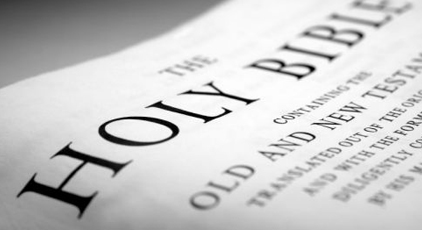
holybibleOf course, there is a place in our Christian faith for feeling, but not at the expense of sound doctrine. God is an emotional Being who created us as emotional beings, but He is also a rational Being who has constructed the universe by rational laws. We are to love Him with our minds as well as our hearts.

To underestimate the value of good doctrine threatens the essence of our faith. Without sound doctrine, we can never know if we have fellowship with the Holy Spirit or an unclean spirit. A lack of sound doctrine allows Satan, the father of lies, to exploit and destroy gullible people while they feel warm and fuzzy.

In the Christian faith, doctrine is based upon facts. Christianity is not an idea, but a historical faith. Its doctrines are based upon the actual work and consistent character of God through Jesus Christ and His people over 2,000 years of recorded time.

These works of God in history are recorded in the Bible for all to read. Doctrines are formed on the basis of what God has done in real people, not upon an enlightenment experience someone had on a mountain top.

The life of Christ, his death and resurrection lie at the crux of our faith. People saw, touched and spoke to the living Christ. They experienced His healing, deliverance and mercy in multiple ways. More than five hundred people saw Him alive after His resurrection. If these events never happened, all of our religious emotion is wasted.

Our doctrines regarding God, Jesus Christ, sin, salvation, prayer, truth, repentance, baptism, the Holy Spirit, the holy life, eternal life and death, the Great Commission, the church, scriptural inspiration—all these doctrines depend upon historical facts, not arbitrary decisions made by people who get emotionally “charged” by them.

In Christian faith, religious emotion is never the beginning or end in itself, but the product of what God does in our lives. We can know what is or is not of God only if we have sound doctrines based upon God’s workings in history that help us to discern genuine from counterfeit.

We develop sound doctrine as we regularly study our Bibles and its record of God’s work. Soon, we begin to sense that certain ideas in our culture are right while others are wrong. We become less likely to become cultural victims and develop a foundation for true transformation by the renewal of our minds (Romans 12:2).

The Bible and sound doctrine are profound gifts of God’s grace. Let us grasp them, thanking Him who has given His life to free us from the enemy’s lies. Let us also remember to pray and give so that hundreds of millions of people in India still without this truth will walk out of darkness and into His Light.

Claiming Our Inheritance

In December 2011, ABC News carried the story of an anonymous Kansas City woman who received $6.1 million, the largest unclaimed money award in U.S. history. Generations ago, her ancestors had invested in a long-forgotten company, and she was the lawful beneficiary of all that had accumulated. The story also said that throughout the U.S., $32 billion of unclaimed money is waiting for its rightful owners. Sometimes, those waiting funds can be huge.
The lesson here is obvious: when we do not claim our inheritance, we may lose out—big time. 2013_01_29_09_54_370004

The Bible tells us that His chosen people lost out on their inheritance—big time. God gave to them the land promised to their forefather Abraham hundreds of years earlier. Claim all the inheritance, God told them through Joshua, their leader, and He would drive out all their foes. But compromise their integrity with godless peoples, temper their obedience, and marry pagan women, and they would suffer indescribable hardships.
Israel’s inheritance from a gracious God went beyond value in time and money. God’s great inheritance carries with it great blessings that can bless untold multitudes of peoples. This is always God’s heart—to bless as many people as possible with the inheritance He gives us. Anything less than the best becomes a snare, a trap, a whip on our backs and thorns in our eyes.
But history shows that the Israelites forsook the blessing of God. They compromised with the world. They forsook the precious inheritance of God for what is passing and trivial.
They forgot God. The nature of God’s inheritance includes not only what He gives, but reflects the nature of God Himself. With God, inheritance is always relational, because God is relational.
Like the Israelites, God has also blessed us with every spiritual blessing. He has chosen us before He created the universe. He has adopted us as His children. He has redeemed and forgiven us. He has showered upon us the riches of His grace. He has given us an inheritance whose height, depth, width and breadth are without measure. He made this available to each of us at no cost to us but the highest cost for Himself.
May we not let God become a stranger to us!
“Delight yourself in the Lord,” writes David, the man after God’s own heart. Become enamored with the perfections of God. Let God’s perfections become the model for the way you live your life. Recognize in God the fulfillment of your deepest desires.
There is no love like God’s love, no joy like God’s joy, no peace like God’s peace, no patience like God’s patience, no kindness like God’s kindness, no goodness like God’s goodness, no faithfulness like God’s faithfulness, no gentleness like God’s gentleness, no self-control like God’s self-control.
God’s inheritance exceeds monetary value. What He is willing to give exceeds our ability to imagine. God is delighted when we take His challenge to stretch our imaginations to take in all of His grace and claim all our inheritance.
But there are still millions of people in India and elsewhere who still have no idea what we are even talking about. If only they knew—God’s inheritance awaits for them as well. Let us make sure that they do not miss out on what God intends for them!

Christ is All

This past January, the theme of our 89th annual convention was “Christ Is All,” based upon Colossians 3:11.

Read that passage, and also Luke 24:27, where Jesus explains to His two followers on the road to Emmaus how even the earliest scriptures up through the prophets spoke of things concerning Jesus Christ.

fingerHow we all need to daily remind ourselves that “Christ Is All”! The two disciples on the road to Emmaus were terribly depressed and discouraged by the awful events that led to Jesus’ totally unexpected humiliation and crucifixion (though He had warned them of these things beforehand). At that moment, they were so wrapped up in their own grief that they failed to recognize Jesus Himself in their midst.

The reason for their depression was that they forgot how fully Christ really is all. They failed to understand the very scriptures that they no doubt had memorized from childhood.

They were overcome by circumstances rather than truth. Unknowingly, they allowed events and theological fads of the day to dictate their interpretation of scripture rather than let God speak for Himself.

They allowed themselves to pick apart the smallest details of scripture while remaining blind to the scripture’s overall plan and purpose. When Jesus cleared the cobwebs from their thinking, we are told that their hearts burned within them at their own blindness. As Jesus opened their eyes to truth, their hearts and minds were set free.

This happened, not to godless men, but to the best of men. If it happened to the most spiritual men of that day, it also can happen to you and me. How easily we can allow our own present circumstances to twist the clear teachings of scripture! If you are grieving endlessly over the state of things right now, you share their same weakness!

How quickly we forget that Jesus Christ is at the center of all scripture from Genesis through Revelation! How quickly we forget that Jesus Christ is at the center of history and controls it! Jesus’ life was not snatched from Him by wicked men more powerful than He, but rather, He gave up His life as a ransom for many. It was all part of “The Plan” that leads to a New Heaven and New Earth.

Likewise, all the circumstances that cause our own distress.

Whatever troubles us, Christ is still all and controls all. Like the two men on the road to Emmaus, we all face personal weaknesses of body, soul and spirit. We face economic and political instability, and even collapse. We face persecution and slander from enemies of the gospel.

In short, we face the same challenges faced by the two men 2000 years ago. But Jesus continues to walk the same road with us, eager to open our eyes and cause our hearts to burn within us as He shows us the truth. Will we allow Him to pry our self-imposed scales from our eyes?

When we see and know the truth that sets us free, we will, like the two men, tell others what we have seen and heard until all of India and the world will have the truth that sets free.

Tagged , , , , , ,