Tag Archives: gospel

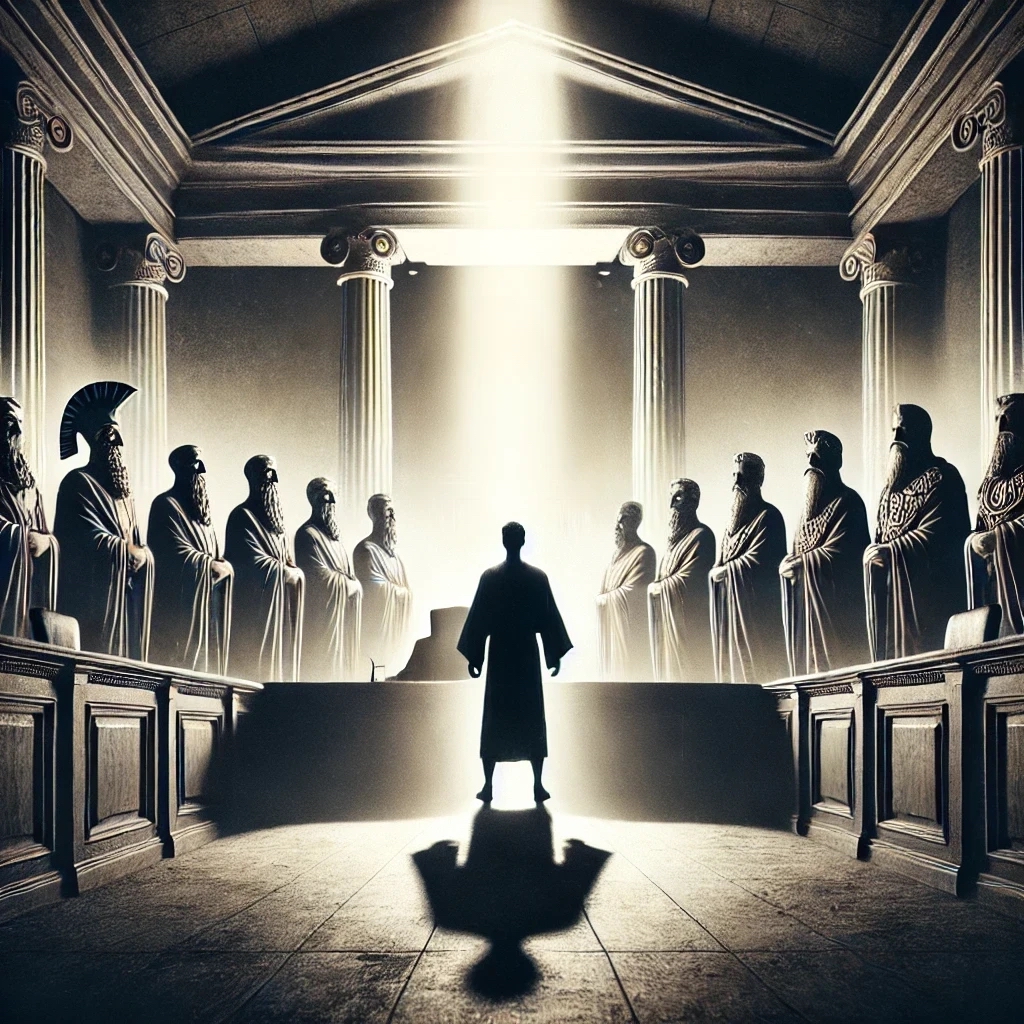
When Kings Tremble

As we follow Paul’s ministry in the Book of Acts, we note that at Paul’s conversion, Jesus told him that the day would come when he would proclaim the gospel before kings (see chapter 9).

That day arrived when he was arrested and stood before Ananias, the high priest, followed by appearances before Antonius Felix, governor of Judea, Porcius Festus (Felix’s successor), and then King Herod Agrippa and his wife, Bernice (read Acts 22-26).

All these rulers were known even in their own day as corrupt tyrants, marked by greed, incest (Bernice was Agrippa’s sister), violence, plunder, cowardice, disrespect for God and man alike.

The historian, Josephus, contemporary of Jesus, Paul and all these potentates, has much to say about these rotten excuses for leaders. For example, Ananias, the high priest, sold food meant for ordinary priests for his own profit, causing priests and their families to starve to death. He betrayed his own people to the Romans and was eventually murdered for his betrayal.

Nothing changed their eternal destinies even after Paul, filled with the Holy Spirit, eloquently and fearlessly gave them the gospel. These oppressors paved the way for Paul to present his case to the most powerful (and corrupt) of them all—Caesar himself, namely, Nero.

Not everyone is called by God to such daunting service. But God formed in Paul an intensity of purpose that allowed him to face this challenge with dignity and grace.

Still, we might ask ourselves, why did God require this sacrifice by Paul, since none of these monsters ever actually bowed the knee to Christ?

We must remember that God not only wants us to join Him in heaven one day, He also wants to revive and reform human society on earth as it is in heaven. Jesus mandated His followers to disciple the nations. This can happen only when governments cease to actively obstruct the gospel and human dignity.

During Paul’s day, 25-40% of the Roman Empire’s peoples were slaves. Women and girls had minimal rights. Life was cheap. People lived in fear of death by torture or crucifixion by unpredictable and unaccountable rulers obsessed with power, not truth. Even their religious leaders were hopelessly corrupt.

God called Paul to start the reformation of government by clearly and fearlessly proclaiming Christ to the powers of his time. They did not submit, but we are told that Felix “trembled” and Agrippa was “almost persuaded.”

Though they did not heed, others also must have heard—and they were persuaded.

We get a strong hint of this in Philippians 4:22 where Paul sends greetings from “the household of Caesar” who followed Christ. The “household of Caesar” included all kinds of people in service to Caesar ranging from slaves to high government officials in positions of influence and authority.

Even when the most powerful refuse to believe, the gospel still penetrates to the highest and most degenerate parts of society. As a result, Christlike values begin to permeate the culture.

Wherever and to whomever the gospel goes, even if they refuse to submit, Jesus makes His mark. When we submit to Christ as Paul did, His Word, spoken with Holy Spirit power, will never return void. In the end, God always wins, even when He appears to lose.


Tagged , , , , , , , , , ,

The Heart of a True Shepherd

Do you want to know what kind of person the apostle Paul would advise you to have as the pastor of your church? If you read Acts 20, you will get a good idea from his parting words to the elders of the church at Ephesus.

The elders were responsible for leadership and oversight of the church. They taught, preached, guarded against false teachers, encouraged believers, prayed for and visited the sick, decided doctrinal matters and trained new believers.

Paul must have done a good job with them. The church of Ephesus became one of the strongest of the early churches. This was a mighty feat, given that Ephesus had lived for more than 1,000 years under the worship of the goddess, Artemis. How did Paul do it? We are most blessed that Paul shares with us the ingredients of his successful recipe. I call them the “ten commandments” for making a good elder/pastor:

  • Paul taught the Ephesians with “all humility and tears.” What powerful words! Paul exhibited a strong empathy with the Ephesian people that he shepherded, whatever their background. They knew he was on their side and wanted only their best.
  • He boldly taught the truth. He left out nothing they should know. He held nothing back, even if it might make them uncomfortable or cost him popularity.
  • He preached the same gospel to all. It didn’t matter what their background was. That gospel required repentance before God and faith in Jesus Christ.
  • He willfully placed his life in the hands of God, knowing some in the community would become offended at the truth and speak evil against him.
  • He knew he had a definite call of God to preach. He had a single-minded purpose and desire to complete the mission God had given him. He would not be swayed by lesser things.
  • He kept a clear conscience, knowing that he preached all that God commissioned him to preach. He preached the whole counsel of God, never mincing his words, so that he comforted the afflicted and afflicted the comfortable.
  • He took care to shepherd his people as Jesus would shepherd them, willing to give up his life on their behalf if necessary.
  • He remained alert for those who entered the flock and led others astray by charisma, smooth talk filled with false and perverse, but attractive-sounding, things.
  • He depended daily upon God to help him do what he could not do in himself alone. He trusted God to build up his own faith as he built up the faith of his people.
  • He especially bent over backward to help those who were weak, giving sacrificially of himself.

What did Paul teach the Ephesians? The epistle to the Ephesians gives us a good idea. Martyn-Lloyd Jones preached at least 232 sermons from this epistle, portraying Paul’s high view of the gospel, a profound portrait of what God intends. Is this the gospel coming to you from the pulpit in your church? Is this the same gospel that guides your life, family and community?

This gospel preached by Paul reflects the life of a man who has met God, witnessed His glory and is completely sold out to Him. May all our pulpits become filled with like-minded pastor/teachers who deliver the message of God, true to the Word and in great power and truth.

Tagged , , , , , , , , , , , , ,

Bridging Cultures: Paul’s Approach

Paul’s visit to Mars Hill in Acts 17 has some important lessons for us today as we confront a culture that has become almost as pagan as the Athenian culture Paul confronted.

In many ways, the Athenians of Paul’s day resembled our own. Yet Paul made an impact upon these heathens, and some of them had their eyes opened. This should encourage us in our own day.

See if you recognize some of these Athenian traits in our own day: rationalism, materialism, relativism, promiscuity (even in religion), rampant sexual perversion, i.e., homosexuality and pedophilia, human trafficking (in this case, slavery), worship of beautiful people, belief that education is the solution to society’s problems, a two-tiered justice system, just to name a few.

Like many people in our own day, these jaded people had no knowledge or trust in inspired scriptures. Quoting from the Old Testament would have meant nothing to these elites steeped in Epicurean and Stoic philosophy, and worship of many gods and goddesses.

Indeed, when Paul first began to speak to them of Jesus, most of them initially brushed him off as an “idle babbler” and a teacher of “strange deities.”

Yet Paul never assumed the privileged Athenian know-it-alls were too far gone for redemption. These pagans also possessed the image of God. They had eternity in their hearts, and these facts inadvertently revealed themselves in the pagan philosophies of the day. So he approached them through the very words of their own philosophers who possessed some truth–though not all of it. For example…

Sometimes we quote Paul, who said to them of the Creator God, “In Him we live and move and have our being,” not knowing that we are actually quoting a pagan Cretan philosopher named Epimenides (c.a. 600 BC). Through such links with their own thinkers, Paul led them to consider Jesus Christ. We are told that his approach struck a receptive chord. Some of them stopped laughing, listened to what Paul was trying to tell them—and they believed!

Paul demonstrated that before we can effectively communicate the gospel to anyone, we must first understand where they are coming from. Only then can we link them to Jesus. We must love them even as God loves them, knowing that Christ died for them as He died for us. The Good News resonates with people of every background—if we take the time to know them and present the truth in a manner they best understand.

Some teachers at IGO training centers and many graduates come out of Hindu, Sikh, Muslim or Buddhist backgrounds—religions regarded by many westerners as “unreachable.” But today, they communicate Jesus Christ to their own people. In many ways, evangelists and church planters from non-Christian backgrounds are the best gospel communicators of all.

Dr. Mahendra Singhal, a former Hindu who knows Hindus and leads an outreach to Hindus, has said, “Hindus believe in going to the extremes in showing love to someone… I have discovered in my witnessing to Hindus that they are generally moved by the depiction of Jesus on the cross to validate His love for us.”

Paul’s approach still works. May his approach become our own as we stand for Christ where we live, work and learn!

Tagged , , , , , , ,

Resistance Against Truth

“These men have upset the world!”

These charges were leveled at Paul and Silas after they preached the Good News in Thessalonica. They must have done a great job in making the gospel clear to all who heard them. Acts 17 tells us that many people came to Christ, both Jews and Gentiles. For these people, the gospel was a welcome fragrance.

To others, it was the stench of death. Some Jews hated the message, and wanted to make Paul and Silas pay for ruining their day. They accused Paul and Silas of promoting another ruler besides Caesar. These Jews hated the rule of Caesar, but they hated Jesus even more.

This episode illustrates a truth about the Good News. Even when clearly presented, it will win some and infuriate others, even to the point of violence. In one person, the Holy Spirit brings new life; in another, the gospel reveals spiritual death.

Why do people reject the gospel? Such people love their sin above all else and resent having it exposed by the light of Christ and told that it is evil. They want to call evil good, to run their own lives without accountability to anyone, including God who made them.

No doubt some people who opposed Paul and Silas were religious, but they were dead to the true God. They wanted to turn the truth of God into something that sounded moral and sounded comfortable. As such, it was something less than truth. They preferred a god that helped them feel good about themselves, not repent. When Paul and Silas reminded them of their sin and God’s holiness, they recoiled.

Paul and Silas did not follow the seeker-friendly approach popular in many churches today. The seeker-friendly approach may lead people to adopt certain ideas from the Bible that appeal to them, but fail to reveal sin leading to repentance. They become devoted to their own ideas of God more than to God Himself.

A spiritually dead person can have spiritual longings, but they are always less than God. They still hate the true God even when they speak in moral and spiritual ways. In real life, they operate according to natural thinking.

The seeker-friendly approach operates on the false premise that one can share the gospel and lead a person to God without upsetting anyone. The seeker-friendly approach is a sign of how much the culture has impacted the church more than the church has impacted the culture.

George Barna reports that in his research, he has found that only 6% of today’s adults have a biblical worldview. The average American church person’s dominant worldview, he says, is syncretism, a collection of contradictory beliefs pasted together to suit themselves. A growing number of people in churches believe in reincarnation and that people are basically good. Fewer pastors preach the gospel with the clarity of Paul and Silas.

Jesus came to destroy the works of the devil. He has already defeated Satan at the cross and invites us to join Him in enforcing His victory. He also warns us that Satan will go down swinging hard.

Let us move forward like Paul and Silas, assured of victory but also steeled for resistance from those who refuse to bow the knee to the King of kings. Let us remember that Jesus has already won.

Tagged , , , , , , , , , , ,

Resolving Differences: Acts 15’s Guidance

Acts 15 demonstrates what we must do when disagreements and differences arise in the body of Christ. Disagreements will arise. We are all imperfect followers of Christ with limited and slanted views due to heredity and environment, subject to influence by a common enemy, the devil. That devil seeks to sow discord and division among us. He wants us to major in minors, to blind our eyes to the main focus, to foil God’s redemptive purpose.

In Acts 15, growing numbers of Gentiles were becoming Christ-followers. For a while, the Christ-followers were mostly Jews. Should these former pagans be compelled to obey the Jewish law? Those believers who were once Pharisees thought they should. Others said, “Not so fast!” The apostles called a special council at Jerusalem to discuss the growing controversy where Paul and Barnabas related the Spirit-filled signs and wonders that came upon the Gentiles.

At last, Peter concluded, “We believe that we are saved through the grace of the Lord Jesus, in the same way as they [the Gentiles] also are” (Acts 15:11). On this point, everyone could agree, and that settled the matter. The grace of God through Jesus and the cross was the common foundation for cooperation between Jewish believers and Gentile believers, not the Jewish law.

Later in Acts 15, a second source of division arose involving a personal dispute between Barnabas and Paul over a relative of Barnabas, a younger man named John Mark. This young man joined with Barnabas and Paul on their first missionary journey but deserted them in Pamphylia after they experienced rough going in Cyprus.

Later, when Paul and Barnabas went back to visit some of these places, Barnabas suggested that John Mark join them, but Paul objected. When they could not agree, they went their separate ways. Barnabas is never mentioned again in Acts.

But this did not end their basic respect for one another. In 1 Corinthians 9:6. Paul praises Barnabas, and in Galatians 2:11-13, Paul describes another event in Antioch that includes Barnabas. Whatever their disagreement over John Mark, they did not let it replace their common goal: to preach and demonstrate the love, grace and power of God through Jesus Christ.

Human passions initially got in the way, and they did gospel work separately for a time, but they did not allow their differences drive them apart. In time, Paul came to see the value of John Mark to the common purpose. Barnabas and Paul refused to speak ill of the other.

They worked within their human limitations as fallible humans, but they never forgot their common purpose: the grace of God through Jesus Christ. The Great Commission continued to advance.

Let these two examples from the past teach us all today. More often than not, our churches and fellowships are motley collections of people from vastly different backgrounds and perspectives who should come together because of a common fellowship in Jesus Christ.

Too often, churches, groups, families and friendships split over personal and extra-biblical matters that have nothing to do with God’s priorities. In doing so, we mock and belittle Christ and His sacrifice.

Let the love and grace of God through Jesus Christ always remain as the cornerstone of all we say and do so that we become salt and light in this world.

Tagged , , , , , , , , , , ,

Unexpected Jesus Follower

The miraculous conversion of Saul of Tarsus gives us hope for our own day.

Saul of Tarsus was the last person anyone expected to follow Jesus Christ. That he would later become the missionary to the Gentiles, willing to face beatings, stonings, prisons, shipwreck, and to lose his life for the sake of Christ was beyond unthinkable to anyone who knew his murderous reputation.

Already, he was implicated in the death of Jesus’ first martyr, Stephen. He possessed a fanatical hatred and fury against Jesus’ followers that rivaled or surpassed that of today’s radical terrorists. When Jesus’ followers fled Jerusalem to escape him, he chased after them, determined to destroy this affront to his beloved traditions. Who knows how many more believers died at his hands or at the hands of those who followed his orders?

In Galatians 1, we read his own description of his total devotion to the faith of his forefathers. The more people who followed Jesus Christ, the more infuriated he became. Nothing, he resolved, would or could stop him from achieving his goal of 100% eradication of Jesus’ followers and Jesus’ memory from the earth. And then…

On the road to Damascus, he met Jesus Christ face-to-face. In a split second, Saul’s life—and our own lives and destinies—were forever reversed.

In that split second, Saul of Tarsus became the man later known as Paul the Apostle, the greatest Jesus-believer the world has ever known. Everyone who reads this piece owes an unpayable debt to him and to Jesus Christ, our risen Lord, who made it all possible.

In those dark days before the light from heaven blinded Saul of Tarsus, most Jesus followers wondered how long it would take before that determined killer caught up to them. They did not count on what God was about to do to change the course of history.

In our own dark days, with so much demonic activity in India and our own nation arrayed against the advance of the gospel, is it not also hard for us to believe that anything will soon change? By the day, everything seems to get worse and worse and worse.

Many prominent Christians even say we live in a post-Christian age. Many of our children and grandchildren, raised in the church, are deserting the faith in droves for New Age, witchcraft, drugs, transgenderism and the like. We are told we will live as powerless exiles on the outskirts of Babylon until Jesus raptures us out of the mess.

But God never adopts a losing scenario. He is the same yesterday, today and forever. He is the same God who reversed the life of Saul of Tarsus in a split second. Jesus’ life, death and resurrection, the coming of the Holy Spirit—and Saul of Tarsus’ conversion—remind us that God’s work on earth never retreats but advances.

What God has shown us in the past is a foretaste of what He plans for the future. The greatest works of Christ have yet to take place in India and the world, in this country, in your lives and in the lives of those we love.

Surely, that day will come in a moment, like the conversion of Saul of Tarsus on that Damascus road. Pray and praise God for that day!

Tagged , , , , , , , , , ,

How to Convince Many

Often, Christian witness today is based upon apologetics—rational arguments. While apologetics has importance and may win a few people to Christ here and there, too often we are satisfied with a few. The problem with apologetics is the likelihood for someone to make counter-arguments and excuses. The arguments may go on forever.

Acts 3 demonstrates that in the power of the Holy Spirit, our witness can become an irresistible force with which no one can argue.

Acts 3 begins on an average day with Peter and John just before afternoon prayer at the temple. They confront a lame man. For years, the man was a fixture at the temple gate, eking out a living in the only way he knew—begging. Most likely, Peter and John had noted the man before, but on this day, the Holy Spirit enabled them to really see him.

They did not just stop to toss him a coin or two, or ask God to bless his day with successful begging. Instead, they invoked the authority of God to heal the man. That day, the man, lame from birth, stood and walked.

A great crowd saw the miracle and gathered around, amazed. They were not hostile. They gazed in wonder. They all had seen this man for years, carried in and carried out, unable to move on his own. Now, he was running and leaping in joy. The healing of the lame man got their attention.

Peter and John quickly told them it was not their own power, but the power of Jesus that healed the man. A few weeks earlier, some of the people who heard this had called for Jesus’ crucifixion, but they did it in ignorance, not knowing who Jesus really was. Peter told them how the prophets prepared the way for Jesus and for this day. This healing was a sign that a time of great restoration had begun that will eventually rid the world of Satan, evil and death.

The amazed people hung on to Peter’s words. In Acts 4, we read that at least 5,000 men believed the message because of what they saw that day.

A display of God’s power prepared the way. The people could not deny what happened. Arguments alone would not have won so many people.

This same power of God is available in our own day. Our evangelists in India, many from non-Christian backgrounds, experienced healing and deliverance which brought them to Christ. Now, they go into unreached areas doing the same works in the power of the Holy Spirit that changed their own lives. Acts 3 is taking place all over India today—power encounters that convince many that Jesus’ power exceeds the power of their old deities.

Acts 3 is our model as well. Let us not be cowed by the anti-supernatural element in many of our churches that tries to preserve an orderly status quo but paralyzes our influence. Let us not say we aren’t good or pious enough for this. Like Peter and John, we have been made clean by the blood of Christ.

Around the world, people are convinced more by God’s power, less by arguments. In today’s evil world, why would Jesus abandon his most powerful weapons against Satan? Jesus is the same yesterday, today and forever.

Tagged , , , , , , , , , , , ,

God’s New Thing

In our troubled days, it is good for us to remember and practice what Jesus’ disciples learned and did as they faced their own days of uncertainty when Jesus left them and ascended into heaven.

The memory of Judas’ betrayal of Jesus was fresh. Yes, Jesus rose from the dead, just as He said He would. But now, He did something totally unexpected. He was not about to restore the kingdom of Israel as they hoped. Instead, Jesus was about to leave them.

This caught them unawares. Now, the future became a question mark to them. Their expectations became irrelevant. Instead, Jesus promised them the coming of the Holy Spirit about whom they knew nothing. In effect, Jesus told them, “You are at the beginning of a New Thing.” But they still didn’t understand the implications of that “New Thing.”

In His departing conversation with His disciples, He gives them at least five instructions as they wait for this “New Thing.” His instructions carry down to us as we wait for God’s “New Thing” in our own time of uncertainty and change:

  • Give up your own expectations.
  • Trust Christ Himself alone—He has the bigger picture.
  • Don’t try to figure out the future. Live in the present and leave the future to God.
  • Trust the power of the Holy Spirit to take you to the promised “New Thing” about to happen.
  • Continue in prayer and supplication before God, and expect God to answer with great and mighty things.

This was a huge and painful paradigm shift for the disciples, but they still trusted Jesus to do what He promised.

Acts 1 tells us that 120 followers of Jesus gathered together and prayed “steadfastly,” that is, without distraction. They prayed “continually,” that is, with perseverance. They prayed “with one accord,” that is, with united focus on Jesus’ instructions. They prayed “with the women,” that is, with those they normally didn’t pray with but who shared the same Lord and destiny.

The Greek word for “to pray” (see also 1 Timothy 2:1) indicates they prayed prayers from the heart directly to God, not as a rote religious ritual. They did not just voice wishes but direct and specific requests of God. They kept a spirit of thanksgiving, remembering Jesus’ miracles, His resurrection, and everything else He did in love for multitudes of people. They knew they were not abandoned, though they still didn’t understand the profound changes about to happen.

They did not focus upon their weaknesses and failures. Their small number did not trouble them, nor the formidable power of the Romans or the impressive religious establishment. The size of the unbelieving community did not sway them, nor did their lack of social or religious influence.

They kept focused on the promise—the good future to which Jesus pointed them and the power He had already displayed in their own lives and those of others.

In our troubled days, let us remember that Jesus has not changed. The promise of the Holy Spirit He gave to His followers comes down to us today. Let us continue to follow the instructions Jesus gave His uncertain followers that we might live out the “New Thing” God has for us in our own day and for a world that still does not know Him.

Tagged , , , , , , , , ,

Living in Truth

As we enter Easter month, our series from the Gospel of John brings us to chapter 18, one of the grimmest chapters of the Bible. This chapter recounts the betrayal and binding of Jesus. What makes this chapter especially grim is that Jesus’ betrayal and binding take place at the hands of people who should have known better.

Judas Iscariot was Jesus’ own disciple. More than anyone else at that time, the disciples experienced Jesus’ love and saw countless numbers of His miracles. Along with other disciples, Judas preached the gospel of the kingdom. Jesus commissioned him with power to heal the sick and cast out demons. Yet this man who saw and experienced so much of God threw it all away for 30 pieces of silver.

Annas and Caiaphas were relatives. Each served as high priest and headed the powerful Sanhedrin, the assembly of elders. They knew the prophecies concerning a coming Messiah, but they chose to interpret them their own way. Instead of seeing the obvious signs of Jesus’ divine presence in their midst, they chose their own political and religious agendas over the truth of God, corrupting themselves and helping to condemn generations of their people.

Pontius Pilate, the cynical (“What is truth?”) Roman governor of Judea, saw through the jealousy and false accusations of the Jewish religious hierarchy. He found Jesus innocent of any crime, but still gave up Jesus to the mob for crucifixion. Cheap politics paralyzed his ability to do the right thing when it counted.

We look with horror at these villains who should have known better and wonder at how wickedly they tortured and killed the Lord of glory. But we should also examine ourselves for times when we bind Christ in what we do (or don’t do) and say. For example . . .

Do we read the Bible as a religious habit rather than to hear His voice and express more of His light and glory through our lives to a darkened world around us?

Do we secretly judge others for whom Christ died and rose again, acting more like Annas and Caiaphas than our Lord and Savior who died for us?

Do we regard Jesus as something less than Son of God, King of kings, brother and best friend?

Do we deny Christ by behaviors/attitudes that clash with our professions of loyalty to Christ?

Do we tie His hands, through unbelief, from doing His mighty works through us?

Do we fail to trust Him with the issues of our lives, with the lives of those with whom we live and work, and those in places of authority in government and culture?

Do we fail to live the gospel in its fullness, or deny to the world the salt and light that Jesus intended to come through us?

Do we fail to obey Christ when His commands conflict with our understanding and desires?

Thank God that Jesus Christ did not stay bound! After three days, He rose again and destroyed the power of death and every other weapon of Satan. In His boundless love, He has forgiven us and given us His Holy Spirit to help us. Let us confess our sins and thank God for His everlasting love for us in spite of ourselves. Then let us tell everyone how He has taken away our sin and overcome the world.

Tagged , , , , , , , , ,

Not of, yet in

We live in a depressing and troubled world.  We face many trials in our personal lives and as a society.  It is tempting for us to want to escape it all.  In the past century, rapture theology has become extremely popular in many churches.  Many people spend much time wishing God would “take them home.”

Personally, I believe the Bible teaches the rapture, but in these troubled times there are other important things we must keep in mind, otherwise we will find ourselves in rebellion against God and His purposes.

In John 17, Jesus’ prays for His disciples (and for us).  His prayer does not allow us any kind of escapist thinking.  He prays, “I do not ask You [God the Father] to take them out of the world, but to keep them from the evil one” (v. 15).

As Jesus’ prayer makes clear, we are not of this world, run by Satan, but Jesus does not want to remove us from the world.  The previous chapters indicate He has too much for us to do for us to leave.  He wants to replace Satan’s kingdom with His own.  He wants us to become involved with Him in making it happen.  We can’t do that if we get raptured or retire to the sidelines of life and wait for His return.

In this prayer, Jesus asks God to sanctify them (and us) in the Truth for the task—for here and now.  He sends them (and us) forth into the world—now.  He wants them (and us) to live in unity—now.  He gives them (and us) the power to live in His glory—through His Holy Spirit.

The gospel of the kingdom has not been well taught in many of our churches.  As a rule, the church has not generally lived in unity in the power of the Holy Spirit.  Our governments, educational systems, businesses, media industries, arts and entertainment, etc. all seem under the domination of anti-Christ forces.  Non-Christians have called the shots while the church reacts defensively to the world instead of taking charge as Jesus commanded.

For Jesus to rapture His church now would signal defeat—a failed experiment.  Defeat is never in God’s vocabulary. His original plan has never changed.  

Who of us will remain faithful to Christ’s original aim to establish His kingdom on earth as it is in heaven?  Who of us will live in the world and take the world for His kingdom in the power of the Holy Spirit?  That’s what our troubled world really needs right now—a united church, empowered by the Holy Spirit, ready to represent Christ in every facet of our cultures and societies.

Has the Great Commission been fulfilled in India and the rest of the world?  Has the kingdom of God come to earth through the church as Jesus envisioned?  Is there unity in the body of Christ?  If not, then we are not yet finished with our tasks on earth.  Let’s not think of escaping quite yet!  We must stay around until we have done it all Jesus’ way.

Elsewhere in the gospels, Jesus tells us to “occupy until I come.”  In other words, keep busy for Him in the here and now and let God the Father decide His future return.

Tagged , , , , ,