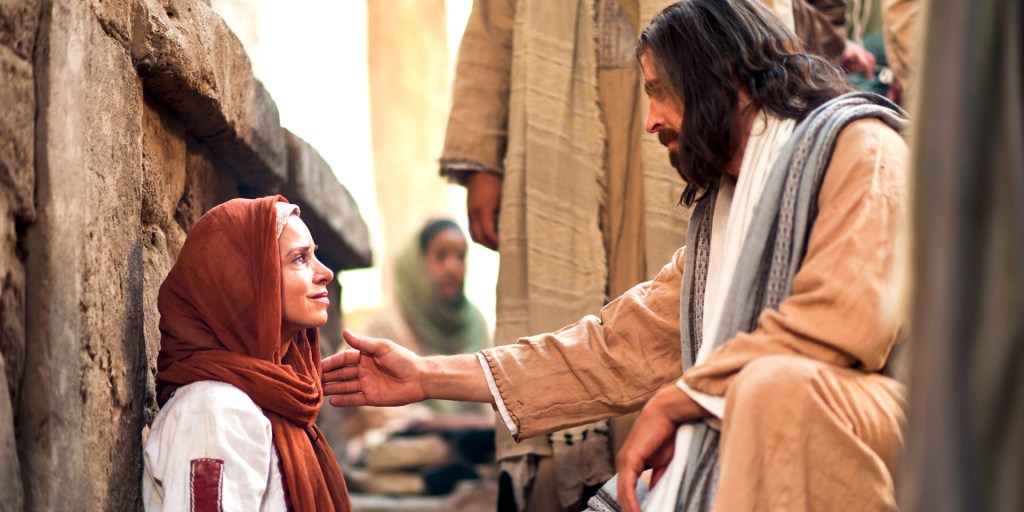
Is the God of the Old Testament different from the God of the New Testament? Some people think so. They see God’s judgment of the Canaanites as the work of a vindictive and bloodthirsty spirit.
The story of Rahab in Joshua 2 destroys that narrative. God is the same yesterday, today and forever. God always looks for people He can save. He often finds uncut gemstones even in the filthiest muck. He found it in Rahab, the harlot.
At first glance, Rahab seems an unlikely candidate for God’s favor. Some people rationalize that Rahab was an innkeeper, but other references in both Old and New Testaments indicate she was indeed a prostitute. She plied her trade in the walled city of Jericho, destined for destruction by God through the Israelites.
So why would God save Rahab whose life represented the depravity that God wanted to destroy? Was it because she risked her life in helping to save two Israelite men who came to spy out the land? Was it because she recognized the sovereign power of the Israelites’ God?
Yes, but I believe there was even more: Rahab and her household were saved because she joined in the covenant of faith with the God of Abraham, Isaac and Jacob right along with the Israelites.
When Rahab begged the two spies to save her life along with the lives of her family members, the two spies told her to hang a scarlet rope outside her window to identify her living place. The two spies vowed that the presence of the scarlet rope would save from destruction all those she gathered with her.
That scarlet rope became to Rahab and her family like the Passover Lamb became to the Israelites when God led them from Egypt to the Promised Land.
Her act of faith in God separated her and her family from the doomed people of Jericho. That scarlet rope was visible for all her people to see. Rahab acted in faith that God would faithfully save her and her family from His judgment—something she did not deserve but acted to claim for herself. Her family members acted with that same faith when they gathered with her.
Such faith and obedience were counted to Rahab and her family as righteousness just as real as the righteousness of faith that separated Abraham from his pagan society. Rahab was later entered into faith’s hall of fame (Hebrews 11:31), a woman of good works (James 2:25) who even entered the family tree of the Lamb of God Himself (Matthew 1:5).
If more of Jericho’s people had demonstrated the faith of Rahab the harlot, they, too, would have been saved. We can say that from what happened later with the cruel and wicked city of Nineveh that came under God’s judgment but repented in sackcloth and ashes and were all spared (Jonah 3).
God’s grace is greater, more inclusive and more ingenious than we know. This should give us great encouragement as we pray for wayward loved ones, nations and radical haters of the gospel who seem totally resistant and “impossible” to change.
May each of us learn to think more like God thinks so that we will pray with greater faith and expectancy for Him to work His grace in ways beyond our understanding.
The Canaanites were not ordinary enemies. Few peoples in history have matched Canaanite depravity. They comprised a body of various peoples who became so devoted to evil that God decided they must go or they would corrupt the whole human race.
They practiced every kind of twisted sexual immorality, child sacrifice and idolatry. They were proud of it. Their ethic was violence. They were physically large, abnormally strong and lived in fortified cities no one had conquered, not even the Egyptians with their mighty armies. An earlier generation of Israelites saw them and felt like grasshoppers in their sight.
The Canaanites had never been brought to account for their depravity and thought they were stronger than God. Even after they heard how God delivered the Israelites at the Red Sea, they refused to repent. Things were getting worse, not better.
For 400 years, the Canaanites tried God’s patience, but even God’s patience wore thin. He called upon the Israelites to destroy them. For their trust and obedience, the land of the Canaanites would become their own “Promised Land” forever.
By worldly standards, the Israelites were an unlikely people to do this. They were former slaves, nomadic shepherds and wilderness wanderers, not military people. But even the Israelites could conquer the Canaanites and take their “Promised Land” if they fulfilled the following conditions:
They were to be strong and of good courage. They were to be strong and courageous in God, convinced He would do exactly what He promised them because He was stronger than the enemy. They were inadequate in themselves, but they were not to fear the ferocity of the enemy because God would never desert them.
They were to observe all of the Law. They were to remember the covenant God made with Abraham and Moses. They were to obey God in everything He asked of them. They were to learn how to think as God thinks, not follow their own instincts. They were to heed all God told them, even when it did not seem to make sense. They were not to get distracted by other things but always hold the promises of God before them. Faithfulness to obey all of God’s word to them would prevent needless heartaches and setbacks.
They were to know that wherever they went, God was with them to bring success. To stand together in unity and trust God alone and not their own ways was the only sure way to success, even against a fierce and evil enemy like the Canaanites.
God’s word to the Israelites in the face of a vicious foe remain true today as we work together to take the Good News to all of India. We face many foes who defy God and are stronger than we are, with vastly more resources than we. Yet God guarantees victory as we remain strong in Him and think His thoughts. We have His promise that through us, the Great Commission will be fulfilled, and the knowledge of the glory of the God will fill India and the whole earth.
May God’s words to Joshua also encourage and strengthen you in these days as you remember His promises to you in the midst of your own challenges from seemingly unbeatable foes.
“For I the Lord do not change…,” Malachi 3:6 tells us.
God’s plan has never changed. As God’s redeemed people, how we live our lives means we must know what an unchanging God has always intended for us. Our salvation comes through the cross of Christ and has restored us to what God always intended for us before Satan robbed us by deceit.
To know what this means in its fullness means we can better join God in His work of redeeming all of India and the entire world from the power of Satan. So, what did God intend from the beginning?
In Genesis 1, we learn that God made us “in His image.” Often, we interpret this to mean moral, ethical and intellectual abilities. However, a more accurate view, based upon better understandings of ancient Middle East culture and Hebrew grammar, suggests a deeper meaning.
A more accurate reading of this text is, “Let us make man AS our image.” In ancient days, a ruler’s image in the town square signified that ruler’s sovereignty over that town. In other words, God created humanity as a sign of God’s rulership over the earth.
“According to our likeness” indicates that God has assigned to us an active role in rulership alongside Him. God has designed us to become His regents in the earth, to keep the world in order according to His will. To have “dominion” means to rule as God would rule, with wisdom, reason, good judgment and careful management over all things. Adam’s fall disrupted all of this. History records how we have failed miserably in our assignment.
Through His life, death and resurrection, Jesus has all authority in heaven and on earth (Matthew 28:18). All that Satan stole from the first Adam and his descendants (us) is returned to us by the Second Adam, Jesus Christ. By His authority, He has restored to us our lost authority as His image, according to His likeness, to have dominion. We are empowered through the Holy Spirit (John 14-17), spiritual gifts (1 Cor. 12) and the keys to the kingdom (Matthew 16).
Through the cross, these already belong to us. All we must do now is claim and use them.
With our authority, granted by Christ, we are to use them to complete the full defeat of our adversary, Satan. Of course, Satan wants to blind us to our authority so he can continue to steal, kill and destroy. But in the end, God will still crush Satan under our feet (Romans 16:20).
As restored sons and daughters of our King Jesus, we have the opportunity to join Him in restoring the earth to its former glory—occupying until He comes, declaring the gospel of the kingdom, discipling the nations, preparing the way for the kingdom of heaven on earth where the knowledge of the glory of God covers the earth as the waters cover the sea. Paul tells us in Romans 8 that creation groans, waiting anxiously for the revealing of the sons of God.
May our generation not let the groaning continue! Once again, by God’s grace, we are His regents on earth. Let us learn by His Spirit to fully incorporate our unchanged assignment into our lives to His glory and for the blessing of the whole world!
It is a fact that God uses men and women to accomplish His purposes. This is the pattern throughout the scriptures and church history. Some people think that this simply “happens,” or that some are “special,” but others are not.
This is not so. Rather, there are specific reasons why God uses some but not others, and these reasons boil down to the choices that we make, often early in life. Our choices determine whether we become good clay in the Potter’s hands.
As an example of this, I mention my own paternal grandfather, Pastor K.E. Abraham.
Some of my readers know his name, life and history. Church historians and members of other denominations recognize him as the founder and chief architect of the Indian Pentecostal Church. To those who want to learn more about his life and ministry, I refer them to numerous books and seminary dissertations, a biography, and his own autobiography.
All those who knew him well and have studied Pastor K.E. Abraham’s life agree that he was indeed a man of God.
I want to suggest some reasons why God used K.E. Abraham. As we understand these reasons, we can better understand how God can use you and me more effectively and fruitfully. When he died in December 1974, I was a very young man. But as a grandson who knew him intimately, I have learned not only why God used K.E. Abraham but also why He uses anybody willing for God to use them.
The writer of Hebrews tells us, “Remember those who led you, who spoke the word of God to you; and considering the result of their conduct, imitate their faith. Jesus Christ is the same yesterday and today, yes and forever” (Hebrews 13:7-8).
God shapes a leader over a lifetime. Some leaders finish well, others do not. A recent study of biblical leaders by a well-known Bible scholar indicates that only one of three leaders finished well. We all want to finish well. How do we do that? What are the ingredients of a well-lived life, used effectively by God? What can we learn from Pastor K.E. Abraham that we might experience the life that God uses for His glory and for the blessing of others?
RECOGNITION OF THE IMPORTANCE OF THE HOLY SPIRIT
From the beginning, K.E. Abraham knew that he could never live an effective Christian life apart from the power of the Holy Spirit. Christian life is not a matter of self-effort, religious temperament, or anything else. First and foremost, it is the life of the Holy Spirit working through him in every facet of life. He recognized early that Christianity is a supernatural power.
AN UNQUENCHABLE DESIRE TO LIVE BY THE POWER OF THE HOLY SPIRIT
A person can recognize the importance of the Holy Spirit without a desire for the power of the Holy Spirit. K.E. Abraham allowed that desire to consume his days and nights. In his prayers, he searched for the infilling of the Holy Spirit. He spent seven years diligently studying the Scriptures to understand the importance of the Holy Spirit. He even walked 100 miles from his hometown to spend time with a godly man, seeking to be immersed in the Spirit.
A STRONG SENSE OF CONVICTION
K.E. Abraham never wavered in his desire to seek God’s truth or do His will. Knowing that God is faithful, K.E. Abraham was willing to pay the price, whatever the cost. When he took a stand, he stood by principle regardless of where it led. That is the sign of a leader, in contrast to a politician whose decision is determined by the polls.
A desire for truth is not always understood by others, especially those who don’t seek it. K.E. Abraham found himself in the minority. Others misunderstood him. He endured harsh criticism and insults. His Syrian Orthodox church excommunicated and reviled him, but he passionately continued to search for the truth, knowing that God would vindicate him.
For six months, these events forced him to worship God in isolation. But when a cobra bit one of his neighbors, God worked through him to bring healing and demonstrate the truth that God revealed to him. After witnessing that healing, the priest who had expelled him six months ago asked K.E. Abraham to preach at the church the following Sunday.
FULLY SURRENDERED, TOTALLY FOCUSED
K.E. Abraham wanted nothing to distract him from God’s call over his life. He knew that a focused life is like a laser beam. He was a teacher, but he surrendered his job, his future, and everything he had to whatever God would do in his life. He gave all to God. He did not believe he was perfect, but he knew what was best, the Lord Jesus Christ and His work. He treasured it above all else and was willing to give whatever he had to get it. As Henry Varley once said, “The world has yet to see what God will do with a man who is totally dedicated to him.” Like Dwight L. Moody before him, K.E. Abraham said, “I will be that man.”
A SIMPLE LIFE
K.E. Abraham’s single-mindedness kept him from distractions. He travelled light literally and metaphorically, he did not clutter his mind, he did not give himself over to worry, he placed no value upon possessions apart from their relationship to the kingdom of God. That freed his spirit so that people could become more important to him than possessions. His simplicity was a conscious choice, a discipline he followed. But his simplicity was not merely a philosophy of renunciation. People knew him as a man of joy. He always dressed neatly, neither shabby nor ostentatious. He found himself at home among rich and poor alike because their possessions meant nothing to him. With no need to impress people with material things, he impressed people instead with his life.
A STUDENT OF GOD’S WORD
From the beginning, K.E. Abraham recognized that for God to use him, he must have the mind of Christ. This meant that he must hide the Word of God in his heart and meditate on it constantly. By the time he was only eight or nine, he had read the entire Bible several times. A priest discovered that not a single page of this child’s Bible was unmarked. As a young boy, he knelt, prayed, and studied the Word. Only this foundation made possible the unforgettable sermons that moved so many people or trained the many outstanding teachers who followed him. This emphasis kept the Indian Pentecostal Church balanced and free from extremes.
A MAN OF PRAYER
A person who prays knows his strength comes from God. God uses the praying person most effectively for His purposes. K.E. Abraham knew how to spend days in fasting and prayer. Even as a young boy, he began to develop a prayer habit. He took all manner of things to God. He closed himself off from others and from food to prevent any distractions. When he married a couple, he spent a day in prayer for them. He learned to trust God entirely for his needs, not even telling family members, so he could watch the Lord consistently bless.
CONSISTENT COMMITMENT TO GODLY VISION
Out of K.E. Abraham’s commitment to God’s truth through the Holy Spirit, the Word, and prayer emerged a godly vision for the World. This godly vision gave him a lifelong task from which he did not waver. As he depended upon God for strength, God gave him the strength to remain faithful in his task. K.E. Abraham’s vision was to reproduce people for the ministry through personal mentoring, and through them build dynamic churches. Because of his commitment to this godly vision, he produced people with a similar vision, willing to die if necessary for its fulfillment.
REGARD FOR MONEY AS A TOOL ONLY
As a person dependent upon God for all his needs, K.E. Abraham did not let the love of money or material gain consume him. He saw money as a tool to further God’s kingdom, not the dominant goal of a person’s life. He gave generously and with compassion to those in need. When he died, his account showed a balance of only 5 rupees, the minimum balance needed to maintain a bank account.
GREAT SENSE OF HUMOR
As a person dependent upon God through the power of the Holy Spirit, the Word of God, and prayer, K.E. Abraham was at peace with God and himself. This gave him the freedom to smile at life. It also provided apt humorous illustrations for talks and sermons. He had a remarkable sense of humor and a playful spirit that attracted him to children and grandchildren.
A HUMBLE AND NATURAL SPIRIT
As he came before the Lord, K.E. Abraham met him in different ways that changed his life. Recognizing his dependence upon God, he put aside dependence upon his own strength, social class or his own spirituality. Therefore those who met him recognized genuine humility. He put on no spiritual airs. Nor did he adopt artificial means to appear either richer or poorer than others to elicit sympathy or respect. He did not dress either rich or poor. He did not put himself above or below others whom he knew that God loved as himself. He discouraged all artificiality in others.
AN ABILITY TO SEE VALUE IN EVERY PERSON
K.E. Abraham saw God at work in all people regardless of age, class or caste. He realized that God does not set up barriers to separate us from one another. Where others made distinctions, K.E. Abraham saw people as equals to himself, as potential partners in ministry and fellowship. He instilled in people a sense of dignity. Therefore, he could influence multitudes of people from different walks of life.
A TRAINER OF PEOPLE
As K.E. Abraham depended upon God and His Word, he recognized Jesus Christ’s calling upon him to teach people to do the same. Because he could value all persons regardless of background, he developed an ability to mentor and train others from every level of life to positions of leadership. He recognized the potential in all kinds of people, regardless of their background. As a result, he prepared thousands of leaders and helped found hundreds of churches. Every person was always a potential person for him to help, teach, and develop God-given abilities. Wherever he went, he took someone along to encourage them, to give them a sense of belonging and significance. In the end, many of his assistants became great leaders who made important contributions to the Indian Pentecostal church and the cause of Jesus Christ in India. K.E. Abraham’s desire for the church and those he trained was for them to remain grounded in the Word and balanced without extremes.
A PRACTICAL SPIRIT
K.E. Abraham saw God work in the lives of people in practical ways. This became his goal as well. He was a detail-oriented man who knew how to organize. We see this in the way he started schools for disenfranchised people. In his day, only the wealthy and high-caste people had a place in Indian society, while the poor and powerless had little chance.
K.E. Abraham provided free education to hundreds of lower classes to uplift them. His home became a shelter and place for training. He and his wife raised and taught orphans as if they were their own children. Also he was not satisfied to teach, but to go out to different places and personally establish churches.
Like all of us K.E. Abraham was a sinner saved by grace. There was nothing special about his background, but with God’s help, he made the right choices. God desires to work through each of us, even as He worked through K.E. Abraham, to do something significant for His Kingdom.
K.E. Abraham began, as we all must, at the foot of the cross. What separated K.E. Abraham from others was that he remained at the foot of the cross.
May we learn from his life that we may also become men and women serving God.
Hebrews 11 portrays the miracle of Jericho in Joshua 6 as one of history’s greatest examples of faith.
Perhaps even more miraculous is that this is not just a record of what happened to Israel 3000+ years ago. The miraculous fall of Jericho becomes a template for our own day when we are linked in covenant with Israel’s God through the cross of Jesus Christ. It becomes a timeless model from a timeless God of how we can face our own “Jerichos,” those seemingly impossible foes and insurmountable odds, whatever they may be. Our weapon is our faith in Him.
We all know the story. The Israelites, led by Joshua, approach the walled, fortress-like and hyper-evil city of Jericho. They have no battering rams, catapults, ladders or anything else to break through city gates or scale those high walls.
In obedience to God’s command, the people march in silence around the city once a day for six days, seven times on the seventh day. At the sound of the priests’ trumpets, they shout a great shout, and the walls fall flat. The city is taken and all its unspeakably demonic inhabitants are slain.
This great act of faith did not just “happen.” It resulted from the Lord’s preparation of His people beforehand. It resulted from God’s discipline of His people. It involved remembering prior acts of God’s provision and taking account of the evidence. It involved parting with past sins, setting themselves apart for God alone, separating themselves from a victim mentality. We, too, must prepare ourselves ahead of time.
We often say that “God is in control,” but He does not choose to act alone. He did not make those walls crumble until His people got involved in the process. They were not just passive observers of God’s power. Also involved were the angelic armies. But they did not get involved either until God’s people first got themselves right with Him and became willing to obey God. Only then did He and the angelic hosts act.
To have faith meant they had to obey God even when His orders didn’t seem to make sense. Until the miracle at Jericho, no city walls ever fell, or were city gates broken through except with battering rams and other instruments of war. The Israelites could have resisted this seemingly irrational command, but they obeyed. Will we obey God’s sure orders to us when they appear foolish to our families, and even to other church people and pastors?
In a sermon on Joshua 6, Charles Spurgeon boiled down the essence of faith to three words: work, wait, win. The “Jerichos” that challenge us in life are not the result of men but of our ultimate enemy, Satan. God gives to us weak and flawed people the privilege of joining with Him to defeat that evil one who enslaved us. He wants us to get involved in winning back our own lost “Promised Land.”
In 3000+ years, God has not changed. We are still made in His image. He still requires of us the same kind of faith He required of the Israelites at Jericho. When we prepare ourselves ahead of time as did the Israelites under Joshua, God will, in the words of Paul, “crush Satan under our feet” (Romans 16:20).
John 9 is a passage that probably applies to most if not all of us. The story really begins at the end of the 8th chapter when Jesus leaves the temple in Jerusalem. On His way out, He and His disciples meet a blind beggar who sits at the temple gate.
The man has suffered blindness since birth. The context suggests he was a fixture at the gate for years, seen by everyone as they entered and left the temple. He was a familiar sight to the disciples who asked Jesus, “Who sinned, this man or his parents, that he would be born blind?”
It was the wrong question, and Jesus corrected them. His response is usually mis-translated in our English versions. Without going into all the technicalities of Greek grammar, His response should be translated something like this: “Neither this man nor his parents sinned, but let the works of God be made manifest in him.”
Jesus’ response should become a comfort to all of us. Not all of life’s misfortunes result from personal or family sin. This includes events such as the loss of friends or loved ones, congenital illness, accidents, death of a child, or a host of events that prevent us from developing gifts or fulfilling good and reasonable dreams.
The disciples reacted to the blind man like Job’s “friends” reacted to his calamities. Jesus reminds His disciples (and us) that God does not cause evil. He does not bring sorrows, calamities and limitations in our lives, even for His glory. These misfortunes come from the devil, whose work He has come to destroy. In other words, the only one at fault is Satan.
This should be good news to all of us who suffer for seemingly irrational purposes. We may even wonder what sin we have committed for God to punish us like this.
Jesus demonstrates to the disciples (and to all of us) that God desires to bring good out of the evil in our lives. Having secured the blind man’s permission, He heals the blind man, enabling him to see for the first time in his life. No longer does he have to sit and beg at the temple gate. Now, he has the opportunity to live a fulfilling life rather than live on the edge of life.
What a lesson to us! Jesus wants to make the works of God manifest in us. He especially wants to heal those areas of misfortune in our lives that come to us through no fault of our own. When we give Him permission to heal, no longer are we bound to our past or to family or environmental circumstances we cannot control.
God does not cause evil, but He can use evil to humble and prepare us for His greater works in us. When we give Him permission, He will change our circumstances in ways possible only with Him. He will make a way where there is no way.
Someone has said, “The Crucified God is not in control of evil, sickness and suffering because He is too busy destroying them and bringing good out of them.”
All of this is part of the Good News that we should make part of our own lives and share with those who have yet to hear of Him.
How are we as Christians to regard such a time as this?
Some of you may have the virus. Others of you have friends or loved ones who have suffered or even died from it. Others of you have lost or are about to lose your livelihoods. In some way, all of us have experienced inconveniences and discouragement we have never known before. None of us knows what the future holds.
Jesus warned His disciples that in this life we will have tribulations or trials (John 16:33). What was He talking about?
Most times, these are things we don’t like to think about. We have been conditioned to think that when we accept Jesus as our Savior, life will be rosy and sweet. What happens when life is not sweet?
Even the best of us experience trials. Jesus Himself was a “man of sorrows and acquainted with grief.” John the Baptist was imprisoned and beheaded. Paul the apostle experienced many tribulations (2 Cor. 11:16-33).
In his first letter, Peter portrays the ideal Christian as both a person of great joy and much sorrow and grief, subject to many trials in life. These are not just chance events, but things that are allowed, and even sent, “if necessary,” by God Himself. Why does God find it necessary?
First and foremost, God wants to build His church whose foundation is Jesus Christ. He saves us when we are still sinners. We enter the kingdom in an imperfect state. God allows trials for at least three different reasons:
Sometimes He chastises us for our failures. “Whom the Lord loves, He chastens,” we are told in Hebrews 12:6. If we do not know the chastening of the Lord, if all is sweetness and light in our lives, we are not Christians, it is as simple as that.
Sometimes God allows trials in life to prepare us for a higher task, to make us more dependent upon Him. Think of Joseph and David who knew grievous trials of faith. God chose them for greater things, and they needed greater maturity to bear greater responsibilities.
Even when we have not fallen into gross sin, we are still imperfect in our faith. We all have many areas of the flesh in our thinking and doing, however unconscious they may be, that interfere with our effective walk with Christ. Often, God sends trials our way to make us aware of these things and to bring out a greater faith.
When we bear these trials and learn from them to develop greater fellowship with our Heavenly Father, we certify that we are indeed His children. We learn to rejoice in our salvation (1 Peter 1:3-5) in ways we have never rejoiced before. As believers who rejoice in the midst of tribulation, we become testimonies to a watching world of a great and loving God.
Which of these kinds of trials have you experienced? When we learn from them, they last only for a season. The fruit we bear in our lives at such times glorifies our Lord Jesus. Such fruit lasts for eternity and affects not only us but the world around us.
During this time of trial and crisis, how ready are we to submit to God’s will and allow Him to work through our present troubles to bring about revival, healing and spiritual awakening?
Generational curses are common in India. There is increasing talk about them in western countries and among Christians.
Someone has defined a generational curse as “the cumulative effect on a person of things that their ancestors did, believed or practiced in the past, and a consequence of an ancestor’s actions, beliefs and sins being passed down.” What does the Bible tell us about generational curses?
A verse often cited is Exodus 20:5 which tells us that God’s wrath is visited to the third and fourth generation of those who hate God.
Too often, however, this passage is isolated from its full context. The passage also tells us that God’s mercy is visited upon thousands of generations of those who love God. Note the contrast—three or four generations of wrath, but thousands of generations of mercy. The purpose of this passage is not to communicate a specific number of generations He will bless and curse but to contrast God’s greater mercy with His wrath.
We should note that the term “generational curse” appears nowhere in the Bible.
Generational curses do not come from God, but from sinful human nature. Sin results from our distrust of God, our alienation from God. We shut out God’s light, and spirits of darkness take over, replacing God’s truth with lies. We wander into traps of our own making, leading to all kinds of slavery.
Sinful lifestyles are learned by example by one generation after another. For example, when a parent adopts a dark view of life, it can result in lifestyles of alcohol or drug addiction, abuse, divorce, gambling, incest or sexual promiscuity. It is likely the children will pick them up.
Our first ancestor, Adam, alienated himself from God, and through him, “all have sinned and fall short of the glory of God” (Romans 3:23). Through our first ancestor, we all face the prospect of a generational curse.
Generational curses are a human-made form of captivity, blindness and oppression in which many generations may suffer.
Jesus Christ tells us that “He [God] has sent me to preach the gospel to the poor, He has sent me to proclaim release to the captives and recovery of sight to the blind, to set free those who are oppressed” (Luke 4:18).
Paul the apostle writes, “Christ redeemed us from the curse of the law by becoming a curse for us” (Galatians 3:13). He became the curse through His death on the cross. He broke the curse when He rose from the grave.
Paul also tells us that Jesus Christ is the Second Adam who frees us from the curse. “Just as the result of one trespass was condemnation for all men, so the result of the one act of righteousness was justification that brings life for all men” (Romans 5:18).
Through His cross and resurrection, Jesus Christ has broken the power of every curse including the generational curse.
In Christ, we no longer must live as victims of the past. Let us put these things behind us and enter the new way of life Jesus Christ has already provided through the cross. Let us renew our minds daily with this truth (Romans 12:2).
The best news is that this is a free gift paid by God through Christ. Let us live in His grace and experience His freedom. Let us also proclaim it to all of India and beyond.
The first Thanksgiving celebrated by the Pilgrims took place among people who sacrificed and suffered beyond words. During their first harsh winter in America, they lost almost half their number. Yet those who lived thanked God for His provision in the midst of widespread grief.
The apostle Paul suffered trials and persecutions almost without number. Yet he says he has learned to be content under all conditions, whether good or bad. “I can do all things,” he writes, “through Christ who strengthens me.”
Paul’s experience and that of the Pilgrims indicates that contentment and thanksgiving are not natural human traits. They are learned experiences that come over time through daily, personal relationship with Jesus Christ. They are the product of seeking the kingdom of God and His righteousness. When we do this, Jesus says, “all these things [including contentment and thanksgiving] will be added unto you.”
We live in a general culture of discontent. We see signs of this all around us in high consumer debt and a high rate of mobility. Increasing numbers of people identify as victims. We become anxious over what we do not have. We exhibit jealousy and envy. We engage in self-criticism and self-hatred. We focus on everything else but God to meet our needs, but since God made us for Himself, these other things can never help us.
Discontented people are miserable people. Miserable people are not thankful people. Unfortunately, many such people are found in the church. Are we among them?
Contentment and thankful spirits are acquired traits. How do we acquire them? By learning to submit to God as sovereign, knowing that He puts us where we are and is fully able to give us all we need for the situation. By learning to serve the Savior who has served us to the fullest degree. By learning to trust the One who is all-sufficient in all circumstances.
Paul, who suffered many things, experienced the love of God poured out into his heart through the Holy Spirit (Romans 5:5). How does this work out in real life? Read the testimony of a young man, 19 years old, dying of a fever, lying on a straw bed in a hovel with broken windows:
“I would not change my state with the richest person on earth . . . Blessed be God! I have a good hope through Christ, of being admitted to those blessed regions where Lazarus now dwells, having long forgotten his sorrows and miseries. Sir, this is nothing to bear, while the presence of God cheers my soul and where I have access to Him, by constant prayer through faith in Jesus Christ.”
“Only the love of God is constant,” said Henry Venn, who experienced shifting circumstances in his life. He learned to practice constant prayer, meditate on scripture, engage in fasting and keep a spiritual diary. To him, these were not mere religious exercises, but means to develop intimacy with the living God.
Henry Venn had lost two wives and a 16-year-old daughter through death. Through his trials, he recognized his sin and his need for humility before God. He experienced the love of God poured out in his heart. It was more than enough, and he thanked God.
Do we have that kind of contentment that leads to thanksgiving? When we learn contentment, we will have a testimony the world cannot ignore.
One Sabbath Day, early in Jesus’ ministry, He visited His hometown of Nazareth and stood before the town’s synagogue filled with old friends and neighbors. That day, He read these words:
“The Spirit of the Lord is upon Me because He anointed Me to preach the gospel to the poor, He has sent Me to proclaim release to the captives, and recovery of sight to the blind, to set free those who are oppressed, to proclaim the favorable year of the Lord” (Isaiah 61:1-2).
These words, sometimes called “the Nazareth Manifesto,” are Jesus’ announcement to His friends and neighbors—and to us—what His coming and calling are all about.
A manifesto proclaims the aims and policies of a political party or candidate. Often, the manifesto consists of many words, all meant to win favor from the people.
In contrast, the Nazareth Manifesto’s words are few, and Jesus comes, not to stir a mass movement of public favor that sweeps Him into power, but to announce the irresistible will and authority of God to accomplish all He has just read. By this authority, He lays out what will surely come to pass to fulfill a prophecy from hundreds of years before.
He reaches out to four different kinds of people: the poor, captives, the blind and the oppressed. He does not define these terms because they include every manner of poverty, captivity, blindness and oppression that results from separation from God.
The “favorable year of the Lord” refers to the Year of Jubilee when once every 50 years, slaves received their freedom, debts were canceled, ancestral property was returned to the original owners. It is a proclamation of a new order.
The Nazareth Manifesto is a ringing declaration of Jesus’ power and ability to do it all.
Jesus’ Nazareth Manifesto is the model for the salvation we proclaim and practice before the world. We must not water it down but proclaim it in full, and like Jesus, do great works because He told us, “Greater things than I have done, you will do.”
Not everyone will accept Jesus’ Manifesto. His own hometown rejected Him, and for a time, even members of His own earthly family thought He was crazy. He faced great opposition especially from those who did not see themselves as poor, captives, blind or oppressed.
Jesus’ Nazareth Manifesto was not a political message or even a religious message, but a relational one. It required personal trust in Him alone to bring about the results He promised. It roused anger and opposition from the proud and those used to power because it proclaimed a sweeping away of the status quo.
Two thousand years have passed, but His aims have not changed. He still proclaims release to the captives, sight to the blind, freedom for the oppressed. He has delegated to us the task of preaching the gospel to the poor. One day, when He returns, we will see the fullness of the Year of Jubilee. The Nazareth Manifesto continues to arouse opposition from the status quo while it steadily wins new followers of Jesus Christ.
In 2000 years, the Nazareth Manifesto has already seen much accomplishment, but much more is yet to come! Let us make sure that we have made Jesus’ Manifesto our own!






 Generational curses are common in India. There is increasing talk about them in western countries and among Christians.
 The first Thanksgiving celebrated by the Pilgrims took place among people who sacrificed and suffered beyond words. During their first harsh winter in America, they lost almost half their number. Yet those who lived thanked God for His provision in the midst of widespread grief.