Tag Archives: witness

When Kings Tremble

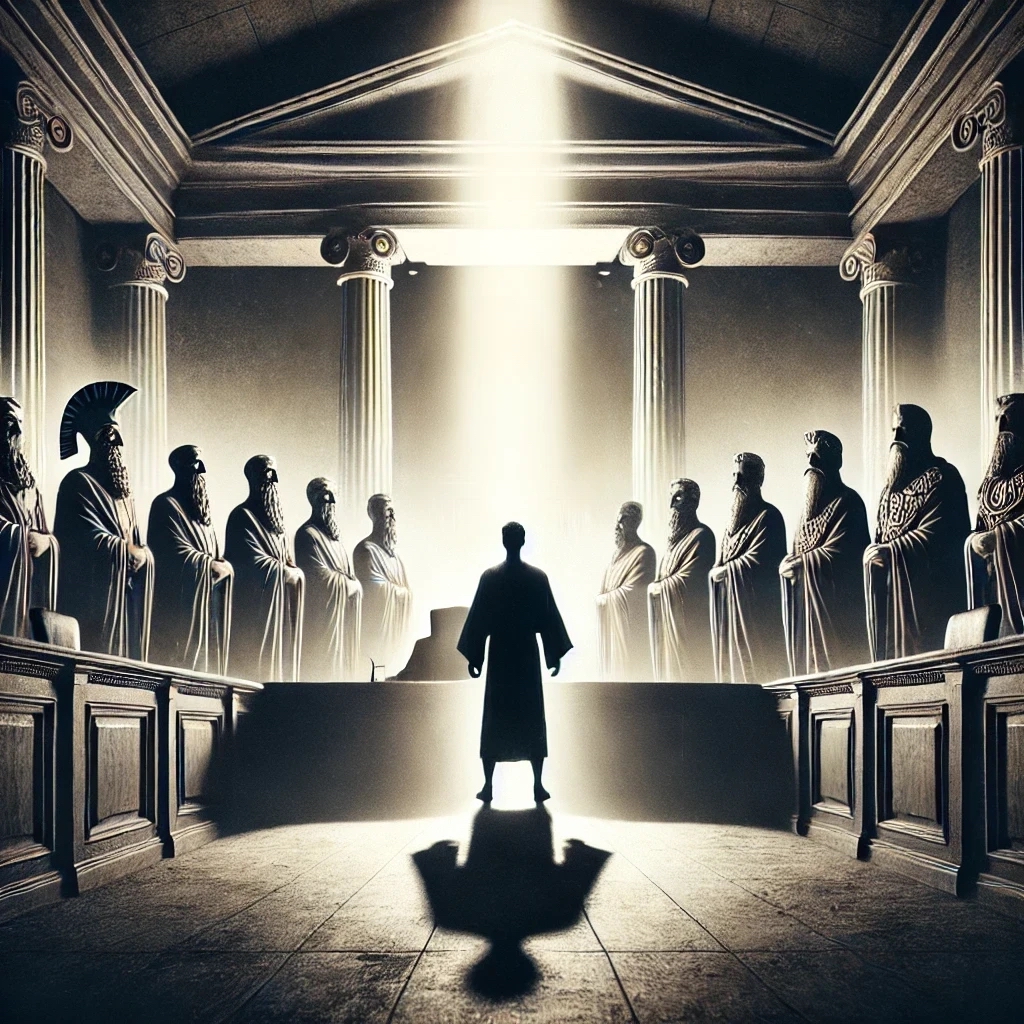
As we follow Paul’s ministry in the Book of Acts, we note that at Paul’s conversion, Jesus told him that the day would come when he would proclaim the gospel before kings (see chapter 9).

That day arrived when he was arrested and stood before Ananias, the high priest, followed by appearances before Antonius Felix, governor of Judea, Porcius Festus (Felix’s successor), and then King Herod Agrippa and his wife, Bernice (read Acts 22-26).

All these rulers were known even in their own day as corrupt tyrants, marked by greed, incest (Bernice was Agrippa’s sister), violence, plunder, cowardice, disrespect for God and man alike.

The historian, Josephus, contemporary of Jesus, Paul and all these potentates, has much to say about these rotten excuses for leaders. For example, Ananias, the high priest, sold food meant for ordinary priests for his own profit, causing priests and their families to starve to death. He betrayed his own people to the Romans and was eventually murdered for his betrayal.

Nothing changed their eternal destinies even after Paul, filled with the Holy Spirit, eloquently and fearlessly gave them the gospel. These oppressors paved the way for Paul to present his case to the most powerful (and corrupt) of them all—Caesar himself, namely, Nero.

Not everyone is called by God to such daunting service. But God formed in Paul an intensity of purpose that allowed him to face this challenge with dignity and grace.

Still, we might ask ourselves, why did God require this sacrifice by Paul, since none of these monsters ever actually bowed the knee to Christ?

We must remember that God not only wants us to join Him in heaven one day, He also wants to revive and reform human society on earth as it is in heaven. Jesus mandated His followers to disciple the nations. This can happen only when governments cease to actively obstruct the gospel and human dignity.

During Paul’s day, 25-40% of the Roman Empire’s peoples were slaves. Women and girls had minimal rights. Life was cheap. People lived in fear of death by torture or crucifixion by unpredictable and unaccountable rulers obsessed with power, not truth. Even their religious leaders were hopelessly corrupt.

God called Paul to start the reformation of government by clearly and fearlessly proclaiming Christ to the powers of his time. They did not submit, but we are told that Felix “trembled” and Agrippa was “almost persuaded.”

Though they did not heed, others also must have heard—and they were persuaded.

We get a strong hint of this in Philippians 4:22 where Paul sends greetings from “the household of Caesar” who followed Christ. The “household of Caesar” included all kinds of people in service to Caesar ranging from slaves to high government officials in positions of influence and authority.

Even when the most powerful refuse to believe, the gospel still penetrates to the highest and most degenerate parts of society. As a result, Christlike values begin to permeate the culture.

Wherever and to whomever the gospel goes, even if they refuse to submit, Jesus makes His mark. When we submit to Christ as Paul did, His Word, spoken with Holy Spirit power, will never return void. In the end, God always wins, even when He appears to lose.


Tagged , , , , , , , , , ,

The Early Christians Recognized this Threat

Sometimes it really strikes me—the irrationality of unbelief. The refusal to bow to fact, to rational argument, even the clear hand of God. What is most striking is how the most unbelieving can also be the most religious.

In Acts 4, Peter and John, by the power of Christ, have just healed a man lame from birth, convincing 5,000 people to follow Christ, demonstrating the power of God. But the ruling religious Sanhedrin of Jerusalem arrest both Peter and John and throw them into jail. The religious leaders could not deny the healing. They could not deny the power and boldness of Jesus’ uneducated disciples, but they want to stop them.

They knew about Jesus’ miracles. When Jesus died, they saw the massive temple veil rip from top to bottom. They could not deny Jesus’ resurrection. In Acts 5, Gamaliel, a wise elder member of the Sanhedrin even warned them that if what Peter and John did “is of God, you will not be able to overthrow them; or else you may even be found fighting against God.” They could have reconsidered their position, but they refused.

Unbelief shows little compassion for those freed by Christ from bondage. The religious establishment did not share the healed man’s joy. They did not empathize with his years of infirmity, his inability to care for himself, his wasted talents, his decades of destroyed dreams, the lectures from others about his imagined “sins” that brought his condition, the taunts of thoughtless children. They were lifeless and loveless.

Stone-cold unbelief can strike fear in those who speak truth, especially if the unbelievers have more power, money and political authority.

Don’t we find stone-cold unbelief in our own world today, even in our churches, whether in India or the USA? In both nations, men and women with power and authority care nothing about the God of the Bible and want to hurl Him from His throne (see Psalm 2). At times, they appear to be invulnerable, subject to no other law but their own whims and agendas that drip with unbelief and contempt for God and others they regard as lesser than they.

The early Christians recognized this threat. They saw the odds against them, but they did not flinch before the stronger foe. Peter said, “We cannot stop speaking about what we have seen and heard.”

They went to prayer, remembering the God who called them is the same God who created the heavens and the earth. They remembered Jesus’ wondrous acts. They remembered how God uses even His enemies to accomplish His purposes. They knew that the stronger power of God who raised Jesus Christ from the dead would sustain them. The scriptures tell us they prayed for boldness to preach, for signs and wonders.

God answered their prayers. He filled them anew with His Holy Spirit. In time, in 70 AD, after much patience and giving the religious authorities forty years to repent of their unbelief, He destroyed their decadent and unbelieving religious structures. In the meantime, the gospel continued to spread to “the uttermost parts of the world” as it does today.

May God help us to continue steadfast in their footsteps before our present opposition. The gospel of Jesus Christ always has the last word.

Tagged , , , , ,

Baptism of the Holy Spirit

HolySpiritAnointingTo understand the baptism of the Holy Spirit, we must keep in mind the Big Picture:


After Adam’s fall, Satan rules, and the whole cosmos falls under sin and corruption. God’s plan is to redeem humanity and the cosmos. He will destroy sin and corruption through Jesus Christ and reconcile the world to Himself. He will do it in relationship with redeemed humanity through the agency of the Holy Spirit who dwells in the believer, giving new life and power to those who cooperate with Him.

John the Baptist anticipates this New Day when he says, “I baptize with water, but the One who comes after me will baptize you with the Holy Spirit and with fire.” The Holy Spirit is key to destruction of Satan’s dominion, restoring God’s original purpose in its fullness. The Holy Spirit will work through the lives of Satan’s former subjects, once captive to sin, now free in Christ, to bring about his total destruction.

In short, the baptism of the Holy Spirit is key to effective witness and completion of the Great Commission, which will usher in the triumphant Second Advent of Jesus Christ.

This plan terrifies Satan. He desperately wants to limit the power of the Holy Spirit in the lives of God’s redeemed children. He does all in his power to blind God’s children to the reality and power of the Holy Spirit. He works overtime, getting us to waste time and energy in pointless arguments about the Holy Spirit.

He bends over backward trying to get us to fear the mis-use of Holy Spirit power so that we take the opposite extreme of dis-use. This keeps us from being open and receptive to His infilling so that the Holy Spirit can use us in supernatural ways.

He tries to turn the baptism of the Holy Spirit and its many blessings into a curse that separates members of God’s family from one another.

All of this grieves the Holy Spirit. Let us not fall into Satan’s traps. Let us remember how Acts 2 began to fulfill the prophecy of Joel 2. Let us remember how the Holy Spirit radically transformed the disciples. Let us remember how the Holy Spirit turned that first-century persecutor of the church, Saul of Tarsus, into Jesus’ most faithful missionary.

Let us remember those first centuries of church history when the Holy Spirit caused the church, weak in the eyes of the world, to grow in spite of persecution and outlast their persecutors through our own day.

Let us remember that the Holy Spirit has planted within each of us as His children His New Life. As His children, we have the life of God, Creator of the universe, living within us.

Because life in the Holy Spirit is a relationship, we must renew our relationship with Him day by day as a husband and wife must renew their relationship with one another day by day and even hour by hour and minute by minute for the marriage
to work.

Let us remember the Big Picture of who we are in Christ through the power of His Holy Spirit. Then we will become His more effective witnesses in the world to fulfill the Great Commission and usher in the fullness of His kingdom. We will become His agents to answer the prayer we have long prayed: “Thy kingdom come, on earth as it is in heaven.”

Tagged , , ,

Your Life, His Grace

In the Greek New Testament, the word for “witness” is also the root word for “martyr.” When Jesus tells His disciples, “You shall be my witnesses…,” He is also saying, “You will lay down your lives for My sake.”

This does not mean that we must seek martyrdom to become a “witness” for Christ. But it requires that we count the cost of discipleship. We must see ourselves as soldiers for Christ. When a new recruit takes his oath of loyalty, he gives his superiors the right to send him anywhere, even into battles that require great risk to his life, from which he may not return.

A-bigger-lifeTo become a “witness” for Christ means that we serve a life bigger than this earthly life. The circumstances of our lives are short and uncertain. There are other things better and eternal, centered on Christ. A true “witness,” like Jesus, has compassion upon people and a world that wander like sheep without a shepherd. Whether in life or death, true witnesses trust Jesus to provide everything they need, to go wherever He says to go.

Jesus warns His “witnesses” that He may assign them to take the gospel as “sheep to wolves.” Many will gladly accept the Good News, but others will hate the “witness,” claim that he is destroying society and seek to defame him or her.

Like Jesus, witnesses may also have to stand before the authorities in trial for their faith. But their suffering will further the gospel, and the Holy Spirit will give them the words to say at the right time.

We are to become Christ’s witnesses with the perspective of Christ’s own suffering and of His Second Coming. We are to know that whatever suffering we face will bring glory to God, a great reward in heaven and ultimate judgment for those who persecute us. We are to know that even if we lose our lives, human power over us ends at death, but God’s power is eternal.

Grace is costly, Dietrich Bonhoeffer reminds us. The gift is free, but it costs our lives. Beware of “cheap grace,” he warns, “the grace that we [not God] bestow on ourselves…forgiveness without repentance…baptism without discipline, communion without confession.”

“Costly grace,” he goes on, “costs a man his life, and it is grace because it gives a man the only true life.”

Dietrich Bonhoeffer knew what he was talking about. God called him as a witness to serve Him in Nazi Germany—a place unfriendly to the gospel. He became a leader of the Confessing Church when other German churches were giving in to Hitler. His friends wanted to save him by bringing him to America, but after a few months, Bonhoeffer knew he must return to the place God called him.

Bonhoeffer indeed paid with his life, but he became the ultimate winner. Days after his death, Hitler went down to defeat—and suicide. Bonhoeffer’s witness continues throughout the world in his writings and his example of commitment to Jesus Christ.

This month, as we celebrate Christ’s costly sacrifice and His triumphant resurrection, may each of us also count the cost of discipleship and commit ourselves to effective witness however and wherever Christ calls us.

Tagged , , , , , , ,

His Witnesses

witnessThree years before he became President, Abraham Lincoln, then a lawyer, was called to defend an old family friend accused of murder. The murder took place at night, and a key witness said that he saw the defendant kill the man “by the light of the full moon.” This seemed compelling evidence, beyond reasonable doubt.

However, during cross-examination, Lincoln used a simple almanac to prove that on the night of the murder, there was no full moon. The accuser could not have seen what he claimed to see.

Today, we all stand accused by Satan of crimes against our Creator. His evidence against us appears beyond reasonable doubt: we all stand guilty before God. But through Jesus Christ, God has evidence on our behalf that saves us from our arch-accuser, Satan.

Before He ascended into heaven, Jesus told His disciples that they would become His witnesses to His power to save, and that their witness would carry them to the ends of the earth (Acts 1:8).

What kind of compelling “witness” did Jesus have in mind for us? How effective is our “witness” to others?

The Greek word for “witness” used by Luke has more than one meaning. First, a “witness” is one who speaks from first-hand experience about actions in which he participates. Specifically, this “witness” means our testimony to others of our relationship with Jesus Christ and what God has done in our lives.

Second, a “witness” is one who makes an evangelistic confession of specific truths. In Luke 24, Jesus said that this “witness” must include the truths involving His suffering and death on the cross and His resurrection on the third day—the key to our salvation. It must declare the need for repentance from sin to receive forgiveness and reconciliation with God.

Luke tells us that Jesus sent His disciples forth on their mission as “witnesses” with the promise of His Father and the power of the Holy Spirit. In other words, an effective witness depends upon trust in the word of God to empower us and bless our witness in great and marvelous ways.

Before He left them, Jesus grounded their “witness” firmly in the scriptures. He systematically showed them how the entire Old Testament—“the law of Moses, the Prophets and the Psalms”—was the foundation for His saving life, death and resurrection.

In short, effective “witness” comprises four major elements for compelling communication to others: (1) personal experience, (2) clear evangelistic confession, (3) trust in Holy Spirit power and (4) solid biblical foundations. If one or more of these elements is lacking, our “witness” suffers, and a needy world fails to hear the Good News and escape Satan’s accusations.

How well are we doing? Is our society becoming more or less committed to the Christ of our “witness”? Too often, we must admit, our words and actions have denied Jesus. Too often, we have played the coward, fleeing from opportunities and hiding from opposition.

Clearly, as we read our daily news today, we have much for which to repent. But let us not become discouraged. Let us remember that the success of the disciples’ witness followed only after their own abject failures and cowardice. Let us heed their example of repentance, for God’s forgiveness and renewal is the same yesterday, today and forever.

Tagged , , , , , ,