Tag Archives: paul

When Kings Tremble

As we follow Paul’s ministry in the Book of Acts, we note that at Paul’s conversion, Jesus told him that the day would come when he would proclaim the gospel before kings (see chapter 9).

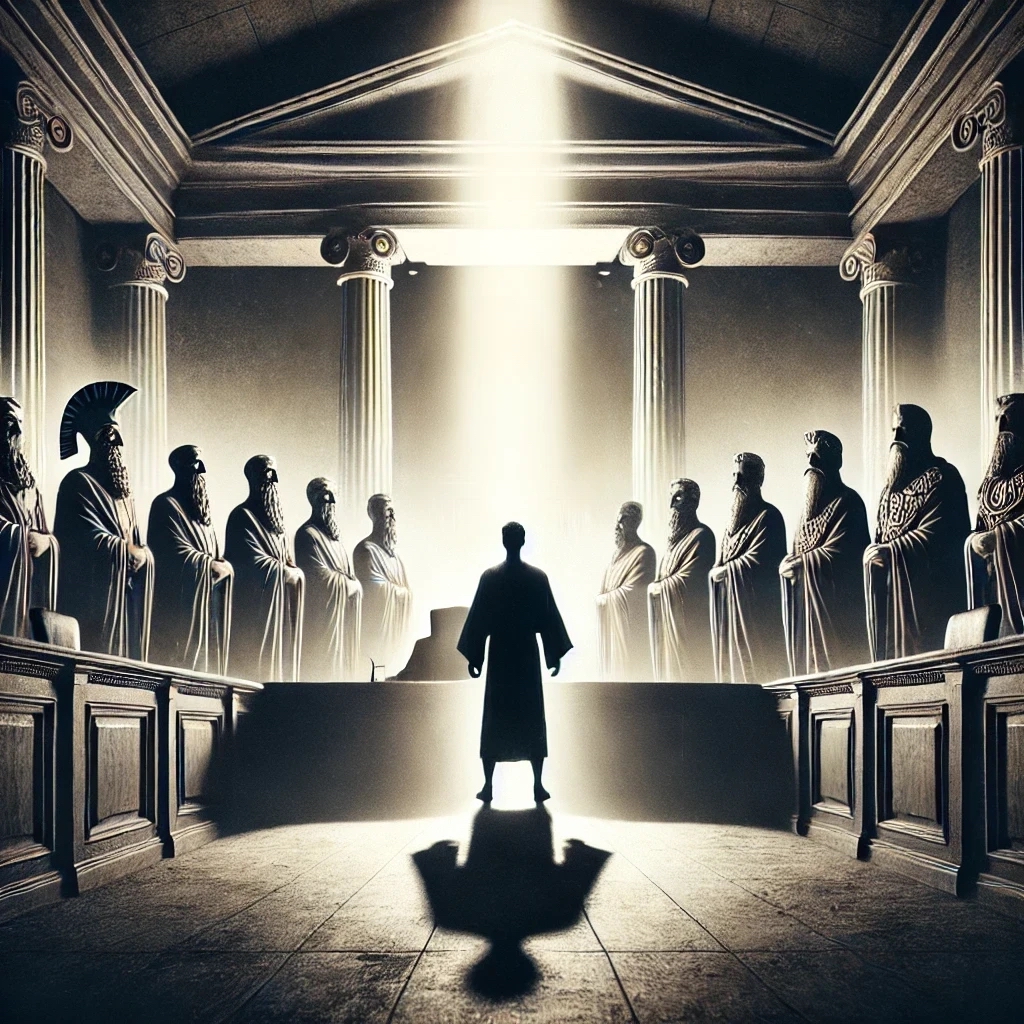
That day arrived when he was arrested and stood before Ananias, the high priest, followed by appearances before Antonius Felix, governor of Judea, Porcius Festus (Felix’s successor), and then King Herod Agrippa and his wife, Bernice (read Acts 22-26).

All these rulers were known even in their own day as corrupt tyrants, marked by greed, incest (Bernice was Agrippa’s sister), violence, plunder, cowardice, disrespect for God and man alike.

The historian, Josephus, contemporary of Jesus, Paul and all these potentates, has much to say about these rotten excuses for leaders. For example, Ananias, the high priest, sold food meant for ordinary priests for his own profit, causing priests and their families to starve to death. He betrayed his own people to the Romans and was eventually murdered for his betrayal.

Nothing changed their eternal destinies even after Paul, filled with the Holy Spirit, eloquently and fearlessly gave them the gospel. These oppressors paved the way for Paul to present his case to the most powerful (and corrupt) of them all—Caesar himself, namely, Nero.

Not everyone is called by God to such daunting service. But God formed in Paul an intensity of purpose that allowed him to face this challenge with dignity and grace.

Still, we might ask ourselves, why did God require this sacrifice by Paul, since none of these monsters ever actually bowed the knee to Christ?

We must remember that God not only wants us to join Him in heaven one day, He also wants to revive and reform human society on earth as it is in heaven. Jesus mandated His followers to disciple the nations. This can happen only when governments cease to actively obstruct the gospel and human dignity.

During Paul’s day, 25-40% of the Roman Empire’s peoples were slaves. Women and girls had minimal rights. Life was cheap. People lived in fear of death by torture or crucifixion by unpredictable and unaccountable rulers obsessed with power, not truth. Even their religious leaders were hopelessly corrupt.

God called Paul to start the reformation of government by clearly and fearlessly proclaiming Christ to the powers of his time. They did not submit, but we are told that Felix “trembled” and Agrippa was “almost persuaded.”

Though they did not heed, others also must have heard—and they were persuaded.

We get a strong hint of this in Philippians 4:22 where Paul sends greetings from “the household of Caesar” who followed Christ. The “household of Caesar” included all kinds of people in service to Caesar ranging from slaves to high government officials in positions of influence and authority.

Even when the most powerful refuse to believe, the gospel still penetrates to the highest and most degenerate parts of society. As a result, Christlike values begin to permeate the culture.

Wherever and to whomever the gospel goes, even if they refuse to submit, Jesus makes His mark. When we submit to Christ as Paul did, His Word, spoken with Holy Spirit power, will never return void. In the end, God always wins, even when He appears to lose.


Tagged , , , , , , , , , ,

The Heart of a True Shepherd

Do you want to know what kind of person the apostle Paul would advise you to have as the pastor of your church? If you read Acts 20, you will get a good idea from his parting words to the elders of the church at Ephesus.

The elders were responsible for leadership and oversight of the church. They taught, preached, guarded against false teachers, encouraged believers, prayed for and visited the sick, decided doctrinal matters and trained new believers.

Paul must have done a good job with them. The church of Ephesus became one of the strongest of the early churches. This was a mighty feat, given that Ephesus had lived for more than 1,000 years under the worship of the goddess, Artemis. How did Paul do it? We are most blessed that Paul shares with us the ingredients of his successful recipe. I call them the “ten commandments” for making a good elder/pastor:

  • Paul taught the Ephesians with “all humility and tears.” What powerful words! Paul exhibited a strong empathy with the Ephesian people that he shepherded, whatever their background. They knew he was on their side and wanted only their best.
  • He boldly taught the truth. He left out nothing they should know. He held nothing back, even if it might make them uncomfortable or cost him popularity.
  • He preached the same gospel to all. It didn’t matter what their background was. That gospel required repentance before God and faith in Jesus Christ.
  • He willfully placed his life in the hands of God, knowing some in the community would become offended at the truth and speak evil against him.
  • He knew he had a definite call of God to preach. He had a single-minded purpose and desire to complete the mission God had given him. He would not be swayed by lesser things.
  • He kept a clear conscience, knowing that he preached all that God commissioned him to preach. He preached the whole counsel of God, never mincing his words, so that he comforted the afflicted and afflicted the comfortable.
  • He took care to shepherd his people as Jesus would shepherd them, willing to give up his life on their behalf if necessary.
  • He remained alert for those who entered the flock and led others astray by charisma, smooth talk filled with false and perverse, but attractive-sounding, things.
  • He depended daily upon God to help him do what he could not do in himself alone. He trusted God to build up his own faith as he built up the faith of his people.
  • He especially bent over backward to help those who were weak, giving sacrificially of himself.

What did Paul teach the Ephesians? The epistle to the Ephesians gives us a good idea. Martyn-Lloyd Jones preached at least 232 sermons from this epistle, portraying Paul’s high view of the gospel, a profound portrait of what God intends. Is this the gospel coming to you from the pulpit in your church? Is this the same gospel that guides your life, family and community?

This gospel preached by Paul reflects the life of a man who has met God, witnessed His glory and is completely sold out to Him. May all our pulpits become filled with like-minded pastor/teachers who deliver the message of God, true to the Word and in great power and truth.

Tagged , , , , , , , , , , , , ,

Ephesus to India: Power, Opposition, and the Unstoppable Gospel

The Book of Acts, written almost 2,000 years ago, serves as a template for God’s workings at any time in the history of Christ’s followers, including our own. It reveals human nature in its response to God. This includes Acts 19 which records Paul’s mission to Ephesus.

In Paul’s day, Ephesus was a vital port city, its impressive buildings constructed of fine marble. The city was dominated by the overpowering presence of the white marble temple to the goddess, Artemis (or Diana), widely worshipped throughout the Mediterranean region. Millions of pilgrims flocked to Ephesus to worship at this temple, one of the seven wonders of the ancient world.

This worship of Artemis went back more than 1,000 years. It was a highly entrenched religion that dominated the region, like Hinduism in Varanasi or Islam in Mecca. A myth grew up among Artemis followers that in ancient days, her statue descended from heaven.

Paul came to Ephesus to introduce Jesus Christ and challenge this deeply rooted religious culture. Fearlessly, he proclaimed Jesus as Lord, and he depended upon the Holy Spirit to do what rational argument alone could never do.

Dr. Luke tells us that notable miracles took place. Handkerchiefs and aprons, touched by Paul, become instruments of healing and deliverance from demons. This demonstration of the gospel by power as well as word won people to Christ in droves as they saw Jesus do what Artemis had never done.

Not everyone was happy about this. The silversmiths, who got rich selling silver idols of Artemis to devotees, saw their profits dwindle as Jesus gained influence. They reacted with venom against Paul’s “attack on society”. Others envied what they wrongly perceived was Paul’s magical powers and coveted this power for their own selfish ends.

What took place in Ephesus during Paul’s ministry was truly a power encounter with Satan, who long blinded the people, and the power of Jesus Christ who opens blind eyes. The clash between God and Satan broke out into the visible human realm at Ephesus.

Paul did not flee but stood firm and discipled the new believers. The Ephesian church grew fast. The Ephesians became a bright light for the gospel. Later, Paul wrote his epistle to these former worshippers of Artemis and praised their mature faith in Jesus Christ.

The happenings at Ephesus take place in India today as we see God answer your prayers and the prayers of His people in India. The Word of God is both preached and demonstrated in power with healings, deliverance from demons and other signs and wonders. An entrenched religious system is being challenged by the living and powerful Jesus Christ who is opening eyes once blinded by the devil.

At the same time, opposition has come thick and fierce from those who enrich themselves through the status quo and accuse Christians of “destroying society.” The enemy comes armed with entrenched traditions backed by overwhelming political and financial power.

Despite the opposition, the Holy Spirit enables us to train new disciples and send more harvest workers. Quietly, former believers of old religions enter their workplaces and schools to counteract this influence at the grass roots with the power of Christ in word and deed.

May what happened in Ephesus take place all over India in coming days — and in the place where you live and work!

Tagged , , , , , , , , , ,

How God Strengthens Us in Our Darkest Moments

Acts 18 records Paul’s first visit to Corinth. This chapter includes a matter that, at first glance, seems odd in a great man of faith as Paul—fear.

While Paul made great progress among the Gentiles, he faced blasphemous opposition from Corinthian Jews. As Paul experienced their ferocity, fear rose in his heart.

One night, he had a vision of Jesus who told him, Do not be afraid any longer, but go on speaking… I am with you… no man will attack you… I have many people in this city” (Acts 18:9-10).

Every person who contends for the Lord faces the rage of those who hate God. In the Old Testament, Elijah won an overwhelming victory over the prophets of Baal. But when Queen Jezebel remained set in her idolatry even after the miracle of God, she threatened Elijah’s life. He fled and hid in a cave, convinced he was the only faithful one left in Israel.

Moses, David, John the Baptist had their own bouts with fear. Even Jesus Himself, bearing His true human condition, experienced every human emotion including fear.

In 1517, Martin Luther experienced fear when he faced a hostile religious establishment, seemingly all alone.

Recent years have presented the greatest challenges I have ever faced in my ministry. Fear is a very real thing which I also face.

The question is not whether we have fears, but what we do with them. Does fear master us, or do we master fear? Do we retreat from Satan’s rage, or do we trust our Lord through his rage?

Jesus, who was truly human, knows from experience how fragile we are. He does not leave us alone in our fear but encourages us through it. He came to Paul, not to chastise him for weak faith but to strengthen him and re-confirm His call on Paul’s life. He assured Paul that He was for him, and that he would bear much fruit in Corinth. He had a purpose, and he would fulfill it no matter what. Paul stood firm.

When we stand firm despite our fear, we will also bear much fruit because God is faithful to deliver. God is glorified by the fruit we bear in this life, and we are immortal in this life until we accomplish our purpose.

God is faithful even in our mortality. Martyrs for the faith, such as Stephen, did not die in vain but paved the way for Paul’s conversion and future mission to the Corinthians and many others. Think of Odisha missionary Graham Staines and his two sons, trapped and burned to death by a murderous mob. A terrible death indeed, but how many men and women now serve Christ in Odisha today through their sacrifice and suffering?

Paul, who endured more than his share of suffering, and must have faced fear many times, has written, “I consider that the sufferings of this present time are not worthy to be compared with the glory that is to be revealed to us” (Romans 8:18).

Paul kept his perspective. He remained close to God who continually encouraged him and gave him hints of greater glory. Even those little hints overwhelmed all the enemy threw at him.

May God encourage each of us through our own struggles with fear in troubled times!

Tagged , , , , , , , , , , ,

Resistance Against Truth

“These men have upset the world!”

These charges were leveled at Paul and Silas after they preached the Good News in Thessalonica. They must have done a great job in making the gospel clear to all who heard them. Acts 17 tells us that many people came to Christ, both Jews and Gentiles. For these people, the gospel was a welcome fragrance.

To others, it was the stench of death. Some Jews hated the message, and wanted to make Paul and Silas pay for ruining their day. They accused Paul and Silas of promoting another ruler besides Caesar. These Jews hated the rule of Caesar, but they hated Jesus even more.

This episode illustrates a truth about the Good News. Even when clearly presented, it will win some and infuriate others, even to the point of violence. In one person, the Holy Spirit brings new life; in another, the gospel reveals spiritual death.

Why do people reject the gospel? Such people love their sin above all else and resent having it exposed by the light of Christ and told that it is evil. They want to call evil good, to run their own lives without accountability to anyone, including God who made them.

No doubt some people who opposed Paul and Silas were religious, but they were dead to the true God. They wanted to turn the truth of God into something that sounded moral and sounded comfortable. As such, it was something less than truth. They preferred a god that helped them feel good about themselves, not repent. When Paul and Silas reminded them of their sin and God’s holiness, they recoiled.

Paul and Silas did not follow the seeker-friendly approach popular in many churches today. The seeker-friendly approach may lead people to adopt certain ideas from the Bible that appeal to them, but fail to reveal sin leading to repentance. They become devoted to their own ideas of God more than to God Himself.

A spiritually dead person can have spiritual longings, but they are always less than God. They still hate the true God even when they speak in moral and spiritual ways. In real life, they operate according to natural thinking.

The seeker-friendly approach operates on the false premise that one can share the gospel and lead a person to God without upsetting anyone. The seeker-friendly approach is a sign of how much the culture has impacted the church more than the church has impacted the culture.

George Barna reports that in his research, he has found that only 6% of today’s adults have a biblical worldview. The average American church person’s dominant worldview, he says, is syncretism, a collection of contradictory beliefs pasted together to suit themselves. A growing number of people in churches believe in reincarnation and that people are basically good. Fewer pastors preach the gospel with the clarity of Paul and Silas.

Jesus came to destroy the works of the devil. He has already defeated Satan at the cross and invites us to join Him in enforcing His victory. He also warns us that Satan will go down swinging hard.

Let us move forward like Paul and Silas, assured of victory but also steeled for resistance from those who refuse to bow the knee to the King of kings. Let us remember that Jesus has already won.

Tagged , , , , , , , , , , ,

God’s Unexpected Choices

God can work through anybody! That is a vital lesson we can all learn from Acts 16.

In Acts 16, Paul takes the gospel for the first time to Europe. His venture plants a gospel beachhead in a pagan Roman colony, Philippi—through a woman. In Paul’s day, women were supposed to stay home, not start new and earthshaking movements. The woman, Lydia wasn’t even a native of the city, but came from Asia Minor.

She followed the God of the Jews, but there were not even enough Jews in Philippi to start a synagogue. So, she just met with a small band of other like-minded Gentile women at the riverbank. With this seemingly woeful and unnoticed group, Paul began his ministry—and ultimately changed a continent. As we read on, Lydia became a more dynamic believer and leader than anyone expected. Another example…

In those early days of ministry in Philippi, Paul and his companion-in-ministry, Silas, delivered a girl possessed of demons. That miracle unjustly landed them in jail because Paul ended the livelihood of those who exploited the poor girl’s misery for profit.

Instead of complaining, Paul and Silas praised God for His many blessings which outweighed their present trials. God responded with an earthquake that caused chaos in the prison. The jailer almost committed suicide, thinking all his prisoners had escaped, and he would now suffer death from his superiors for losing them.

This jailer was likely a cynical man hardened by the dregs of humanity. There was nothing religious or idealistic about him, and yet something about the lives of Paul and Silas touched him. In his sudden weakness, the shaken man approached them and asked, “What must I do to be saved?” That night, we are told, the jailer and his entire household—wife, children, relatives, servants—put their trust in Jesus Christ.

This unlikely woman, Lydia, and unnamed Roman jailer, along with his household, became part of the new fellowship of believers in Philippi. Every believer who comes from a European heritage or has received guidance through European believers ultimately owes a spiritual debt to these two unlikely people for an important reason…

The Philippian church did not become a self-centered, religious social club. In his letter to the Philippians, Paul praises the Philippians for their faith and vision for the lost. They were not content to keep the faith to themselves but joined Paul’s mission to deliver the faith to Thessalonica and the center of Rome itself.

Let us not forget that Paul himself was an unlikely messenger—a “Jew of the Jews,” a former terrorist and fanatic who became God’s messenger to the Gentiles he once despised.

The lesson is clear: never underestimate what God can do through you no matter what you or others may think of your abilities. God is always able to work in unexpected ways in unexpected people to accomplish His greater work.

I see this all the time as I meet with Indian evangelists and pastors. Again and again, IGO training centers graduate men and women from the most unlikely backgrounds whom God has called to do great things for the Kingdom.

What unlikely and unthinkable thing is God willing to do through you to affect lives and destinies of people for generations to come?

Tagged , , , , , , , ,