Tag Archives: missions

When Kings Tremble

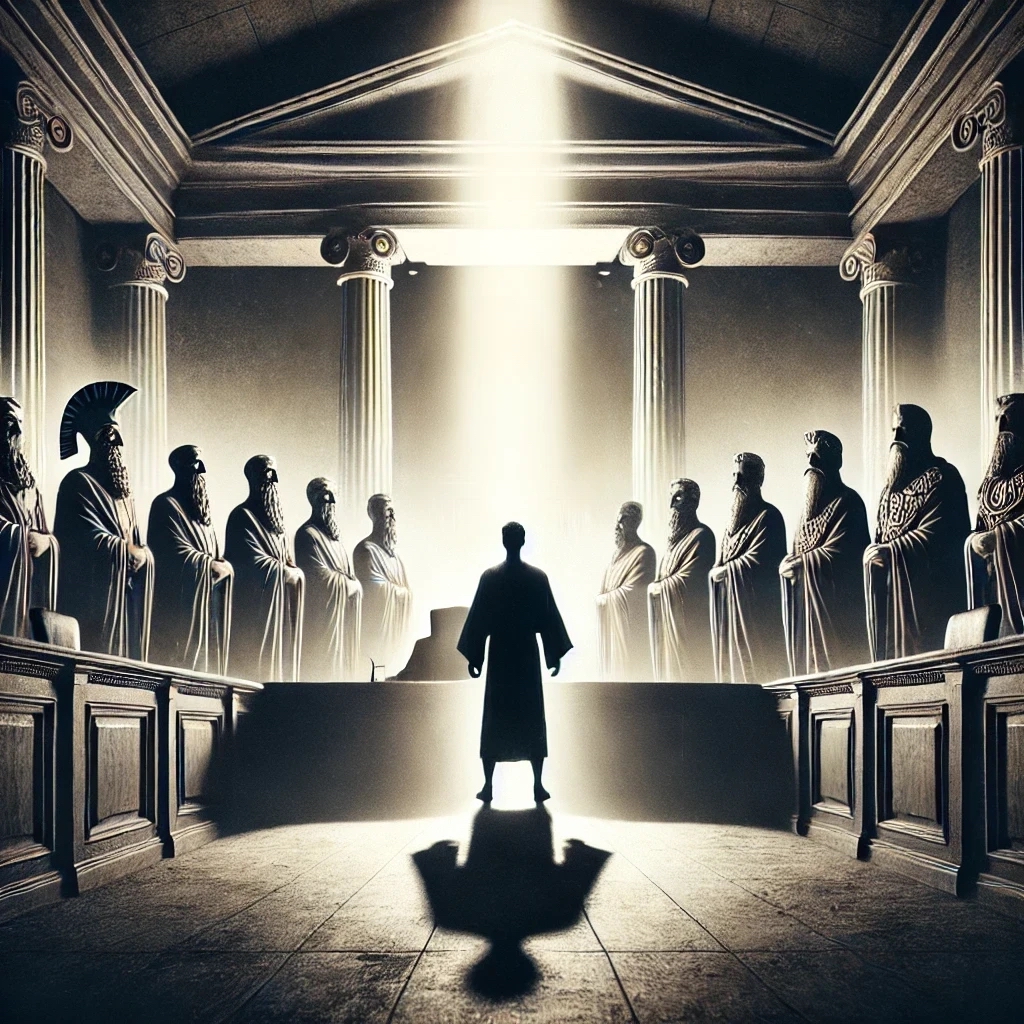
As we follow Paul’s ministry in the Book of Acts, we note that at Paul’s conversion, Jesus told him that the day would come when he would proclaim the gospel before kings (see chapter 9).

That day arrived when he was arrested and stood before Ananias, the high priest, followed by appearances before Antonius Felix, governor of Judea, Porcius Festus (Felix’s successor), and then King Herod Agrippa and his wife, Bernice (read Acts 22-26).

All these rulers were known even in their own day as corrupt tyrants, marked by greed, incest (Bernice was Agrippa’s sister), violence, plunder, cowardice, disrespect for God and man alike.

The historian, Josephus, contemporary of Jesus, Paul and all these potentates, has much to say about these rotten excuses for leaders. For example, Ananias, the high priest, sold food meant for ordinary priests for his own profit, causing priests and their families to starve to death. He betrayed his own people to the Romans and was eventually murdered for his betrayal.

Nothing changed their eternal destinies even after Paul, filled with the Holy Spirit, eloquently and fearlessly gave them the gospel. These oppressors paved the way for Paul to present his case to the most powerful (and corrupt) of them all—Caesar himself, namely, Nero.

Not everyone is called by God to such daunting service. But God formed in Paul an intensity of purpose that allowed him to face this challenge with dignity and grace.

Still, we might ask ourselves, why did God require this sacrifice by Paul, since none of these monsters ever actually bowed the knee to Christ?

We must remember that God not only wants us to join Him in heaven one day, He also wants to revive and reform human society on earth as it is in heaven. Jesus mandated His followers to disciple the nations. This can happen only when governments cease to actively obstruct the gospel and human dignity.

During Paul’s day, 25-40% of the Roman Empire’s peoples were slaves. Women and girls had minimal rights. Life was cheap. People lived in fear of death by torture or crucifixion by unpredictable and unaccountable rulers obsessed with power, not truth. Even their religious leaders were hopelessly corrupt.

God called Paul to start the reformation of government by clearly and fearlessly proclaiming Christ to the powers of his time. They did not submit, but we are told that Felix “trembled” and Agrippa was “almost persuaded.”

Though they did not heed, others also must have heard—and they were persuaded.

We get a strong hint of this in Philippians 4:22 where Paul sends greetings from “the household of Caesar” who followed Christ. The “household of Caesar” included all kinds of people in service to Caesar ranging from slaves to high government officials in positions of influence and authority.

Even when the most powerful refuse to believe, the gospel still penetrates to the highest and most degenerate parts of society. As a result, Christlike values begin to permeate the culture.

Wherever and to whomever the gospel goes, even if they refuse to submit, Jesus makes His mark. When we submit to Christ as Paul did, His Word, spoken with Holy Spirit power, will never return void. In the end, God always wins, even when He appears to lose.


Tagged , , , , , , , , , ,

Ephesus to India: Power, Opposition, and the Unstoppable Gospel

The Book of Acts, written almost 2,000 years ago, serves as a template for God’s workings at any time in the history of Christ’s followers, including our own. It reveals human nature in its response to God. This includes Acts 19 which records Paul’s mission to Ephesus.

In Paul’s day, Ephesus was a vital port city, its impressive buildings constructed of fine marble. The city was dominated by the overpowering presence of the white marble temple to the goddess, Artemis (or Diana), widely worshipped throughout the Mediterranean region. Millions of pilgrims flocked to Ephesus to worship at this temple, one of the seven wonders of the ancient world.

This worship of Artemis went back more than 1,000 years. It was a highly entrenched religion that dominated the region, like Hinduism in Varanasi or Islam in Mecca. A myth grew up among Artemis followers that in ancient days, her statue descended from heaven.

Paul came to Ephesus to introduce Jesus Christ and challenge this deeply rooted religious culture. Fearlessly, he proclaimed Jesus as Lord, and he depended upon the Holy Spirit to do what rational argument alone could never do.

Dr. Luke tells us that notable miracles took place. Handkerchiefs and aprons, touched by Paul, become instruments of healing and deliverance from demons. This demonstration of the gospel by power as well as word won people to Christ in droves as they saw Jesus do what Artemis had never done.

Not everyone was happy about this. The silversmiths, who got rich selling silver idols of Artemis to devotees, saw their profits dwindle as Jesus gained influence. They reacted with venom against Paul’s “attack on society”. Others envied what they wrongly perceived was Paul’s magical powers and coveted this power for their own selfish ends.

What took place in Ephesus during Paul’s ministry was truly a power encounter with Satan, who long blinded the people, and the power of Jesus Christ who opens blind eyes. The clash between God and Satan broke out into the visible human realm at Ephesus.

Paul did not flee but stood firm and discipled the new believers. The Ephesian church grew fast. The Ephesians became a bright light for the gospel. Later, Paul wrote his epistle to these former worshippers of Artemis and praised their mature faith in Jesus Christ.

The happenings at Ephesus take place in India today as we see God answer your prayers and the prayers of His people in India. The Word of God is both preached and demonstrated in power with healings, deliverance from demons and other signs and wonders. An entrenched religious system is being challenged by the living and powerful Jesus Christ who is opening eyes once blinded by the devil.

At the same time, opposition has come thick and fierce from those who enrich themselves through the status quo and accuse Christians of “destroying society.” The enemy comes armed with entrenched traditions backed by overwhelming political and financial power.

Despite the opposition, the Holy Spirit enables us to train new disciples and send more harvest workers. Quietly, former believers of old religions enter their workplaces and schools to counteract this influence at the grass roots with the power of Christ in word and deed.

May what happened in Ephesus take place all over India in coming days — and in the place where you live and work!

Tagged , , , , , , , , , ,

How God Strengthens Us in Our Darkest Moments

Acts 18 records Paul’s first visit to Corinth. This chapter includes a matter that, at first glance, seems odd in a great man of faith as Paul—fear.

While Paul made great progress among the Gentiles, he faced blasphemous opposition from Corinthian Jews. As Paul experienced their ferocity, fear rose in his heart.

One night, he had a vision of Jesus who told him, Do not be afraid any longer, but go on speaking… I am with you… no man will attack you… I have many people in this city” (Acts 18:9-10).

Every person who contends for the Lord faces the rage of those who hate God. In the Old Testament, Elijah won an overwhelming victory over the prophets of Baal. But when Queen Jezebel remained set in her idolatry even after the miracle of God, she threatened Elijah’s life. He fled and hid in a cave, convinced he was the only faithful one left in Israel.

Moses, David, John the Baptist had their own bouts with fear. Even Jesus Himself, bearing His true human condition, experienced every human emotion including fear.

In 1517, Martin Luther experienced fear when he faced a hostile religious establishment, seemingly all alone.

Recent years have presented the greatest challenges I have ever faced in my ministry. Fear is a very real thing which I also face.

The question is not whether we have fears, but what we do with them. Does fear master us, or do we master fear? Do we retreat from Satan’s rage, or do we trust our Lord through his rage?

Jesus, who was truly human, knows from experience how fragile we are. He does not leave us alone in our fear but encourages us through it. He came to Paul, not to chastise him for weak faith but to strengthen him and re-confirm His call on Paul’s life. He assured Paul that He was for him, and that he would bear much fruit in Corinth. He had a purpose, and he would fulfill it no matter what. Paul stood firm.

When we stand firm despite our fear, we will also bear much fruit because God is faithful to deliver. God is glorified by the fruit we bear in this life, and we are immortal in this life until we accomplish our purpose.

God is faithful even in our mortality. Martyrs for the faith, such as Stephen, did not die in vain but paved the way for Paul’s conversion and future mission to the Corinthians and many others. Think of Odisha missionary Graham Staines and his two sons, trapped and burned to death by a murderous mob. A terrible death indeed, but how many men and women now serve Christ in Odisha today through their sacrifice and suffering?

Paul, who endured more than his share of suffering, and must have faced fear many times, has written, “I consider that the sufferings of this present time are not worthy to be compared with the glory that is to be revealed to us” (Romans 8:18).

Paul kept his perspective. He remained close to God who continually encouraged him and gave him hints of greater glory. Even those little hints overwhelmed all the enemy threw at him.

May God encourage each of us through our own struggles with fear in troubled times!

Tagged , , , , , , , , , , ,

Bridging Cultures: Paul’s Approach

Paul’s visit to Mars Hill in Acts 17 has some important lessons for us today as we confront a culture that has become almost as pagan as the Athenian culture Paul confronted.

In many ways, the Athenians of Paul’s day resembled our own. Yet Paul made an impact upon these heathens, and some of them had their eyes opened. This should encourage us in our own day.

See if you recognize some of these Athenian traits in our own day: rationalism, materialism, relativism, promiscuity (even in religion), rampant sexual perversion, i.e., homosexuality and pedophilia, human trafficking (in this case, slavery), worship of beautiful people, belief that education is the solution to society’s problems, a two-tiered justice system, just to name a few.

Like many people in our own day, these jaded people had no knowledge or trust in inspired scriptures. Quoting from the Old Testament would have meant nothing to these elites steeped in Epicurean and Stoic philosophy, and worship of many gods and goddesses.

Indeed, when Paul first began to speak to them of Jesus, most of them initially brushed him off as an “idle babbler” and a teacher of “strange deities.”

Yet Paul never assumed the privileged Athenian know-it-alls were too far gone for redemption. These pagans also possessed the image of God. They had eternity in their hearts, and these facts inadvertently revealed themselves in the pagan philosophies of the day. So he approached them through the very words of their own philosophers who possessed some truth–though not all of it. For example…

Sometimes we quote Paul, who said to them of the Creator God, “In Him we live and move and have our being,” not knowing that we are actually quoting a pagan Cretan philosopher named Epimenides (c.a. 600 BC). Through such links with their own thinkers, Paul led them to consider Jesus Christ. We are told that his approach struck a receptive chord. Some of them stopped laughing, listened to what Paul was trying to tell them—and they believed!

Paul demonstrated that before we can effectively communicate the gospel to anyone, we must first understand where they are coming from. Only then can we link them to Jesus. We must love them even as God loves them, knowing that Christ died for them as He died for us. The Good News resonates with people of every background—if we take the time to know them and present the truth in a manner they best understand.

Some teachers at IGO training centers and many graduates come out of Hindu, Sikh, Muslim or Buddhist backgrounds—religions regarded by many westerners as “unreachable.” But today, they communicate Jesus Christ to their own people. In many ways, evangelists and church planters from non-Christian backgrounds are the best gospel communicators of all.

Dr. Mahendra Singhal, a former Hindu who knows Hindus and leads an outreach to Hindus, has said, “Hindus believe in going to the extremes in showing love to someone… I have discovered in my witnessing to Hindus that they are generally moved by the depiction of Jesus on the cross to validate His love for us.”

Paul’s approach still works. May his approach become our own as we stand for Christ where we live, work and learn!

Tagged , , , , , , ,

Resistance Against Truth

“These men have upset the world!”

These charges were leveled at Paul and Silas after they preached the Good News in Thessalonica. They must have done a great job in making the gospel clear to all who heard them. Acts 17 tells us that many people came to Christ, both Jews and Gentiles. For these people, the gospel was a welcome fragrance.

To others, it was the stench of death. Some Jews hated the message, and wanted to make Paul and Silas pay for ruining their day. They accused Paul and Silas of promoting another ruler besides Caesar. These Jews hated the rule of Caesar, but they hated Jesus even more.

This episode illustrates a truth about the Good News. Even when clearly presented, it will win some and infuriate others, even to the point of violence. In one person, the Holy Spirit brings new life; in another, the gospel reveals spiritual death.

Why do people reject the gospel? Such people love their sin above all else and resent having it exposed by the light of Christ and told that it is evil. They want to call evil good, to run their own lives without accountability to anyone, including God who made them.

No doubt some people who opposed Paul and Silas were religious, but they were dead to the true God. They wanted to turn the truth of God into something that sounded moral and sounded comfortable. As such, it was something less than truth. They preferred a god that helped them feel good about themselves, not repent. When Paul and Silas reminded them of their sin and God’s holiness, they recoiled.

Paul and Silas did not follow the seeker-friendly approach popular in many churches today. The seeker-friendly approach may lead people to adopt certain ideas from the Bible that appeal to them, but fail to reveal sin leading to repentance. They become devoted to their own ideas of God more than to God Himself.

A spiritually dead person can have spiritual longings, but they are always less than God. They still hate the true God even when they speak in moral and spiritual ways. In real life, they operate according to natural thinking.

The seeker-friendly approach operates on the false premise that one can share the gospel and lead a person to God without upsetting anyone. The seeker-friendly approach is a sign of how much the culture has impacted the church more than the church has impacted the culture.

George Barna reports that in his research, he has found that only 6% of today’s adults have a biblical worldview. The average American church person’s dominant worldview, he says, is syncretism, a collection of contradictory beliefs pasted together to suit themselves. A growing number of people in churches believe in reincarnation and that people are basically good. Fewer pastors preach the gospel with the clarity of Paul and Silas.

Jesus came to destroy the works of the devil. He has already defeated Satan at the cross and invites us to join Him in enforcing His victory. He also warns us that Satan will go down swinging hard.

Let us move forward like Paul and Silas, assured of victory but also steeled for resistance from those who refuse to bow the knee to the King of kings. Let us remember that Jesus has already won.

Tagged , , , , , , , , , , ,

What Made This Church So Great?

If the conversion and Holy Spirit filling of the Samaritans, the Ethiopian eunuch and the Roman centurion Cornelius seemed radical to Jewish believers, what happened at Antioch must have gone off the charts.

The three people mentioned above were considered Gentiles, but they had at least some connection to the Jewish traditions. The people of Antioch were total pagans in just about every way imaginable, and then some. Yet in Acts 11, Luke portrays a fellowship of Jesus followers that has become a model for us in our own day.

Antioch became the gospel gateway to the rest of the Gentile world, the missionary headquarters leading to Europe, the rest of the Roman Empire, and ultimately, to us today. In Antioch, Jesus followers first became known as “Christians,” a term that once had a meaning far beyond the established religious groups we know today. What makes the Antioch church so great?

No one knows who founded the Antioch church—probably an unknown lay person. Whoever it was, the church also had supernatural roots. “The hand of the Lord was upon them,” Luke records. What a remarkable description! They depended upon the power of God, not their own knowledge and ingenuity. They heard the voice of God and saw Him work miracles in their midst. Programs were less important than people and the pleasure of God’s company.

As a result, record numbers of people from pagan backgrounds were turning to Christ from every background. They hungered for fellowship with God and with one another. They became involved in serious and effective prayer. They heard God speak to them through the Word. They had a Great Commission vision for the world. Deep understanding and application of the Word was vital to them.

From the Antioch church Paul launched his great missionary journeys that ultimately spread the gospel throughout the Roman Empire. Many other lesser known but powerful missions to the world had their beginnings at Antioch because the people there believed in self-multiplication.

Personal and corporate discipleship was the rule. Continuous spiritual growth and maturity was the goal. These people in the Antioch church were not rural hillbillies but sophisticated and cosmopolitan men, women and children from the third largest urban center in the Roman Empire.

Another unprecedented feature: Jewish and Gentile believers fellowshipped with one another. In today’s culture, that would be like Brahmans eating with Dalits, or whites hanging out with Black Lives Matter folks, or hippie-types enjoying fellowship with corporate executives. Such phenomena are “God things,” impossible to reproduce apart from a move of the Holy Spirit.

How many of our own churches today resemble the church in Antioch? As Henry Blackaby has said, “We have become satisfied today to live without the manifest presence of God.”

In spite of Bible resources unavailable to any previous generation, few church members today open their Bibles or pray. Few church members demonstrate any power of the Holy Spirit. Few church members have any vision for the world. Few churches are little more than religious social clubs. It is no wonder that the world as a whole considers the church powerless, useless and irrelevant.

Pray for revival and renaissance in the church. Pray that every fellowship returns to the Antioch model. Only then will we see our world change.

Tagged , , , , , , , , , , ,

The People You Detest

Philip’s story in Acts 8 has profound lessons for us today. Though his divine appointment with the Ethiopian eunuch is perhaps better known, his ministry in Samaria is equally profound.

Philip’s adventure in Samaria teaches us that we should never put God in a box, but do whatever He asks of us even when it appears detestable and absurd.

It takes place at a time of persecution. Stephen’s martyrdom set off the persecution directed by the fanatical Saul of Tarsus, forcing Jerusalem believers to flee for their lives. One of those exiles was the Spirit-filled Philip who felt nudged by the Holy Spirit to proclaim Christ to the Samaritans in their capital, Samaria. We first read of him in Acts 6, one of seven men selected to meet the needs of Hellenistic Jews.

This venture of Philip into Samaria is most unusual. Philip was a Jew, and the average Jew detested Samaritans as half-breeds whose religion was an odd mixture of Jewish and pagan beliefs. They hated the Samaritans so much, they took the longer and harder route around their territory just to avoid contact with them. This deep-seated and irrational hatred had persisted for centuries.

If Philip had any of these natural tendencies, he pushed them aside and obeyed the Holy Spirit. When he did, he discovered sincere spiritual hunger among these hated and rejected people. They saw signs and wonders, heard of Jesus’ love for them, and experienced multiple deliverance from demonic spirits. They welcomed Jesus as their Messiah and received the Holy Spirit. Luke tells us in Acts 8:8, “There was much rejoicing in that city.”

Not many years earlier, Jesus Himself had visited the Samaritans and changed the life of the woman who met Him at Jacob’s Well, near the town of Sychar. That transformed woman opened her people’s eyes to the true Messiah and made it possible for Jesus to do a great work among them (John 4). These people had already demonstrated their spiritual hunger.

But Jesus did not complete the ministry to the Samaritans. He paved the way for Philip to do even more. He wanted to share His own joy with others like Philip who would obey His invitation to join Him in His work.

Did He not specifically tell His disciples before His ascension, “You shall be My witnesses . . . in Samaria” (Acts 1:8)?

What an important lesson (and invitation) this is for all of us! We all have people in our lives whom we regard as “impossible” when it comes to openness to the Good News. Like the Samaritans, they could be members of a particular ethnic or cultural group. They could be family members whose rebellious or obnoxious ways have repulsed us for years, even decades.

When Jesus included Samaria in His Great Commission, He was essentially telling His disciples (and us), “You shall not only be My witnesses to the people you know, but also to the people you most detest. You and they will rejoice when you do this unlikely and impossible thing.”

Let us allow the Lord to identify any “impossible” people in our hearts so He can transform us to accept His possibilities and obey Him. In this way, we all, like Philip and the Samaritans, will also rejoice when we see God bring the impossible to pass.

Tagged , , , , , ,

How to Convince Many

Often, Christian witness today is based upon apologetics—rational arguments. While apologetics has importance and may win a few people to Christ here and there, too often we are satisfied with a few. The problem with apologetics is the likelihood for someone to make counter-arguments and excuses. The arguments may go on forever.

Acts 3 demonstrates that in the power of the Holy Spirit, our witness can become an irresistible force with which no one can argue.

Acts 3 begins on an average day with Peter and John just before afternoon prayer at the temple. They confront a lame man. For years, the man was a fixture at the temple gate, eking out a living in the only way he knew—begging. Most likely, Peter and John had noted the man before, but on this day, the Holy Spirit enabled them to really see him.

They did not just stop to toss him a coin or two, or ask God to bless his day with successful begging. Instead, they invoked the authority of God to heal the man. That day, the man, lame from birth, stood and walked.

A great crowd saw the miracle and gathered around, amazed. They were not hostile. They gazed in wonder. They all had seen this man for years, carried in and carried out, unable to move on his own. Now, he was running and leaping in joy. The healing of the lame man got their attention.

Peter and John quickly told them it was not their own power, but the power of Jesus that healed the man. A few weeks earlier, some of the people who heard this had called for Jesus’ crucifixion, but they did it in ignorance, not knowing who Jesus really was. Peter told them how the prophets prepared the way for Jesus and for this day. This healing was a sign that a time of great restoration had begun that will eventually rid the world of Satan, evil and death.

The amazed people hung on to Peter’s words. In Acts 4, we read that at least 5,000 men believed the message because of what they saw that day.

A display of God’s power prepared the way. The people could not deny what happened. Arguments alone would not have won so many people.

This same power of God is available in our own day. Our evangelists in India, many from non-Christian backgrounds, experienced healing and deliverance which brought them to Christ. Now, they go into unreached areas doing the same works in the power of the Holy Spirit that changed their own lives. Acts 3 is taking place all over India today—power encounters that convince many that Jesus’ power exceeds the power of their old deities.

Acts 3 is our model as well. Let us not be cowed by the anti-supernatural element in many of our churches that tries to preserve an orderly status quo but paralyzes our influence. Let us not say we aren’t good or pious enough for this. Like Peter and John, we have been made clean by the blood of Christ.

Around the world, people are convinced more by God’s power, less by arguments. In today’s evil world, why would Jesus abandon his most powerful weapons against Satan? Jesus is the same yesterday, today and forever.

Tagged , , , , , , , , , , , ,

A New Era in World History

Acts 2 is one of the most amazing chapters in the Bible. It marks the beginning of a new era in world history—the era of the Holy Spirit. That new era came by the will of God, but at the same time, God willed it to come through the actions of His children.

First, they waited on God. They had to wait in order to learn that God’s plans are bigger and better than their own. They had to abandon their own expectations. They waited on God because God was waiting on them to adopt heart attitudes needed for receiving the Holy Spirit.

Up until now, most of the 120 who waited in the Upper Room expected Jesus to set up an earthly kingdom. They didn’t realize that such an earthly kingdom would become subject to the same forces that brought to ruin every other kingdom—the power of the devil.

Jesus’ plan was to completely rid the world of the devil’s power, and that depended upon the power of the Holy Spirit. Once their hearts were ready, the Holy Spirit came upon them with great power that shook the place and attracted thousands from the outside.

That day, Peter preached a short and simple message that went right to the point and pricked the hearts of those who heard it. There was nothing seeker-friendly about it, yet 3,000 people responded—a 2,600% increase in their number in less than 24 hours. All because the original group had gained expectant hearts to receive the Holy Spirit.

How many churches today expect great things from God through the power of the Holy Spirit? Today, too many churches depend upon seeker-friendly methods, intellectual powers of persuasion, social media and fancy programs, but the culture and influence of the church has continued to decline. Little is said in most churches about the Holy Spirit. In fact, there is much suspicion about the Holy Spirit. This must truly delight the devil!

Yes, we must establish a strong intellectual foundation for belief. But Peter was no intellectual. His blunt message to the crowd reflected his own “blue collar” background as a fisherman. His message demonstrates what the Holy Spirit can do through anyone who abandons his agenda and waits upon God with expectancy to do great and mighty things in his/her life.

A few years later, Paul came along and demonstrated his great intellectual powers in such works as his epistles to the Romans and the Ephesians. But even Paul knew that any intellectual arguments he used depended upon Holy Spirit power to truly transform lives.

Too many people treat Acts 2 as an isolated phenomenon. But Acts 2 lies at the heart of what Jesus introduced in John 14-16 regarding the Holy Spirit. In John 17, Jesus prayed not only for His disciples in their generation but all His people including our own generation and beyond. No, Acts 2 is not an isolated phenomenon but a model for every generation.

Like the 120 who waited for the coming of the Holy Spirit, we also must put aside our own expectations and wait upon God to work through us in Holy Spirit power to preach the gospel to all peoples. In the meantime, God waits for us…

Tagged , , , , , ,

Not of, yet in

We live in a depressing and troubled world.  We face many trials in our personal lives and as a society.  It is tempting for us to want to escape it all.  In the past century, rapture theology has become extremely popular in many churches.  Many people spend much time wishing God would “take them home.”

Personally, I believe the Bible teaches the rapture, but in these troubled times there are other important things we must keep in mind, otherwise we will find ourselves in rebellion against God and His purposes.

In John 17, Jesus’ prays for His disciples (and for us).  His prayer does not allow us any kind of escapist thinking.  He prays, “I do not ask You [God the Father] to take them out of the world, but to keep them from the evil one” (v. 15).

As Jesus’ prayer makes clear, we are not of this world, run by Satan, but Jesus does not want to remove us from the world.  The previous chapters indicate He has too much for us to do for us to leave.  He wants to replace Satan’s kingdom with His own.  He wants us to become involved with Him in making it happen.  We can’t do that if we get raptured or retire to the sidelines of life and wait for His return.

In this prayer, Jesus asks God to sanctify them (and us) in the Truth for the task—for here and now.  He sends them (and us) forth into the world—now.  He wants them (and us) to live in unity—now.  He gives them (and us) the power to live in His glory—through His Holy Spirit.

The gospel of the kingdom has not been well taught in many of our churches.  As a rule, the church has not generally lived in unity in the power of the Holy Spirit.  Our governments, educational systems, businesses, media industries, arts and entertainment, etc. all seem under the domination of anti-Christ forces.  Non-Christians have called the shots while the church reacts defensively to the world instead of taking charge as Jesus commanded.

For Jesus to rapture His church now would signal defeat—a failed experiment.  Defeat is never in God’s vocabulary. His original plan has never changed.  

Who of us will remain faithful to Christ’s original aim to establish His kingdom on earth as it is in heaven?  Who of us will live in the world and take the world for His kingdom in the power of the Holy Spirit?  That’s what our troubled world really needs right now—a united church, empowered by the Holy Spirit, ready to represent Christ in every facet of our cultures and societies.

Has the Great Commission been fulfilled in India and the rest of the world?  Has the kingdom of God come to earth through the church as Jesus envisioned?  Is there unity in the body of Christ?  If not, then we are not yet finished with our tasks on earth.  Let’s not think of escaping quite yet!  We must stay around until we have done it all Jesus’ way.

Elsewhere in the gospels, Jesus tells us to “occupy until I come.”  In other words, keep busy for Him in the here and now and let God the Father decide His future return.

Tagged , , , , ,