
In John 9, Jesus heals a beggar blind from birth, enabling him to live a full life, not just live on the edge of life. The religious leaders of the day opposed this healing for silly and irrelevant reasons. In John 10, Jesus responded to the religious leaders with the parable of the Good Shepherd (Himself), contrasting Himself with the false shepherds of that day.
Unlike the false shepherds, Jesus says, “I have come that they might have life and have it more abundantly.”
What would Jesus say about today’s prominent religious leaders and Christians? Do we live the abundant life, reflecting our Master? Truth is, to the world, the church often appears weak and irrelevant. Too many churches do not preach the Word. They dilute the gospel and its mission. Its people are rampant in unbelief. Its young people look elsewhere for answers the church does not provide.
Christian marriages fail as often or more than those in the world. Where are the signs and wonders? How many churches go for years without a single conversion or baptism?
Recently, I heard of a church that was closed down and sold to Buddhists. Weak preaching and teaching and lack of faith in God’s power gave the people no motivation to keep coming. The few who were left sold the building to the highest bidder. False shepherds.
We have more Bible reference books than ever, better-trained pastors—but more ignorance. Most people still cannot give a reason for the hope in them. They don’t know how to pray with power. Again, false shepherds.
As a church, we have allowed the world’s agenda to govern our lives and attitudes. Few Christians develop a Christian worldview, applying Bible standards to situations in the natural world. Is it any wonder the humanists and secularists have taken over? It is because of our weakness, not their strength. False shepherds, just as in Jesus’ day.
What does the abundant life look like? Think of Brother Lawrence, a lay brother in a Carmelite monastery, a man of limited schooling, born in poverty, suffering from wounds of war and imprisonment, awkward and rough in appearance. He had none of the things most of us count as needful for life. Yet he exhibited a profound wisdom found in few men. He found such joy in practicing the presence of God, he became the envy of all who met and knew him.
The collection of his letters and conversation, “The Practice of the Presence of God,” has become a classic portrait of the abundant life Jesus intended for all of us.
What does this mean for us today? To really believe and practice God’s presence means His presence will be strong in our meetings. We will no longer need gimmicks to attract people. People will hunger for God’s Word and ways. Preachers will preach with Holy Spirit anointing. The church will manifest the presence of God in signs and wonders.
Salvations will come by the millions from every class and age group. The love of God in our midst will overcome oppression, racism, immorality, hatred, anger, fear. Social transformation will take place. The gospel will burst out of the churches into the surrounding communities and into other nations of the world. Laws will change, becoming more righteous and just.
Amen! Let that day come, Lord Jesus!
 Generational curses are common in India. There is increasing talk about them in western countries and among Christians.
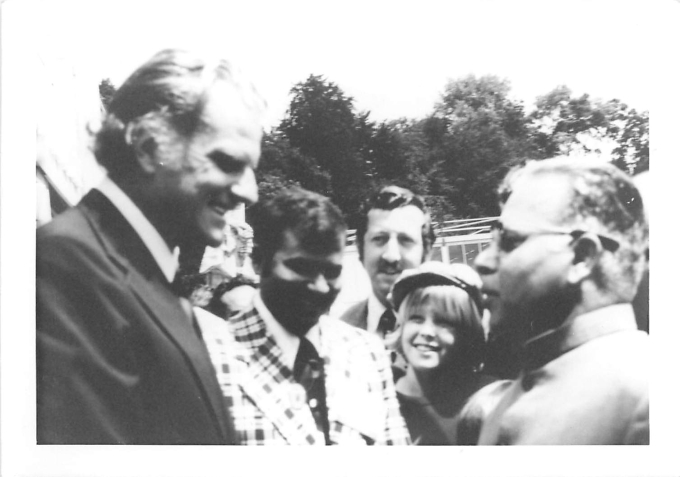 About thirty-five years ago, when Dad was visiting us in California, we went to see a friend I discipled during university days. He took us to an expensive restaurant for dinner. During our conversation, he asked my father, “What is your greatest need for the ministry?” At that time, this friend was doing extremely well financially, able to write 5-digit checks without any problem. After a pause, my dad replied,
 Body, soul and spirit—we are all three, and each affects the others.
 A major worldwide issue today is gender justice—ending inequalities between men and women in the family, workplace and larger community. Christian approaches to this critical problem can help to reveal the character of the gospel to the rest of the world.
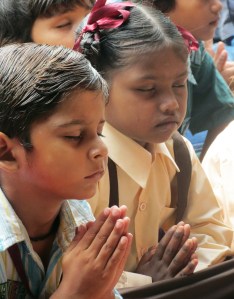 Our children are our first mission field.
 Our effective fulfilling the Great Commission sometimes depends upon how we honor the most dishonorable people of our lives with God’s grace. This may include parents who mistreated, neglected and abused us.
 Children especially have the right to hear and see Jesus in their own parents. It is understandable how non-Christian parents would ignore this. But do we believers, including pastors, evangelists and church leaders, inadvertently quench the Holy Spirit in our children and withhold them from vital relationships with Christ
 From the Desk of Valson Abraham