Tag Archives: church

The Heart of a True Shepherd

Do you want to know what kind of person the apostle Paul would advise you to have as the pastor of your church? If you read Acts 20, you will get a good idea from his parting words to the elders of the church at Ephesus.

The elders were responsible for leadership and oversight of the church. They taught, preached, guarded against false teachers, encouraged believers, prayed for and visited the sick, decided doctrinal matters and trained new believers.

Paul must have done a good job with them. The church of Ephesus became one of the strongest of the early churches. This was a mighty feat, given that Ephesus had lived for more than 1,000 years under the worship of the goddess, Artemis. How did Paul do it? We are most blessed that Paul shares with us the ingredients of his successful recipe. I call them the “ten commandments” for making a good elder/pastor:

  • Paul taught the Ephesians with “all humility and tears.” What powerful words! Paul exhibited a strong empathy with the Ephesian people that he shepherded, whatever their background. They knew he was on their side and wanted only their best.
  • He boldly taught the truth. He left out nothing they should know. He held nothing back, even if it might make them uncomfortable or cost him popularity.
  • He preached the same gospel to all. It didn’t matter what their background was. That gospel required repentance before God and faith in Jesus Christ.
  • He willfully placed his life in the hands of God, knowing some in the community would become offended at the truth and speak evil against him.
  • He knew he had a definite call of God to preach. He had a single-minded purpose and desire to complete the mission God had given him. He would not be swayed by lesser things.
  • He kept a clear conscience, knowing that he preached all that God commissioned him to preach. He preached the whole counsel of God, never mincing his words, so that he comforted the afflicted and afflicted the comfortable.
  • He took care to shepherd his people as Jesus would shepherd them, willing to give up his life on their behalf if necessary.
  • He remained alert for those who entered the flock and led others astray by charisma, smooth talk filled with false and perverse, but attractive-sounding, things.
  • He depended daily upon God to help him do what he could not do in himself alone. He trusted God to build up his own faith as he built up the faith of his people.
  • He especially bent over backward to help those who were weak, giving sacrificially of himself.

What did Paul teach the Ephesians? The epistle to the Ephesians gives us a good idea. Martyn-Lloyd Jones preached at least 232 sermons from this epistle, portraying Paul’s high view of the gospel, a profound portrait of what God intends. Is this the gospel coming to you from the pulpit in your church? Is this the same gospel that guides your life, family and community?

This gospel preached by Paul reflects the life of a man who has met God, witnessed His glory and is completely sold out to Him. May all our pulpits become filled with like-minded pastor/teachers who deliver the message of God, true to the Word and in great power and truth.


Tagged , , , , , , , , , , , , ,

Impossible Victory

In times of crisis, we must know what to do to gain victory. Acts 12 gives us a good model.

In Acts 12, heavy persecution hit the Jerusalem group of Jesus followers. It came against them from the enemies with the most money, the strongest military and political power, and a long and established religious tradition. Herod Agrippa, who ordered the persecution, was a ruthless king who cared nothing for God nor man, only his own power. He wanted to do something to please the religious establishment.

Among those who died was James, apostle of the church, brother of John, son of Zebedee, one of Jesus’ three closest disciples. Peter waited in jail for public humiliation and certain death, delayed only by a religious holiday. We are told that he was guarded by 16 soldiers and chained to two of them. Short of a miracle, Peter was going to die.

The death of James was a terrible blow to the church, and the loss of Peter and his teaching would put the church in jeopardy. No one took the situation lightly. We are told the whole church met for an all-night prayer meeting over this humanly impossible situation. It was grim, but not hopeless.

To make a long story short, the miracle happened. An angel came to the prison and snatched Peter from his chains, from the guards and from certain death. His rescue was so dramatic, it caught everyone by surprise, including the prayer warriors.

This miracle took place because of how the church responded to the crisis. They did not just wait for God to act, nor did they panic.

Luke tells us the whole church met for an all-night prayer meeting and prayed “fervently.” The Greek word means they strained themselves to the utmost to reach their goal. They were not half-hearted or ritualistic in their prayers but wholehearted. They may not have been eloquent, but they gave themselves with total sincerity, expectancy and trust that God would come through. They moved God with their faith in Him.

There is great advantage in praying together. Prayer builds upon prayer, faith builds upon faith, until they find themselves praying for things only God can do. God wants us to pray for “impossible” things and expect Him to do them. He delights when we trust Him as our Father. He wants us to grasp the authority He has given us to deal firmly with the “Herod Agrippas” of our lives (see Matthew 16:19).

It never pays to be passive with God. God is “in control,” but in His sovereignty, He wants us to confront opponents with authority to speak and decree words of release and freedom, to destroy the works of the devil. Certainly, the devil was at work through the political and religious elites of that day. The church recognized it, taking the situation seriously, yet refusing to panic or regard themselves as victims.

We also live in crisis days, facing our own “Herod Agrippas.” Let us pray “fervently” in the spirit of the early church. The prince of darkness is grim, but we must not tremble for him. Instead, we must pray, united in wholehearted sincerity and confidence in the God of the impossible. No chains and prisons need hinder His purposes in this world and in our lives when we ask in faith.

Tagged , , , , , , , , , ,

What Made This Church So Great?

If the conversion and Holy Spirit filling of the Samaritans, the Ethiopian eunuch and the Roman centurion Cornelius seemed radical to Jewish believers, what happened at Antioch must have gone off the charts.

The three people mentioned above were considered Gentiles, but they had at least some connection to the Jewish traditions. The people of Antioch were total pagans in just about every way imaginable, and then some. Yet in Acts 11, Luke portrays a fellowship of Jesus followers that has become a model for us in our own day.

Antioch became the gospel gateway to the rest of the Gentile world, the missionary headquarters leading to Europe, the rest of the Roman Empire, and ultimately, to us today. In Antioch, Jesus followers first became known as “Christians,” a term that once had a meaning far beyond the established religious groups we know today. What makes the Antioch church so great?

No one knows who founded the Antioch church—probably an unknown lay person. Whoever it was, the church also had supernatural roots. “The hand of the Lord was upon them,” Luke records. What a remarkable description! They depended upon the power of God, not their own knowledge and ingenuity. They heard the voice of God and saw Him work miracles in their midst. Programs were less important than people and the pleasure of God’s company.

As a result, record numbers of people from pagan backgrounds were turning to Christ from every background. They hungered for fellowship with God and with one another. They became involved in serious and effective prayer. They heard God speak to them through the Word. They had a Great Commission vision for the world. Deep understanding and application of the Word was vital to them.

From the Antioch church Paul launched his great missionary journeys that ultimately spread the gospel throughout the Roman Empire. Many other lesser known but powerful missions to the world had their beginnings at Antioch because the people there believed in self-multiplication.

Personal and corporate discipleship was the rule. Continuous spiritual growth and maturity was the goal. These people in the Antioch church were not rural hillbillies but sophisticated and cosmopolitan men, women and children from the third largest urban center in the Roman Empire.

Another unprecedented feature: Jewish and Gentile believers fellowshipped with one another. In today’s culture, that would be like Brahmans eating with Dalits, or whites hanging out with Black Lives Matter folks, or hippie-types enjoying fellowship with corporate executives. Such phenomena are “God things,” impossible to reproduce apart from a move of the Holy Spirit.

How many of our own churches today resemble the church in Antioch? As Henry Blackaby has said, “We have become satisfied today to live without the manifest presence of God.”

In spite of Bible resources unavailable to any previous generation, few church members today open their Bibles or pray. Few church members demonstrate any power of the Holy Spirit. Few church members have any vision for the world. Few churches are little more than religious social clubs. It is no wonder that the world as a whole considers the church powerless, useless and irrelevant.

Pray for revival and renaissance in the church. Pray that every fellowship returns to the Antioch model. Only then will we see our world change.

Tagged , , , , , , , , , , ,

A Fierce Love

The love of Jesus is beyond our comprehension. We get a glimpse of this in the foot washing episode of John 13.

In a few hours, Jesus will face a mock trial. He will be flayed without mercy by sadistic soldiers. He will face mobs of people who cry for His death though He has likely healed many of them. He will die by crucifixion, a death so obscene that no respectable person mentioned it. Our tame pictures of the crucifixion do not convey what Jesus endured. Varnished church crosses numb us to what He actually experienced. 

All of this loomed over Him and was on His mind. Yet just a few hours before His impending death, He thinks of His disciples and their comfort in one of the most humbling and trifling of details—their feet. He, their Master, even takes the role of a lowly servant and washes each disciple’s feet, including those of Judas Iscariot who will soon betray Him, and Peter who will deny Him with curses. Soon, the others will flee and abandon him, leaving Him completely alone to His executioners. 

He knows all of this will soon take place, yet He performs this humble task anyway. 

All the gospels portray Jesus’ disciples as dull learners who, over the past three years, forget what He says almost as soon as they hear it. Yet He says to these twelve pitiful men, “Unto you it is given to know the mystery of the kingdom of God.” His love for them never wavers in spite of their habitual stupidity.

The love of Jesus is stronger than death. It is a fierce love that stops at nothing, is discouraged by nothing. His love accepts the full reality of sin but completely overrules and overcomes it by good. It crushes every lesser thing in its path. 

Charles Spurgeon once said: “Earthworms are miserable company for angels . . .yet love made our great Master endure the society of His ignorant and carnal followers.” His great love is conditioned by nothing.

In contrast, our own weak and sentimental love is conditioned by a thousand different things. We are always getting offended by something or someone. We allow trivial things to divide us. Political correctness is a symptom of how unloving we have become as a society and within the church itself.

We are told that only about 4% of today’s young people maintain contact with the church. The church remains unattractive to most because they see church people as unloving. They fear coming to church to hear more rebuke than encouragement. They are aware of their sins and feel guilt over them. They hunger for redemption and release, but they do not hear it.

Once more, the church needs to experience the fierce love of Jesus that stops at nothing and will not let us go. This is the greatest weapon by which we fight the works of the devil. This is how we defeat fear and hopelessness. This is how we stop medicating ourselves with materialism and worldliness. The fierce love of Christ restores relationship and ends mere religion and legalism.

When we recover the fierce love of Jesus, we will have the one thing for which the rest of the world hungers. May that day come sooner rather than later!

Tagged , , , , , ,

What Makes Jesus Mad?

What makes Jesus mad?

In John 2, we find Jesus cleansing the temple, driving out merchants, moneychangers and cattle. He must have shown real rage that day. By Himself, he drove out all of them with only a small whip. We find similar accounts in the other three gospels. Most of the time, we don’t think of this angry side of Jesus—nor do we like to.

In his book, “What Made Jesus Mad?”, Pastor Tim Harlow observes the recorded times when Jesus showed anger. Pastor Harlow notes that at no time does Jesus exhibit anger against “sinners,” but only against religious people and His own disciples.

In every case of Jesus’ recorded anger, we find him directing His wrath against those who claimed to know God but blocked others from God’s grace. When we examine the accounts of the temple cleansing in detail, we find that the Jewish religious people were blocking God’s grace from “the nations,” or Gentiles. He rebuked His disciples for blocking the children from seeing Him.

Jesus’ love does not permit anyone to turn away those who need Him. That is also the message of the torn veil in the temple—all peoples have access to a holy and loving Father.

How do we block others from God? We block them by judging them less than worthy when they don’t meet our standards. We create spiritual “elites.” We block others by legalism, by trivializing what is essential and making essential what is trivial. We block them by pretending to be holier than we are—the word is “hypocrites.” Jesus had a lot to say about that.

Do our own churches block others from hearing the gospel? Our churches should be filled with homosexuals, prostitutes and the homeless. Why do we so rarely find them? Our churches should be sharing the light and bringing people out of darkness, but most churches do not support missionaries to the unreached. Are we examining the reasons for this failure to win others?

Do we block the Good News from those who have never heard? “Unreached peoples” are “the nations” of our own day—those who cannot hear the gospel until someone goes to them (or are sent by those with kingdom vision). They cannot absorb the gospel by osmosis from neighboring cultures. According to Bethany Global University, 3.14 billion people remain “unreached.” Of the 400,000 missionaries worldwide, only about 13,000 focus upon reaching “unreached peoples.”

What about the churches? Bethany Global University finds that 99.99% of all church money goes to causes other than reaching the unreached. Here, Jesus’ people have dreadfully failed, and yes, Jesus has every right to be mad.

Isobel Kuhn, missionary to the unreached Lisu people of China, has written, “I believe that in each generation God has called enough men and women to evangelize all the yet unreached people of the earth. It is not God who does not call. It is man who will not respond.”

The Pharisees did not learn their lesson. Instead, they rejected the rebuke of Jesus, and the temple was destroyed. The disciples, slow to learn, finally learned their lesson. The Spirit-filled church expanded throughout the known world, and you and I are their legacy.

What will future generations—and our Lord Jesus—say about us in our generation?

Tagged , , , , , , ,

Subject to Many Trials

How are we as Christians to regard such a time as this?

Some of you may have the virus. Others of you have friends or loved ones who have suffered or even died from it. Others of you have lost or are about to lose your livelihoods. In some way, all of us have experienced inconveniences and discouragement we have never known before. None of us knows what the future holds.

Jesus warned His disciples that in this life we will have tribulations or trials (John 16:33). What was He talking about?

Most times, these are things we don’t like to think about. We have been conditioned to think that when we accept Jesus as our Savior, life will be rosy and sweet. What happens when life is not sweet?

Even the best of us experience trials. Jesus Himself was a “man of sorrows and acquainted with grief.” John the Baptist was imprisoned and beheaded. Paul the apostle experienced many tribulations (2 Cor. 11:16-33).

In his first letter, Peter portrays the ideal Christian as both a person of great joy and much sorrow and grief, subject to many trials in life. These are not just chance events, but things that are allowed, and even sent, “if necessary,” by God Himself. Why does God find it necessary?

First and foremost, God wants to build His church whose foundation is Jesus Christ. He saves us when we are still sinners. We enter the kingdom in an imperfect state. God allows trials for at least three different reasons:

  1. Sometimes He chastises us for our failures. “Whom the Lord loves, He chastens,” we are told in Hebrews 12:6. If we do not know the chastening of the Lord, if all is sweetness and light in our lives, we are not Christians, it is as simple as that.
  2. Sometimes God allows trials in life to prepare us for a higher task, to make us more dependent upon Him. Think of Joseph and David who knew grievous trials of faith. God chose them for greater things, and they needed greater maturity to bear greater responsibilities.
  3. Even when we have not fallen into gross sin, we are still imperfect in our faith. We all have many areas of the flesh in our thinking and doing, however unconscious they may be, that interfere with our effective walk with Christ. Often, God sends trials our way to make us aware of these things and to bring out a greater faith.

When we bear these trials and learn from them to develop greater fellowship with our Heavenly Father, we certify that we are indeed His children. We learn to rejoice in our salvation (1 Peter 1:3-5) in ways we have never rejoiced before. As believers who rejoice in the midst of tribulation, we become testimonies to a watching world of a great and loving God.

Which of these kinds of trials have you experienced? When we learn from them, they last only for a season. The fruit we bear in our lives at such times glorifies our Lord Jesus. Such fruit lasts for eternity and affects not only us but the world around us.

During this time of trial and crisis, how ready are we to submit to God’s will and allow Him to work through our present troubles to bring about revival, healing and spiritual awakening?

Tagged , , , , , , ,

The Trouble with Tradition

We all have expectations of our families and friends, our society and government—and of God. We all have expectations of our church, how it should act and what it should teach and how it should govern. Some of these expectations are based upon customs and beliefs that pass down from generation to generation. These expectations are what we call “traditions.”

There is nothing good or bad about “traditions” in and of themselves. We get into trouble when we base our lives upon long-practiced and revered traditions that have questionable authority and keep people in bondage. We may give first priority to traditions, good in themselves, but of second priority to things more important to God.

Jesus had strong words for those that substituted divine revelation with human tradition. When the Pharisees challenged Jesus’ disciples for not washing their hands, he told them they had left God’s Word to favor their own way. To be fair, the Pharisees were trying to avoid breaking God’s law, but they used their own way to do it, not God’s way. Tradition is still something that divides the church in our own day.

Paul tells us we are to adhere to “apostolic traditions” (1 Corinthians 11:1,2). The apostles were men chosen by Jesus. For three years, He taught them the revelations of God.

After Paul’s conversion, he went to the desert where he was taught by Jesus and the Holy Spirit. In Galatians 1:11-24, Paul tells us that later, he went to Jerusalem to meet Peter and compare notes and found that Peter and Paul’s teachings matched perfectly though the two men had never before met until that time.

This strongly confirms that apostolic traditions do not come from men but from God, from Jesus Christ Himself. We find these traditions, these teachings, in the gospels and in the writings of the apostles in the New Testament. Throughout the gospels, Jesus frequently refers to Old Testament scriptures, giving His stamp of approval to the Old Testament as well. Both the Old Testament and New Testament make up our Bible.

We must base our own traditions and experiences upon the traditions of the apostles which come from Jesus Christ Himself. Wherever the two come into conflict, our traditions and experiences and preferences must give way to the teachings of scripture.

Our traditions and practices must enable our relationship with Christ and one another, not detract. Too often, our traditions win the day, even as it did with the Pharisees 2,000 years ago.

Many disputes in families, churches and society result from elevating human teaching and tradition above the Word of God. Too often, we treat our beloved traditions and experiences as sacred writ. When we face these disputes, will we go back to the scriptures with teachable and humble spirits, ready to change if need be?

Let us remember the words of Paul to Timothy: “All scripture is inspired by God and profitable for teaching, for reproof, for correction, for training in righteousness; to that the man of God may be adequate, equipped for every good work” (2 Timothy 3:15-16).

Let us remember that our faithfulness to the apostles’ teachings in scripture will give us good traditions that will enable us to free others in India and elsewhere with the same gospel that has given us freedom.

Tagged , , , ,

Set Back

adventure-ancient-antique-697662Years ago, the late Billy Graham, held one of his large evangelistic crusades in a certain city. A prominent minister of that city was approached by a reporter who asked him how he thought the crusade was going.
The minister grumbled, “Billy Graham has set back the churches of this city fifty years!

Later, the reporter told Billy Graham what that minister said. Billy Graham replied with a smile, “I pray I will set back the churches of this city two thousand years!

Billy Graham was referring to those days immediately after the Day of Pentecost. On that day, the Holy Spirit descended upon a group of 120 men and women in an upper room, and their lives (and ours) were changed forever. That day, the church was born.

On that day, Peter, the arrogant and cowardly fisherman from Galilee, found within himself a newfound ability to preach his first of many eloquent sermons before a crowd of thousands of people from all over the then-known world.

That day, the former coward, Peter, boldly preached a hard-hitting sermon, and when it was over, 3,000 people were added to the church. From that day, the gospel spread like wildfire throughout the known world, and within 30 years, the gospel had spread to Rome and even to Spain.

What were the marks of that first Spirit-filled church? Luke tells us in Acts 2:42-47 that the Jerusalem church was characterized by:

  • Teaching the Word of God
  • Worship, praise and prayer
  • Fellowship
  • Evangelism
  • Stewardship
  • Spirit-envisioned leadership
  • Care for the poor.

We are told that every day, the Lord was “adding to the church those who were being saved.”

Satan hates Spirit-filled churches. Such churches quickly fulfill the Great Commission, the one condition that must take place before Jesus comes again, sets up His kingdom and puts Satan out of business! Thus, Satan does all he can to quench the Spirit through persecution, corruption and distraction. He is a master at persuading churches to major in minors or avoid too much “fanaticism”, i.e., do nothing.

Has your church been “set back two thousand years”? Do you have a Spirit-filled church where the Lord is adding daily those who are being saved? Is your church marked by the same signs of the Jerusalem church that accomplished so much in so little time?

How many new believers (not church transfers) have been added to your church lately? Is your community transformed because of your church? What sacrifices do you and your church make to transform others by the gospel, both at home and abroad, especially where the gospel has never gone before?

In the life of every church, policy debates arise over the church’s function. Without a model other than our own feelings, the church always goes off course and fails at God’s mission for the church—to take the gospel to all peoples whom He loves and become salt and light, preparing the way for His glorious kingdom on earth.

We have a timeless biblical model in the church of Jerusalem. As we confront new challenges in the days ahead, let us keep this model before us. Any deviation from this model is less than satisfactory to God, however satisfied we may feel.

Pray that all our churches will be set back two thousand years!

Tagged , , , , , , , ,

The First Mission Field

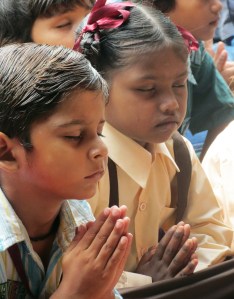
2017-03-slum-school-children-prayerOur children are our first mission field.

We live in a turbulent world inhabited by troubled youth and children, alienated from their families and society. Apart from a dramatic intervention by God, we face a troubled future whenever such troubled youth grow up, become parents themselves and take their places in seats of government, business, education, the arts, media and communication. How we raise our children today, influences our society for generations to come.

These things do not “just happen.” Two thousand years ago, the apostle Paul identified a major cause for an alienated generation when he wrote, “Fathers, do not provoke your children to anger, but bring them up in the discipline and instruction of the Lord” (Ephesians 6:4).

Too many parents stimulate rebellious spirits in their children when they resort to harsh discipline or fail to discipline them at all. Such extremes never work. What is needed is right discipline.

The key to right discipline is for parents to first discipline themselves, to submit themselves to their heavenly Father. Parents submitted to God know their children are not their personal possessions to treat as they please, but gifts of God. Parents are not to use children for their own purposes and ambitions, but to patiently help them to develop the unique personalities God gave each of them.

Like us, our children are born in sin. We depend upon God’s mercy and grace in our own lives, and we must treat our own children’s shortcomings with mercy and grace. Discipline is necessary, but to humiliate a child or inflict physical, verbal or emotional abuse have no place in a Christian home.

Paul tells us to raise our children “in the discipline and instruction of the Lord.” This means parents must learn to sacrifice their own interests to bring their children into emotional and spiritual maturity by instruction and example. Fathers and mothers must spend less time at the office or other activities to accomplish this God-given mission. Their own children are always their first priority.

Trying to force religion down their children’s throats or coerce a “decision for Christ” is never right. Going to church, Sunday school and youth group are good, but even better, children should see in their parents consistent character, integrity, and kindness that win their respect and motivate them to become like their parents.

They should see in their parents a worldview and lifestyle that sets them apart from parents of neighbors and friends. They should understand from their parents that this difference comes because of God’s gospel of grace in their lives.

Children should hear regularly from their parents how God has changed their lives, answered their prayers, and been faithful. Children should see in their parents the joy of the Lord, and know their parents pray for them every day.

Children should see and hear their parents read their Bibles and pray for those in need. They should hear their parents apply the scriptures to their lives, work and family. They should see their parents take a vital interest in those who still live in darkness without the gospel.

Yes, our children and grandchildren are our first mission field. If we have done our job right, our children will more likely become God’s ambassadors to their own children and a needy world around them.

Tagged , , , , , , , , , ,

Mature Believers

As believers in the Great Commission, we must never become content just with winning people to Jesus Christ. Jesus told us to “make disciples,” not just make converts. Discipleship training must follow conversion or chaos will take place.

The church in Corinth is a good case study in how a new church should not run.

The new believers lived in a pagan city with a bad reputation. Throughout the Roman Empire, the stereotype of the typical Corinthian was a drunkard or a harlot. Many new Corinthian Christians came out of this mold. They were not use to self-discipline. They had multiple bad habits to overcome. Like young children, Corinthian Christians were divisive, loud, self-indulgent, disorderly, rude, selfish, manipulative and argumentative. They revealed a “me-first” attitude. They exhibited many impressive spiritual gifts, but they didn’t know how to use them wisely—like a ten-year-old boy behind the wheel of a car.

Paul indicates the Corinthian believers were truly Christ-followers, but they lacked maturity. Like a good father, Paul wrote to remind them that God is a God of order, not confusion. To remind them of their childish ways, Paul said, “Shall I come to you with a rod?”

The problem-filled Corinthian church was like many of our own churches today, and the new churches we plant in places where the gospel has never gone before. Whatever age or culture, many churches are often filled with disorder, threatening their ministries. In his letters to the Corinthians, Paul presents three metaphors to serve as models for a dynamic and orderly church:

  1. Mature-BelieversThe runner. Believers must train themselves like runners-in-training. Runners organize their diets, sleep, exercise and habits to prepare their bodies and minds for the coming race. The race becomes their chief priority, and all other things become secondary. Good pastors and elders serve as coaches to prepare their congregations for the coming race of life. Earthly races reward winners with perishable rewards. The final goal of the Christian’s race is resurrection and eternal life with an eternal God. This requires putting aside old habits of thought and action that distract us from effective preparation.
  2. The body of Christ. Just as the body has many parts that work together in unity, so the church is made up of many people with many gifts who must learn to work together in unity. Each person has a different but critical role to play. The Head of the Church is Jesus Christ. As we listen to our Head and respect each other’s role, we will accomplish much together for the glory of God and the advancement of His kingdom in the world around us.
  3. The virgin bride. In 2 Corinthians 11:2, Paul likens the church to a virgin bride awaiting her husband (Jesus Christ), untainted by impure doctrines by false teachers. Pure doctrine is essential for a truly dynamic church that bears much fruit.

Whether we live in the West or India, we all face the challenge of immaturity and disorder in our churches. We have much to learn from the Corinthians. Thank God for His patience with us! Let us reckon ourselves dead to sin and alive to Him, and learn to run the race together in unity and purity of doctrine, and the whole world will look on in wonder at His grace.

Tagged , ,