Tag Archives: acts

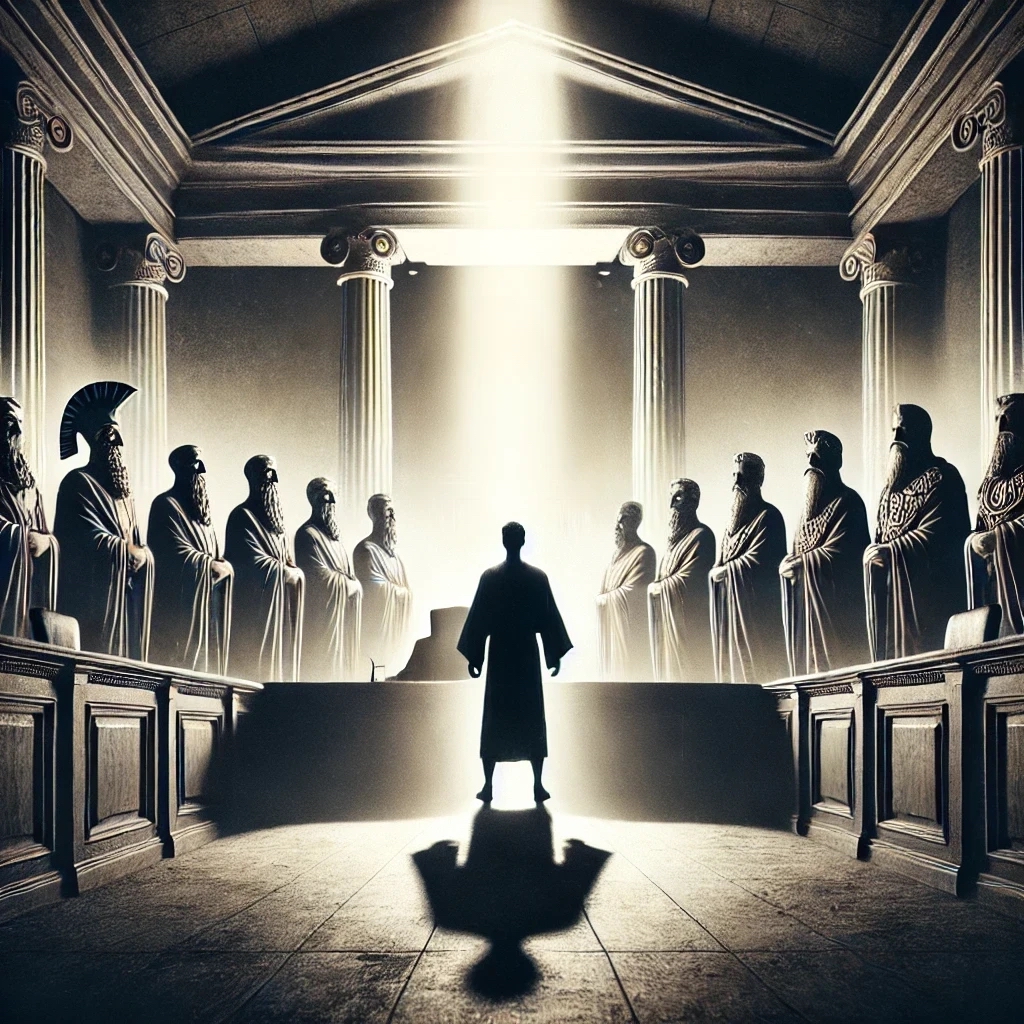
When Kings Tremble

As we follow Paul’s ministry in the Book of Acts, we note that at Paul’s conversion, Jesus told him that the day would come when he would proclaim the gospel before kings (see chapter 9).

That day arrived when he was arrested and stood before Ananias, the high priest, followed by appearances before Antonius Felix, governor of Judea, Porcius Festus (Felix’s successor), and then King Herod Agrippa and his wife, Bernice (read Acts 22-26).

All these rulers were known even in their own day as corrupt tyrants, marked by greed, incest (Bernice was Agrippa’s sister), violence, plunder, cowardice, disrespect for God and man alike.

The historian, Josephus, contemporary of Jesus, Paul and all these potentates, has much to say about these rotten excuses for leaders. For example, Ananias, the high priest, sold food meant for ordinary priests for his own profit, causing priests and their families to starve to death. He betrayed his own people to the Romans and was eventually murdered for his betrayal.

Nothing changed their eternal destinies even after Paul, filled with the Holy Spirit, eloquently and fearlessly gave them the gospel. These oppressors paved the way for Paul to present his case to the most powerful (and corrupt) of them all—Caesar himself, namely, Nero.

Not everyone is called by God to such daunting service. But God formed in Paul an intensity of purpose that allowed him to face this challenge with dignity and grace.

Still, we might ask ourselves, why did God require this sacrifice by Paul, since none of these monsters ever actually bowed the knee to Christ?

We must remember that God not only wants us to join Him in heaven one day, He also wants to revive and reform human society on earth as it is in heaven. Jesus mandated His followers to disciple the nations. This can happen only when governments cease to actively obstruct the gospel and human dignity.

During Paul’s day, 25-40% of the Roman Empire’s peoples were slaves. Women and girls had minimal rights. Life was cheap. People lived in fear of death by torture or crucifixion by unpredictable and unaccountable rulers obsessed with power, not truth. Even their religious leaders were hopelessly corrupt.

God called Paul to start the reformation of government by clearly and fearlessly proclaiming Christ to the powers of his time. They did not submit, but we are told that Felix “trembled” and Agrippa was “almost persuaded.”

Though they did not heed, others also must have heard—and they were persuaded.

We get a strong hint of this in Philippians 4:22 where Paul sends greetings from “the household of Caesar” who followed Christ. The “household of Caesar” included all kinds of people in service to Caesar ranging from slaves to high government officials in positions of influence and authority.

Even when the most powerful refuse to believe, the gospel still penetrates to the highest and most degenerate parts of society. As a result, Christlike values begin to permeate the culture.

Wherever and to whomever the gospel goes, even if they refuse to submit, Jesus makes His mark. When we submit to Christ as Paul did, His Word, spoken with Holy Spirit power, will never return void. In the end, God always wins, even when He appears to lose.

Tagged , , , , , , , , , ,

Bridging Cultures: Paul’s Approach

Paul’s visit to Mars Hill in Acts 17 has some important lessons for us today as we confront a culture that has become almost as pagan as the Athenian culture Paul confronted.

In many ways, the Athenians of Paul’s day resembled our own. Yet Paul made an impact upon these heathens, and some of them had their eyes opened. This should encourage us in our own day.

See if you recognize some of these Athenian traits in our own day: rationalism, materialism, relativism, promiscuity (even in religion), rampant sexual perversion, i.e., homosexuality and pedophilia, human trafficking (in this case, slavery), worship of beautiful people, belief that education is the solution to society’s problems, a two-tiered justice system, just to name a few.

Like many people in our own day, these jaded people had no knowledge or trust in inspired scriptures. Quoting from the Old Testament would have meant nothing to these elites steeped in Epicurean and Stoic philosophy, and worship of many gods and goddesses.

Indeed, when Paul first began to speak to them of Jesus, most of them initially brushed him off as an “idle babbler” and a teacher of “strange deities.”

Yet Paul never assumed the privileged Athenian know-it-alls were too far gone for redemption. These pagans also possessed the image of God. They had eternity in their hearts, and these facts inadvertently revealed themselves in the pagan philosophies of the day. So he approached them through the very words of their own philosophers who possessed some truth–though not all of it. For example…

Sometimes we quote Paul, who said to them of the Creator God, “In Him we live and move and have our being,” not knowing that we are actually quoting a pagan Cretan philosopher named Epimenides (c.a. 600 BC). Through such links with their own thinkers, Paul led them to consider Jesus Christ. We are told that his approach struck a receptive chord. Some of them stopped laughing, listened to what Paul was trying to tell them—and they believed!

Paul demonstrated that before we can effectively communicate the gospel to anyone, we must first understand where they are coming from. Only then can we link them to Jesus. We must love them even as God loves them, knowing that Christ died for them as He died for us. The Good News resonates with people of every background—if we take the time to know them and present the truth in a manner they best understand.

Some teachers at IGO training centers and many graduates come out of Hindu, Sikh, Muslim or Buddhist backgrounds—religions regarded by many westerners as “unreachable.” But today, they communicate Jesus Christ to their own people. In many ways, evangelists and church planters from non-Christian backgrounds are the best gospel communicators of all.

Dr. Mahendra Singhal, a former Hindu who knows Hindus and leads an outreach to Hindus, has said, “Hindus believe in going to the extremes in showing love to someone… I have discovered in my witnessing to Hindus that they are generally moved by the depiction of Jesus on the cross to validate His love for us.”

Paul’s approach still works. May his approach become our own as we stand for Christ where we live, work and learn!

Tagged , , , , , , ,

Resistance Against Truth

“These men have upset the world!”

These charges were leveled at Paul and Silas after they preached the Good News in Thessalonica. They must have done a great job in making the gospel clear to all who heard them. Acts 17 tells us that many people came to Christ, both Jews and Gentiles. For these people, the gospel was a welcome fragrance.

To others, it was the stench of death. Some Jews hated the message, and wanted to make Paul and Silas pay for ruining their day. They accused Paul and Silas of promoting another ruler besides Caesar. These Jews hated the rule of Caesar, but they hated Jesus even more.

This episode illustrates a truth about the Good News. Even when clearly presented, it will win some and infuriate others, even to the point of violence. In one person, the Holy Spirit brings new life; in another, the gospel reveals spiritual death.

Why do people reject the gospel? Such people love their sin above all else and resent having it exposed by the light of Christ and told that it is evil. They want to call evil good, to run their own lives without accountability to anyone, including God who made them.

No doubt some people who opposed Paul and Silas were religious, but they were dead to the true God. They wanted to turn the truth of God into something that sounded moral and sounded comfortable. As such, it was something less than truth. They preferred a god that helped them feel good about themselves, not repent. When Paul and Silas reminded them of their sin and God’s holiness, they recoiled.

Paul and Silas did not follow the seeker-friendly approach popular in many churches today. The seeker-friendly approach may lead people to adopt certain ideas from the Bible that appeal to them, but fail to reveal sin leading to repentance. They become devoted to their own ideas of God more than to God Himself.

A spiritually dead person can have spiritual longings, but they are always less than God. They still hate the true God even when they speak in moral and spiritual ways. In real life, they operate according to natural thinking.

The seeker-friendly approach operates on the false premise that one can share the gospel and lead a person to God without upsetting anyone. The seeker-friendly approach is a sign of how much the culture has impacted the church more than the church has impacted the culture.

George Barna reports that in his research, he has found that only 6% of today’s adults have a biblical worldview. The average American church person’s dominant worldview, he says, is syncretism, a collection of contradictory beliefs pasted together to suit themselves. A growing number of people in churches believe in reincarnation and that people are basically good. Fewer pastors preach the gospel with the clarity of Paul and Silas.

Jesus came to destroy the works of the devil. He has already defeated Satan at the cross and invites us to join Him in enforcing His victory. He also warns us that Satan will go down swinging hard.

Let us move forward like Paul and Silas, assured of victory but also steeled for resistance from those who refuse to bow the knee to the King of kings. Let us remember that Jesus has already won.

Tagged , , , , , , , , , , ,

God’s Unexpected Choices

God can work through anybody! That is a vital lesson we can all learn from Acts 16.

In Acts 16, Paul takes the gospel for the first time to Europe. His venture plants a gospel beachhead in a pagan Roman colony, Philippi—through a woman. In Paul’s day, women were supposed to stay home, not start new and earthshaking movements. The woman, Lydia wasn’t even a native of the city, but came from Asia Minor.

She followed the God of the Jews, but there were not even enough Jews in Philippi to start a synagogue. So, she just met with a small band of other like-minded Gentile women at the riverbank. With this seemingly woeful and unnoticed group, Paul began his ministry—and ultimately changed a continent. As we read on, Lydia became a more dynamic believer and leader than anyone expected. Another example…

In those early days of ministry in Philippi, Paul and his companion-in-ministry, Silas, delivered a girl possessed of demons. That miracle unjustly landed them in jail because Paul ended the livelihood of those who exploited the poor girl’s misery for profit.

Instead of complaining, Paul and Silas praised God for His many blessings which outweighed their present trials. God responded with an earthquake that caused chaos in the prison. The jailer almost committed suicide, thinking all his prisoners had escaped, and he would now suffer death from his superiors for losing them.

This jailer was likely a cynical man hardened by the dregs of humanity. There was nothing religious or idealistic about him, and yet something about the lives of Paul and Silas touched him. In his sudden weakness, the shaken man approached them and asked, “What must I do to be saved?” That night, we are told, the jailer and his entire household—wife, children, relatives, servants—put their trust in Jesus Christ.

This unlikely woman, Lydia, and unnamed Roman jailer, along with his household, became part of the new fellowship of believers in Philippi. Every believer who comes from a European heritage or has received guidance through European believers ultimately owes a spiritual debt to these two unlikely people for an important reason…

The Philippian church did not become a self-centered, religious social club. In his letter to the Philippians, Paul praises the Philippians for their faith and vision for the lost. They were not content to keep the faith to themselves but joined Paul’s mission to deliver the faith to Thessalonica and the center of Rome itself.

Let us not forget that Paul himself was an unlikely messenger—a “Jew of the Jews,” a former terrorist and fanatic who became God’s messenger to the Gentiles he once despised.

The lesson is clear: never underestimate what God can do through you no matter what you or others may think of your abilities. God is always able to work in unexpected ways in unexpected people to accomplish His greater work.

I see this all the time as I meet with Indian evangelists and pastors. Again and again, IGO training centers graduate men and women from the most unlikely backgrounds whom God has called to do great things for the Kingdom.

What unlikely and unthinkable thing is God willing to do through you to affect lives and destinies of people for generations to come?

Tagged , , , , , , , ,

Resolving Differences: Acts 15’s Guidance

Acts 15 demonstrates what we must do when disagreements and differences arise in the body of Christ. Disagreements will arise. We are all imperfect followers of Christ with limited and slanted views due to heredity and environment, subject to influence by a common enemy, the devil. That devil seeks to sow discord and division among us. He wants us to major in minors, to blind our eyes to the main focus, to foil God’s redemptive purpose.

In Acts 15, growing numbers of Gentiles were becoming Christ-followers. For a while, the Christ-followers were mostly Jews. Should these former pagans be compelled to obey the Jewish law? Those believers who were once Pharisees thought they should. Others said, “Not so fast!” The apostles called a special council at Jerusalem to discuss the growing controversy where Paul and Barnabas related the Spirit-filled signs and wonders that came upon the Gentiles.

At last, Peter concluded, “We believe that we are saved through the grace of the Lord Jesus, in the same way as they [the Gentiles] also are” (Acts 15:11). On this point, everyone could agree, and that settled the matter. The grace of God through Jesus and the cross was the common foundation for cooperation between Jewish believers and Gentile believers, not the Jewish law.

Later in Acts 15, a second source of division arose involving a personal dispute between Barnabas and Paul over a relative of Barnabas, a younger man named John Mark. This young man joined with Barnabas and Paul on their first missionary journey but deserted them in Pamphylia after they experienced rough going in Cyprus.

Later, when Paul and Barnabas went back to visit some of these places, Barnabas suggested that John Mark join them, but Paul objected. When they could not agree, they went their separate ways. Barnabas is never mentioned again in Acts.

But this did not end their basic respect for one another. In 1 Corinthians 9:6. Paul praises Barnabas, and in Galatians 2:11-13, Paul describes another event in Antioch that includes Barnabas. Whatever their disagreement over John Mark, they did not let it replace their common goal: to preach and demonstrate the love, grace and power of God through Jesus Christ.

Human passions initially got in the way, and they did gospel work separately for a time, but they did not allow their differences drive them apart. In time, Paul came to see the value of John Mark to the common purpose. Barnabas and Paul refused to speak ill of the other.

They worked within their human limitations as fallible humans, but they never forgot their common purpose: the grace of God through Jesus Christ. The Great Commission continued to advance.

Let these two examples from the past teach us all today. More often than not, our churches and fellowships are motley collections of people from vastly different backgrounds and perspectives who should come together because of a common fellowship in Jesus Christ.

Too often, churches, groups, families and friendships split over personal and extra-biblical matters that have nothing to do with God’s priorities. In doing so, we mock and belittle Christ and His sacrifice.

Let the love and grace of God through Jesus Christ always remain as the cornerstone of all we say and do so that we become salt and light in this world.

Tagged , , , , , , , , , , ,

Breaking Tradition

Jesus tells us to pray “thy kingdom come…on earth as it is in heaven.” John, His disciple, tells us, “The Son of God [Jesus] appeared…to destroy the works of the devil”
(1 John 3:8).

In other words, we as Jesus’ followers have marching orders. We are engaged in a spiritual war to regain territory from an illegal occupier, Satan, who stole it from us through deceit. Through the cross, he has no further authority to keep it. The mission involves both angelic and human forces obedient to Jesus, our Commander-in-Chief.

Military operations require an overall plan and objective that unfolds in different phases. The operation depends upon troop flexibility to shift direction and action at a moment’s notice.

Acts 10 exemplifies one of those momentous shifts.

Phase one began with the Abrahamic Covenant. Most Jews came to see this as a covenant exclusive to themselves. Everyone else was regarded as “gentile,” or pagan, though God told Abraham, “Through you all the nations will be blessed.” For most Jews, this part was forgotten.

Before Jesus ascended into heaven, He told His disciples they, the Jewish believers, would take the gospel to the “uttermost parts of the earth,” that is, to the outside Gentile world.

Peter, Jesus’ disciple and apostle of the early church, was a traditional and patriotic Jew. But Jesus wanted him to preach the gospel, not only to a man and his household regarded as outside the Covenant, but who came from among hated Roman conquerors. This Roman officer, Cornelius, had learned to worship the true God, but because he was “gentile,” his faith was regarded as inferior. For Peter to willingly obey this order required a massive paradigm shift.

God required him to abandon 2,000 years of traditional thinking at a moment’s notice. In Acts 10, Peter’s housetop vision (repeated three times) prepared him for his mission, with God commanding him to kill and eat animals regarded as unclean by Jewish law. In the vision, Peter at first refuses this order, saying, “By no means, Lord!”

In the end, Peter gets the message. He obeys God and preaches the gospel to Cornelius and his household. They all commit their lives to Christ and experience the filling of the Holy Spirit, identical to what happened to the blood children of Abraham at Pentecost.

This event is so momentous to Peter and to the Jewish believers that they marvel over it in the next chapter. They are advancing in their faith, but they are still learning about God’s overall plan to destroy the works of the devil and to bring the kingdom of God on earth as it is in heaven. They didn’t have the whole picture, and neither do we. We receive it just one order at a time.

Are we ready to abandon at a moment’s notice beloved and familiar traditions to destroy Satan’s work and reassert Christ’s authority? Are we willing to accept people as fellow believers whose looks and ways differ from our cherished expectations?

As we learn in Acts 10, God still brings blessings to and through the very people we least expect and whom we even despise. God’s love and mercy is greater than our own. His sovereignty is more sovereign than we know. His grace is more gracious, His love more loving.

Tagged , , , , , , ,

Unexpected Jesus Follower

The miraculous conversion of Saul of Tarsus gives us hope for our own day.

Saul of Tarsus was the last person anyone expected to follow Jesus Christ. That he would later become the missionary to the Gentiles, willing to face beatings, stonings, prisons, shipwreck, and to lose his life for the sake of Christ was beyond unthinkable to anyone who knew his murderous reputation.

Already, he was implicated in the death of Jesus’ first martyr, Stephen. He possessed a fanatical hatred and fury against Jesus’ followers that rivaled or surpassed that of today’s radical terrorists. When Jesus’ followers fled Jerusalem to escape him, he chased after them, determined to destroy this affront to his beloved traditions. Who knows how many more believers died at his hands or at the hands of those who followed his orders?

In Galatians 1, we read his own description of his total devotion to the faith of his forefathers. The more people who followed Jesus Christ, the more infuriated he became. Nothing, he resolved, would or could stop him from achieving his goal of 100% eradication of Jesus’ followers and Jesus’ memory from the earth. And then…

On the road to Damascus, he met Jesus Christ face-to-face. In a split second, Saul’s life—and our own lives and destinies—were forever reversed.

In that split second, Saul of Tarsus became the man later known as Paul the Apostle, the greatest Jesus-believer the world has ever known. Everyone who reads this piece owes an unpayable debt to him and to Jesus Christ, our risen Lord, who made it all possible.

In those dark days before the light from heaven blinded Saul of Tarsus, most Jesus followers wondered how long it would take before that determined killer caught up to them. They did not count on what God was about to do to change the course of history.

In our own dark days, with so much demonic activity in India and our own nation arrayed against the advance of the gospel, is it not also hard for us to believe that anything will soon change? By the day, everything seems to get worse and worse and worse.

Many prominent Christians even say we live in a post-Christian age. Many of our children and grandchildren, raised in the church, are deserting the faith in droves for New Age, witchcraft, drugs, transgenderism and the like. We are told we will live as powerless exiles on the outskirts of Babylon until Jesus raptures us out of the mess.

But God never adopts a losing scenario. He is the same yesterday, today and forever. He is the same God who reversed the life of Saul of Tarsus in a split second. Jesus’ life, death and resurrection, the coming of the Holy Spirit—and Saul of Tarsus’ conversion—remind us that God’s work on earth never retreats but advances.

What God has shown us in the past is a foretaste of what He plans for the future. The greatest works of Christ have yet to take place in India and the world, in this country, in your lives and in the lives of those we love.

Surely, that day will come in a moment, like the conversion of Saul of Tarsus on that Damascus road. Pray and praise God for that day!

Tagged , , , , , , , , , ,

The People You Detest

Philip’s story in Acts 8 has profound lessons for us today. Though his divine appointment with the Ethiopian eunuch is perhaps better known, his ministry in Samaria is equally profound.

Philip’s adventure in Samaria teaches us that we should never put God in a box, but do whatever He asks of us even when it appears detestable and absurd.

It takes place at a time of persecution. Stephen’s martyrdom set off the persecution directed by the fanatical Saul of Tarsus, forcing Jerusalem believers to flee for their lives. One of those exiles was the Spirit-filled Philip who felt nudged by the Holy Spirit to proclaim Christ to the Samaritans in their capital, Samaria. We first read of him in Acts 6, one of seven men selected to meet the needs of Hellenistic Jews.

This venture of Philip into Samaria is most unusual. Philip was a Jew, and the average Jew detested Samaritans as half-breeds whose religion was an odd mixture of Jewish and pagan beliefs. They hated the Samaritans so much, they took the longer and harder route around their territory just to avoid contact with them. This deep-seated and irrational hatred had persisted for centuries.

If Philip had any of these natural tendencies, he pushed them aside and obeyed the Holy Spirit. When he did, he discovered sincere spiritual hunger among these hated and rejected people. They saw signs and wonders, heard of Jesus’ love for them, and experienced multiple deliverance from demonic spirits. They welcomed Jesus as their Messiah and received the Holy Spirit. Luke tells us in Acts 8:8, “There was much rejoicing in that city.”

Not many years earlier, Jesus Himself had visited the Samaritans and changed the life of the woman who met Him at Jacob’s Well, near the town of Sychar. That transformed woman opened her people’s eyes to the true Messiah and made it possible for Jesus to do a great work among them (John 4). These people had already demonstrated their spiritual hunger.

But Jesus did not complete the ministry to the Samaritans. He paved the way for Philip to do even more. He wanted to share His own joy with others like Philip who would obey His invitation to join Him in His work.

Did He not specifically tell His disciples before His ascension, “You shall be My witnesses . . . in Samaria” (Acts 1:8)?

What an important lesson (and invitation) this is for all of us! We all have people in our lives whom we regard as “impossible” when it comes to openness to the Good News. Like the Samaritans, they could be members of a particular ethnic or cultural group. They could be family members whose rebellious or obnoxious ways have repulsed us for years, even decades.

When Jesus included Samaria in His Great Commission, He was essentially telling His disciples (and us), “You shall not only be My witnesses to the people you know, but also to the people you most detest. You and they will rejoice when you do this unlikely and impossible thing.”

Let us allow the Lord to identify any “impossible” people in our hearts so He can transform us to accept His possibilities and obey Him. In this way, we all, like Philip and the Samaritans, will also rejoice when we see God bring the impossible to pass.

Tagged , , , , , ,

How to Convince Many

Often, Christian witness today is based upon apologetics—rational arguments. While apologetics has importance and may win a few people to Christ here and there, too often we are satisfied with a few. The problem with apologetics is the likelihood for someone to make counter-arguments and excuses. The arguments may go on forever.

Acts 3 demonstrates that in the power of the Holy Spirit, our witness can become an irresistible force with which no one can argue.

Acts 3 begins on an average day with Peter and John just before afternoon prayer at the temple. They confront a lame man. For years, the man was a fixture at the temple gate, eking out a living in the only way he knew—begging. Most likely, Peter and John had noted the man before, but on this day, the Holy Spirit enabled them to really see him.

They did not just stop to toss him a coin or two, or ask God to bless his day with successful begging. Instead, they invoked the authority of God to heal the man. That day, the man, lame from birth, stood and walked.

A great crowd saw the miracle and gathered around, amazed. They were not hostile. They gazed in wonder. They all had seen this man for years, carried in and carried out, unable to move on his own. Now, he was running and leaping in joy. The healing of the lame man got their attention.

Peter and John quickly told them it was not their own power, but the power of Jesus that healed the man. A few weeks earlier, some of the people who heard this had called for Jesus’ crucifixion, but they did it in ignorance, not knowing who Jesus really was. Peter told them how the prophets prepared the way for Jesus and for this day. This healing was a sign that a time of great restoration had begun that will eventually rid the world of Satan, evil and death.

The amazed people hung on to Peter’s words. In Acts 4, we read that at least 5,000 men believed the message because of what they saw that day.

A display of God’s power prepared the way. The people could not deny what happened. Arguments alone would not have won so many people.

This same power of God is available in our own day. Our evangelists in India, many from non-Christian backgrounds, experienced healing and deliverance which brought them to Christ. Now, they go into unreached areas doing the same works in the power of the Holy Spirit that changed their own lives. Acts 3 is taking place all over India today—power encounters that convince many that Jesus’ power exceeds the power of their old deities.

Acts 3 is our model as well. Let us not be cowed by the anti-supernatural element in many of our churches that tries to preserve an orderly status quo but paralyzes our influence. Let us not say we aren’t good or pious enough for this. Like Peter and John, we have been made clean by the blood of Christ.

Around the world, people are convinced more by God’s power, less by arguments. In today’s evil world, why would Jesus abandon his most powerful weapons against Satan? Jesus is the same yesterday, today and forever.

Tagged , , , , , , , , , , , ,

Set Back

adventure-ancient-antique-697662Years ago, the late Billy Graham, held one of his large evangelistic crusades in a certain city. A prominent minister of that city was approached by a reporter who asked him how he thought the crusade was going.

The minister grumbled, “Billy Graham has set back the churches of this city fifty years!

Later, the reporter told Billy Graham what that minister said. Billy Graham replied with a smile, “I pray I will set back the churches of this city two thousand years!

Billy Graham was referring to those days immediately after the Day of Pentecost. On that day, the Holy Spirit descended upon a group of 120 men and women in an upper room, and their lives (and ours) were changed forever. That day, the church was born.

On that day, Peter, the arrogant and cowardly fisherman from Galilee, found within himself a newfound ability to preach his first of many eloquent sermons before a crowd of thousands of people from all over the then-known world.

That day, the former coward, Peter, boldly preached a hard-hitting sermon, and when it was over, 3,000 people were added to the church. From that day, the gospel spread like wildfire throughout the known world, and within 30 years, the gospel had spread to Rome and even to Spain.

What were the marks of that first Spirit-filled church? Luke tells us in Acts 2:42-47 that the Jerusalem church was characterized by:

  • Teaching the Word of God
  • Worship, praise and prayer
  • Fellowship
  • Evangelism
  • Stewardship
  • Spirit-envisioned leadership
  • Care for the poor.

We are told that every day, the Lord was “adding to the church those who were being saved.”

Satan hates Spirit-filled churches. Such churches quickly fulfill the Great Commission, the one condition that must take place before Jesus comes again, sets up His kingdom and puts Satan out of business! Thus, Satan does all he can to quench the Spirit through persecution, corruption and distraction. He is a master at persuading churches to major in minors or avoid too much “fanaticism”, i.e., do nothing.

Has your church been “set back two thousand years”? Do you have a Spirit-filled church where the Lord is adding daily those who are being saved? Is your church marked by the same signs of the Jerusalem church that accomplished so much in so little time?

How many new believers (not church transfers) have been added to your church lately? Is your community transformed because of your church? What sacrifices do you and your church make to transform others by the gospel, both at home and abroad, especially where the gospel has never gone before?

In the life of every church, policy debates arise over the church’s function. Without a model other than our own feelings, the church always goes off course and fails at God’s mission for the church—to take the gospel to all peoples whom He loves and become salt and light, preparing the way for His glorious kingdom on earth.

We have a timeless biblical model in the church of Jerusalem. As we confront new challenges in the days ahead, let us keep this model before us. Any deviation from this model is less than satisfactory to God, however satisfied we may feel.

Pray that all our churches will be set back two thousand years!

Tagged , , , , , , , ,